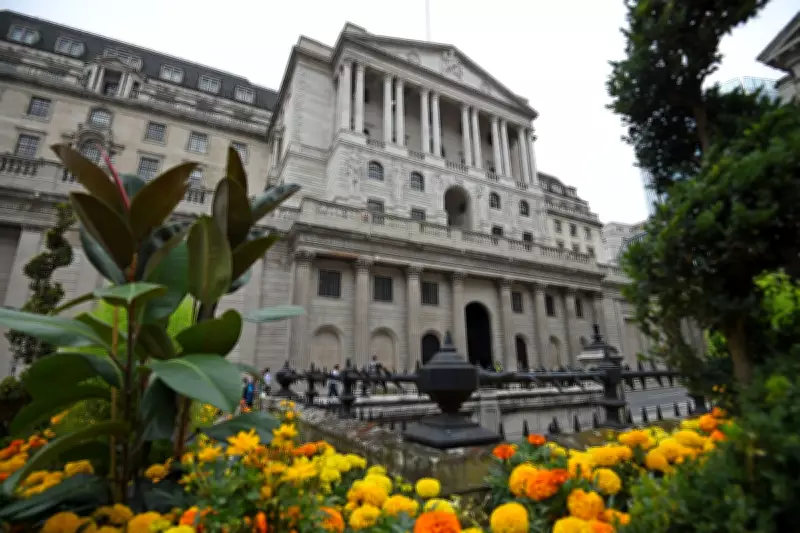
Bank of England Poised to Maintain Interest Rates Amid Global Uncertainty
The Bank of England is widely anticipated to hold interest rates steady at 3.75% during its upcoming policy meeting on Thursday. This decision comes as economists warn that the escalating conflict in Iran has dramatically altered the inflation outlook, putting any plans for a rate cut firmly on hold.
Shift in Economic Expectations
Prior to the recent escalation of hostilities in Iran, some economists had been forecasting that policymakers might deliver a rate cut to stimulate economic growth. However, the rapidly changing geopolitical landscape has forced a significant pivot in monetary policy thinking.
The primary concern centers on how soaring oil and gas prices—driven by Middle Eastern tensions—could impact UK inflation figures in the coming months. While the Bank of England had previously forecast that Consumer Prices Index (CPI) inflation would fall close to the 2% target by April, experts now caution that price rises could accelerate significantly during the second half of the year.

Expert Analysis and Market Reactions
Thomas Pugh, chief economist for RSM UK, emphasized how dramatically the situation has evolved. "Reflecting the scale of volatility we're all coming to terms with, it was only two weeks ago that a March rate cut looked like a dead cert," he noted. "A cut clearly makes no sense now given the current uncertainty about energy prices, inflation, and the broader economic outlook."
Pugh further explained that the most prudent course of action for the Bank of England would be to wait for greater clarity before making any policy adjustments. "This rules out a rate cut next week and probably one in April too, unless there's a rapid resolution to the crisis," he added.
Mortgage Market Impact
The financial repercussions are already being felt across the UK housing market. A wave of Britain's largest lenders has been increasing mortgage rates in response to the conflict, prompted by a sharp rise in swap rates that are used to price home loans.
According to financial information website Moneyfacts, major lenders have withdrawn all sub-4% fixed-rate mortgage deals that were available to borrowers just last week. Across the broader mortgage market, there were 689 fewer products available on Tuesday compared to March 9, indicating significant tightening of lending conditions.
Global Context and Timing
The Bank of England's decision will follow closely on the heels of the US Federal Reserve's own interest rate announcement, which is also widely expected to maintain current rates amid heightened global uncertainty. This coordinated caution among central banks underscores the widespread concern about how Middle Eastern conflicts could disrupt global energy markets and inflation trajectories.
Economists will be watching closely for any signals about future policy direction, particularly regarding how long the Bank of England might maintain its current stance and what conditions would need to change before considering rate adjustments in either direction.