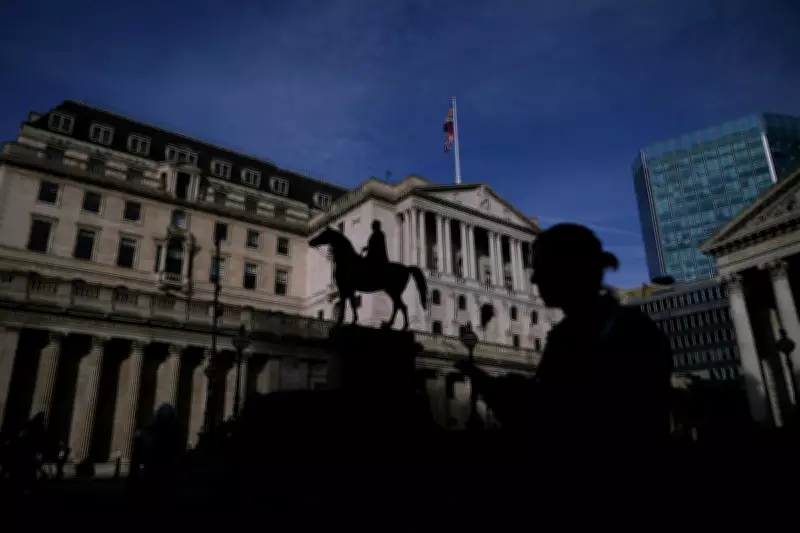
Bank of England to Hold Rates at 3.75% as Middle East Conflict Disrupts Inflation Outlook
Economists have shifted their forecasts, now expecting the Bank of England to maintain borrowing costs at 3.75% during its upcoming Monetary Policy Committee announcement on Thursday. This marks a significant pivot from earlier guidance that suggested a rate cut was likely, driven by the escalating conflict in the Middle East and its impact on global energy markets.
Energy Price Surge Alters Economic Landscape
The war in Iran has triggered a sharp rise in oil and gas prices, which economists say makes an interest rate reduction next week "makes no sense". This surge in energy costs threatens to push UK inflation higher, complicating the Bank's previous expectation that Consumer Prices Index inflation would fall close to 2% by April. Experts warn that if wholesale price increases translate into steeper household electricity and fuel bills, inflation could accelerate in the second half of the year.
Edward Allenby, senior UK economist for Oxford Economics, commented: "The UK inflation outlook was starting to brighten, but the conflict in the Middle East has thrown a spanner in the works. Against this backdrop, it's almost certain that the MPC will keep bank rate unchanged at 3.75% at the March meeting."

Uncertainty Puts Future Rate Cuts in Doubt
The Office for Budget Responsibility has cautioned that persistent energy price spikes could add one percentage point to UK inflation this year. This uncertainty has led economists to reconsider the timing of future rate cuts. Allenby added that if the energy shock proves temporary, the MPC might resume cutting rates in April or June, but an extended pause is likely if prices remain elevated.
Thomas Pugh, chief economist for RSM UK, echoed this sentiment, noting that a March rate cut was seen as a "dead cert" just two weeks ago. He stated: "Given uncertainty about the outlook for energy prices, inflation and the economy, the most sensible thing for the Bank of England to do now is wait for more clarity. This rules out a rate cut next week and probably one in April too, unless there's a rapid resolution to the crisis."
Mortgage Market Turbulence Follows Conflict
The conflict's ripple effects are already being felt in the UK mortgage market, with a wave of major lenders hiking rates due to increased swap rates. Financial information website Moneyfacts reported that at least 530 homeowner mortgage deals have disappeared since Monday, accounting for about 7.5% of available products. This volatility is described as some of the most turbulent since the aftermath of the September 2022 mini-budget, highlighting the broader economic implications of the Middle East crisis.