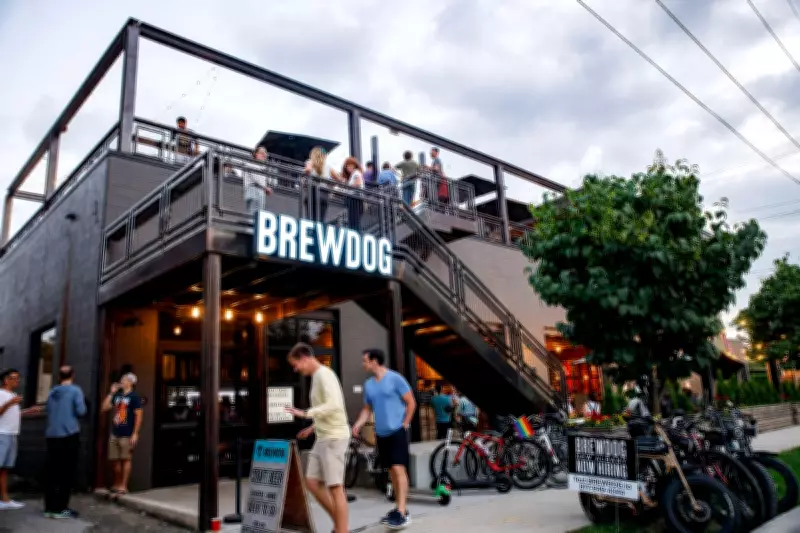
BrewDog's 'Punk' Capitalism Dream Meets Harsh Financial Reality
When Scottish brewery and pub chain BrewDog launched its innovative "Equity for Punks" scheme, inviting loyal customers to become small shareholders, it appeared to represent a revolutionary new model of capitalism. The company positioned itself as a community built around rebellion, identity and participation, allowing beer enthusiasts to invest directly in the brand they loved.
The Rise and Fall of a Community-Driven Model
For a significant period, the BrewDog model looked remarkably successful, with the company reaching a valuation of £2 billion at its peak. The scheme raised approximately £75 million from thousands of small investors who were already brand loyalists, bypassing traditional funding routes like banks and venture capital firms. This approach allowed BrewDog to strengthen its reputation as an industry disrupter while mobilising its own community to fund expansion.
However, the recent sale to American cannabis and alcohol firm Tilray for just £33 million, accompanied by the closure of 38 bars and the loss of 484 jobs, has revealed the limitations of this community-driven approach. The developments suggest that small investors from the Equity for Punks programme will see minimal financial returns, highlighting the gap between narrative and institutional reality.

The Institutional Architecture of Modern Capitalism
The BrewDog story illustrates a broader shift in modern capitalism where companies increasingly use compelling narratives to mobilise communities and raise capital. Research shows that economic behaviour is shaped by trust, narratives and shared identity as much as by financial indicators, with markets being "embedded" in social networks where people invest in people and their stories.
Yet three crucial institutional realities determine outcomes when financial pressure appears. First, companies operate within legal frameworks that establish ownership rights and creditor repayment hierarchies during liquidation or sale. Second, lenders and structured investors typically enjoy protections that small retail investors lack. Third, corporate finance operates through a strict hierarchy that places creditors ahead of shareholders when companies face financial stress.
The Hierarchy of Corporate Finance- Lenders and creditors receive priority repayment
- Tax authorities follow in the repayment order
- Employees and suppliers come next
- Shareholders are last in line to recoup investments
The Blurring Boundary Between Customer and Investor
BrewDog's model perfectly captured the dynamic where customers who invest in companies they admire often interpret their role differently from conventional shareholders. Thousands participated in Equity for Punks not primarily for potential financial returns but as partners in an entrepreneurial journey. However, legally they remained minority investors occupying a specific position within capitalism's institutional architecture.
This point resonates with research showing how economic exchanges, including investments and purchases, are sustained through rules, expectations and relationships surrounding markets. People rarely make decisions based solely on prices or profits, yet when financial pressure appears, institutional rules inevitably take precedence over community narratives.
The Future of Community-Driven Investment
Despite the BrewDog episode, community-driven investment models will likely become more common as digital platforms make it easier for firms to mobilise supporters around shared narratives and identities. However, the institutional rules governing corporate finance have not evolved at the same pace as these new forms of participatory capitalism.
If modern capitalism increasingly invites people to invest not only their money but also their faith, the gap between narrative and institutional reality will become increasingly apparent. Communities may power the stories that fuel entrepreneurship, but when balance sheets tighten, institutional rules ultimately decide who gets paid and in what order.

The BrewDog story serves as a powerful reminder that markets operate through both stories and strict institutional frameworks. While community narratives can mobilise investment, a body of regulations and financial hierarchies ultimately shapes outcomes, particularly when companies face challenging circumstances.