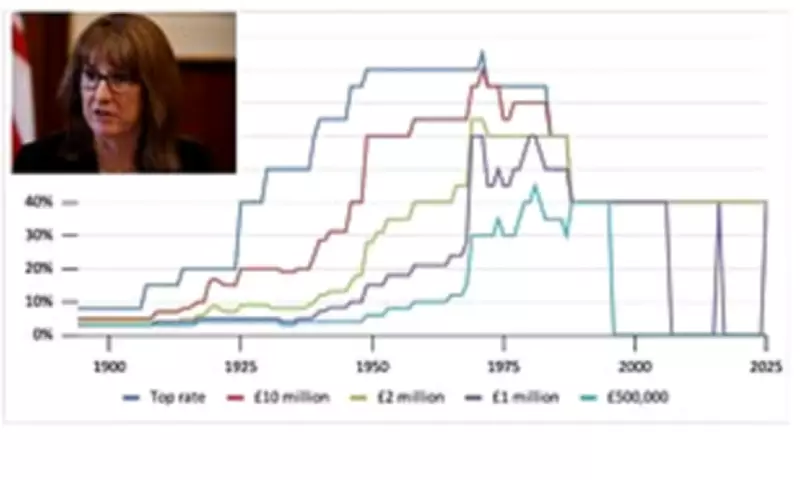
A major report from leading economists has demanded that Chancellor Rachel Reeves scrap Britain's inheritance tax system, branding it one of the most punishing in the Western world. The Institute of Economic Affairs (IEA) think tank argues the 40 percent levy on assets above £325,000 imposes heavy costs on families while deterring saving and investment.
Britain's Harsh International Standing
The IEA research reveals Britain maintains the fifth highest inheritance tax rate among Organisation for Economic Co-operation and Development (OECD) members, undermining the country's international competitiveness. Researchers explain that while Britain's 40 percent headline rate sits moderately above the OECD median, this comparison flatters the UK's true position.
"Most countries treat transfers from parents to their own children as a special category, taxing them at lower rates or not at all," the report states. "Britain makes no such distinction."

Disproportionate Complexity
The London-based experts highlight that inheritance tax represents "among the most disproportionately complex" elements of the British tax system when compared to revenue generated. They cite the Tolley's Handbook for inheritance tax running to 1,000 pages, compared to 2,500 pages for income tax that raises 37 times more revenue.
Former Conservative minister Lord Frost, the IEA's director general, stated: "A nation serious about growth and about giving families the freedom to build something lasting would not levy a 40 percent charge on wealth that has already been taxed."
International Comparisons Reveal Stark Contrast
The IEA comparison demonstrates that almost half of OECD members (18 out of 38) levy no tax whatsoever on transfers from parents to children, while a further 10 charge preferential rates. This places Britain in a small minority of nations applying full inheritance tax rates to family transfers.
"Nearly half of OECD countries do not tax what parents leave their children at all," Lord Frost emphasized. "Inheritance tax raises relatively little, costs a great deal to administer, and distorts the decisions of exactly the kind of wealth creators and entrepreneurs we are desperate to attract and retain."
Practical Reform Options
While researchers called for full abolition of the tax, they outlined several less expensive reforms if the Labour Government proves unwilling to take such drastic action:
- Raising the nil rate band significantly to £2 million or beyond to "remove the overwhelming majority of estates from liability altogether"
- Cutting the headline rate from 40 percent to 20 percent to "reduce the burden on all estates paying the tax"
- Simplifying gifting rules by reducing the exemption period from seven years to as little as two years
Tax expert Rory Meakin, who authored the report, concluded: "Inheritance tax is arbitrary, complex, distortionary and drives away the entrepreneurs Britain needs. A good tax system would not have an inheritance tax and, ultimately, ours should be abolished."
Government Response and Recent Developments
A Treasury spokesman responded: "Fewer than 10 percent of estates are forecast to pay inheritance tax over the next five years. Individuals will still be able to pass on up to £500,000 tax-free each and up to £1 million in some situations."
The report follows recent government adjustments to inheritance tax relief for farmers, with thresholds raised from £1 million to £2.5 million last December following months of protest. Original Treasury plans from Labour's 2024 Budget had triggered tractor protests outside Parliament and criticism from Labour MPs in rural constituencies.
Mr Meakin added: "Even a hesitant government can reform the system now. Raising the threshold, cutting the rate, simplifying the gifting rules: any of these would be a meaningful step in the right direction."