Federal Reserve Maintains Interest Rates Amid Middle East Conflict Concerns
The Federal Reserve has opted to keep short-term interest rates steady at approximately 3.6% during its latest policy meeting, marking the second consecutive meeting without change. This decision comes as central bank officials grapple with the economic implications of the ongoing conflict in Iran, which they anticipate will exacerbate inflation pressures this year while having minimal impact on overall economic growth.
Inflation Projections and Economic Outlook
Despite the geopolitical tensions, Fed policymakers maintain their forecast for a single interest rate reduction in 2026, consistent with projections made in December. They expect inflation to moderate to 2.2% by 2027 and finally reach the Fed's longstanding 2% target in 2028. The immediate effect of the Iran war is predicted to be a temporary spike in gas prices, which officials believe will not derail the broader economic trajectory.
In their updated economic projections, Fed officials now anticipate inflation to reach 2.7% by year's end, up from December's forecast but slightly below January's 2.8% reading. Core inflation, which excludes volatile food and energy categories, is also projected to finish 2026 at 2.7%, increased from a previous estimate of 2.5%. The central bank views core prices as a more reliable indicator of long-term inflation trends.

Powell's Commitment Amid DOJ Investigation
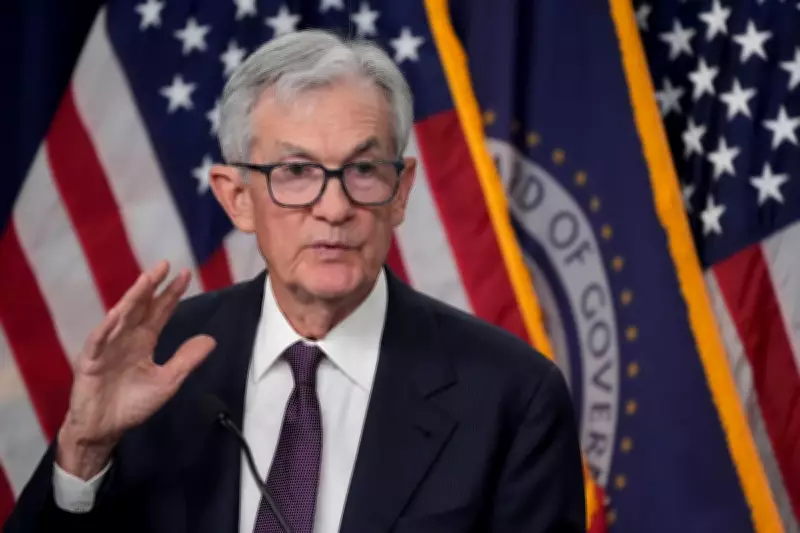
Speaking at a press conference following the rate announcement, Fed Chair Jerome Powell addressed questions about an ongoing Justice Department investigation into building renovations at the Federal Reserve. Powell firmly stated he has "no intention" of departing the central bank until the probe concludes. This investigation recently suffered a setback when a judge dismissed two subpoenas issued by the Justice Department, though U.S. Attorney Jeannine Pirro has indicated plans to appeal the ruling.
Powell's term as Fed chair is scheduled to conclude on May 15, with former top Fed official Kevin Warsh nominated by President Donald Trump as his potential successor. However, Warsh's confirmation has encountered delays in the Senate, where key Republican senators have expressed opposition to the Justice Department's investigation. Powell acknowledged he could potentially remain on the Fed board to complete his term as a governor but has not yet made a definitive decision.
Dissenting Voice and Market Reaction
Not all Fed officials agreed with the decision to maintain current rates. Governor Stephen Miran, appointed by President Trump last September, dissented in favor of a quarter-point rate cut. Meanwhile, financial markets reacted negatively to the Fed's announcement, with the S&P 500 declining 1% and the Dow Jones Industrial Average dropping 628 points, representing a 1.3% decrease.
Energy Prices and Inflation Dynamics
The conflict in Iran has already driven significant increases in energy costs, with gas prices surging to a national average of $3.84 per gallon according to AAA data, representing a 92-cent increase from just one month prior. This spike is expected to substantially elevate inflation readings for March, though core inflation measures may show less dramatic increases since they exclude volatile energy components.
Historically, the Federal Reserve has tended to overlook temporary supply shocks like Middle East oil disruptions when setting monetary policy, recognizing that their inflationary effects typically diminish once the disruption resolves. This approach allows the central bank to avoid unnecessary rate hikes that could hinder economic activity. However, recent history has made officials more cautious after initially dismissing post-pandemic inflation as "transitory" only to see it surge to four-decade highs in 2022.
Broader Economic Context
The Fed's decision occurs against a complex economic backdrop. Recent data shows inflation excluding food and energy reached 3.1% year-over-year in January, essentially unchanged from two years earlier, indicating persistent price pressures. Simultaneously, employment figures have shown weakness, with businesses shedding 92,000 jobs in February following a more encouraging gain of 130,000 positions in January. The unemployment rate has edged up slightly to 4.4% from 4.3%.

Despite these mixed signals, Fed officials project the economy will grow 2.4% this year, a modest improvement from December's 2.3% forecast. They also anticipate the unemployment rate will remain at 4.4% through year's end, reflecting a more optimistic outlook than many external economists have projected.
This week's meeting represents Powell's second-to-last as chair unless Warsh's confirmation remains unresolved by May 15, in which case Powell could continue leading the Fed's rate-setting committee until a permanent replacement is appointed. The central bank finds itself navigating multiple challenges simultaneously—geopolitical uncertainty, persistent inflation, employment volatility, and internal scrutiny—as it attempts to steer the U.S. economy toward stable growth and price stability.