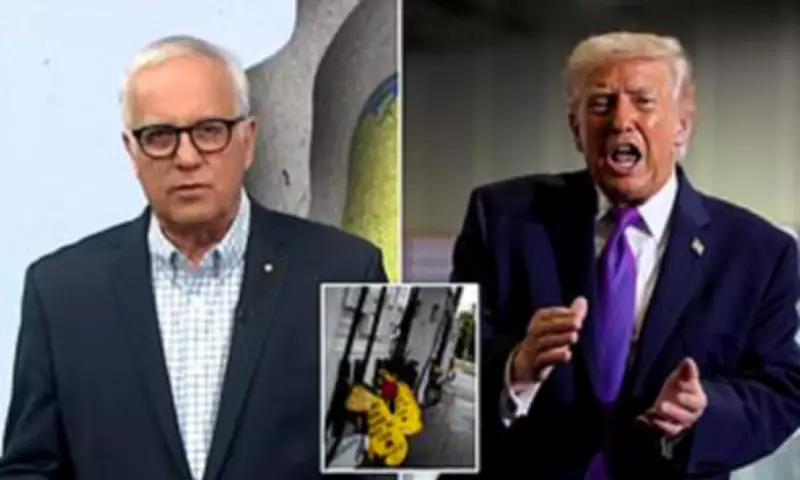
Alan Kohler Issues Dire Warning on Interest Rates and Recession Risk
ABC money expert Alan Kohler has issued a stark warning that interest rates are likely to rise tomorrow, placing Australia at significant risk of sliding into a recession. Kohler highlighted that the Reserve Bank of Australia is confronting a situation with no historical precedent: the complete closure of the critical Strait of Hormuz shipping route.
Unprecedented Crisis in Global Shipping
Kohler explained that with the price of Brent crude oil soaring above US$100 a barrel and the entrance to the Persian Gulf shut for the first time in history, economists are nearly unanimous in predicting another rate hike. "So economists, almost as one, are predicting another rate hike tomorrow, and the futures market puts the odds of it at 72 per cent, not a betting certainty, but let's face it, it's going to happen," he stated.
The oil price has surged about 50 per cent so far, but the closure of the Strait of Hormuz affects far more than just oil. "A large proportion of the world's LNG, urea, chemical feedstocks and sulphur are also locked in," Kohler noted, emphasising the broad economic impact.

Deepening Affordability Crisis in Australia
Kohler warned that a sustained surge in fuel prices would deepen Australia's affordability crisis, already strained by post-pandemic inflation and soaring house prices. The situation could worsen if the RBA follows up with a series of rate hikes that further squeeze borrowers. He pointed out that most economists anticipate at least two more hikes, one tomorrow and another in May, with the futures market pricing the cash rate at 4.55 per cent by November, indicating an 80 per cent chance of a third hike.
The Reserve Bank’s official cash rate currently sits at 3.85 per cent, but economists warn it could climb to 4.35 per cent if the central bank delivers hikes in March and May. Each 0.25 per cent increase adds roughly $90 a month to a typical $600,000 mortgage with 25 years remaining. Combined with February's rise, repayments could be around $270 a month higher than in December, as banks typically charge higher rates than the RBA's cash rate.
Global Alarm and Supply Disruption
International alarm has intensified after the International Energy Agency warned that the Middle East conflict has created the largest supply disruption in global oil market history. Iranian vessels have attacked oil tankers in the Strait of Hormuz, forcing a shutdown of this vital route. Kohler expressed uncertainty about when the strait might reopen, stating, "The war will only stop and the Strait reopen if either the US and Israel manage to kill the entire Iranian leadership, which seems unlikely, or else Trump declares victory and walks away, which is more likely since he has already done it a few times."
Expert Insights on Economic Vulnerability
AMP chief economist Shane Oliver echoed concerns, warning that Australia would be highly vulnerable if the oil supply disruption continues beyond a month or two. "Iran wants to see Trump pay a big economic and political cost and the best way to do this is to keep the Strait of Hormuz effectively closed to shipping," he said. Oliver highlighted the 1979 oil crisis, which saw a threefold rise in prices from a 5 per cent supply hit, and noted a 45 per cent probability of extended disruption potentially pushing oil prices to $US200 or beyond.
Kohler concluded that the RBA's tough talk on inflation may not suffice, and a recession might be inevitable. "At some point, so the thinking goes, there's a recession you have to have," he remarked, underscoring the precarious balance Australia faces in avoiding a hard landing amid this unprecedented crisis.