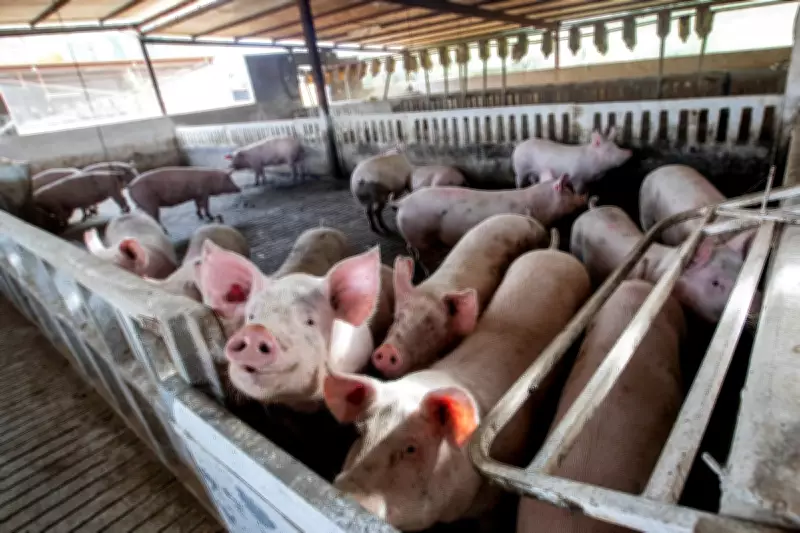
The closure of the world-famous Las Vegas all-you-can-eat buffets is not just affecting human visitors but also the pigs that fed on the food scraps. Sarah Stallard of Las Vegas Livestock told Fox 5 Vegas that the farm now has about 5,000 hogs that were entirely fed with food waste from the buffets, and the farm is now looking for alternative sources to feed its animals.
This comes as Sin City continues to move away from all-you-can-eat dining rooms, once a staple of the city. Earlier this month, MGM announced that its buffet at the Grand Hotel will close permanently on May 31. This follows a trend of major resorts replacing traditional buffets with food halls and specialty restaurants.
For years, Las Vegas buffets provided a steady source of food waste for livestock farms. However, their decline has led some farmers to shift their attention to grocery stores and warehouses instead. This shift was exacerbated by the Covid-19 pandemic, which prompted Vegas proprietors to adopt the food hall model.

Patrick Miller, CEO of Rio Hotel & Casino, told Fox News Digital last September: "During the pandemic, interest in buffets continued to decrease while the costs of operating one increased. With [our food hall], we've managed to offer guests the same selection of flavors with a higher emphasis on quality [food] at an affordable price point that is made fresh to order, rather than sitting under a heat lamp."
Such a change had a direct knock-on effect on livestock farmers. Stallard said: "Before the pandemic, we were mostly servicing casino hotels, sort of those one-stop properties. After the pandemic, it kind of caused a shift in where we were going to get that from."
Switching from Vegas buffets to grocery stores also required equipment upgrades to process different types of waste and remove inorganic material, she added. However, it has resulted in higher, more consistent waste volumes. Stallard told Fox 5 Vegas: "Pre-pandemic, we were probably processing 30 tons a day, and now we process close to 55 tons a day. Thankfully, the shift that we made implementing that waste sorting technology has given us access to that grocery store market, and that is very consistent."