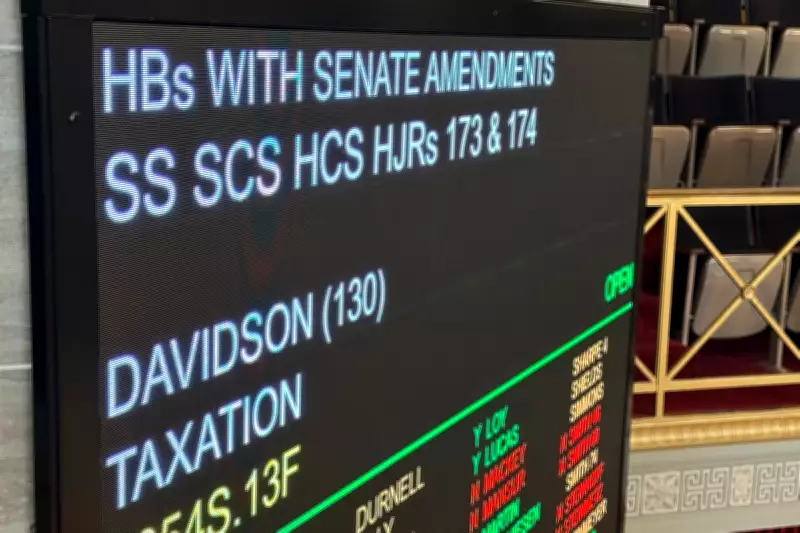
Missouri voters will face a historic decision later this year: whether to eliminate the state's individual income tax and potentially expand sales taxes. This marks the first time since the modern income tax began over a century ago that a U.S. state legislature has asked voters to abolish the tax.
Background on Income Tax
Congress gained the power to tax income with the ratification of the 16th Amendment in 1913. Many states, including Missouri in 1917, adopted their own income taxes. However, some states like Florida, Nevada, South Dakota, Texas, and Wyoming never adopted an individual income tax, relying instead on sales taxes or other sources. Alaska is the only state to have imposed and later repealed a general individual income tax, doing so in 1980 when oil revenues were high.
National Trend of Tax Cuts
Missouri's proposal caps a five-year tax-cutting spree in states that benefited from strong post-pandemic revenues. Almost every state made permanent or temporary reductions to some type of tax, and more than half of income-tax states lowered their top rate. These cuts were rarely offset by increasing other taxes, but Missouri's measure acknowledges that eliminating the income tax requires alternative revenue sources.

Other States Phasing Out Income Tax
Kentucky, Mississippi, Oklahoma, and South Carolina have enacted laws to gradually reduce or phase out their income taxes, often with revenue-based triggers. For example, Kentucky expanded sales tax to some services, while Mississippi and Oklahoma set benchmarks for further cuts.
Missouri's Proposal Details
The proposed constitutional amendment directs the General Assembly to eliminate the individual income tax through gradual reductions based on revenue growth. It also grants lawmakers authority to impose sales tax on “any goods and services,” bypassing a 2016 constitutional ban on expanding the sales tax base. The legislature has five years to decide which additional services to tax without another public vote. The ballot wording asks voters to “modify” the sales tax, avoiding terms like “increase” or “expand.”
Support and Opposition
Republican Governor Mike Kehoe supports the repeal, arguing it will boost the economy and attract businesses. Businessman Will Spartin testified that he located his beverage company in Florida due to its lack of income tax and would consider returning to Missouri if the tax is eliminated. However, retired teacher Sharon Wells worries that a broader sales tax could increase her overall tax burden, as services like lawn mowing, haircuts, and car maintenance are currently untaxed but could become taxable.
Data on Tax Impact
The nonprofit Institute on Taxation and Economic Policy estimates that a family earning $49,000 to $78,000 annually would pay an average of $535 more in taxes if the income tax is repealed and replaced with higher sales taxes. Lower-income earners would see even larger increases. Research Director Carl Davis said, “Pretty clearly, this is going to be a tax increase for most people.”
Other data from the Tax Foundation shows that states without income taxes like Texas, Florida, and Tennessee attracted more federal income tax filers in 2023, while high-tax states like California and New York lost residents. If Missouri's referendum passes, it could encourage other states to accelerate their own income tax reductions.