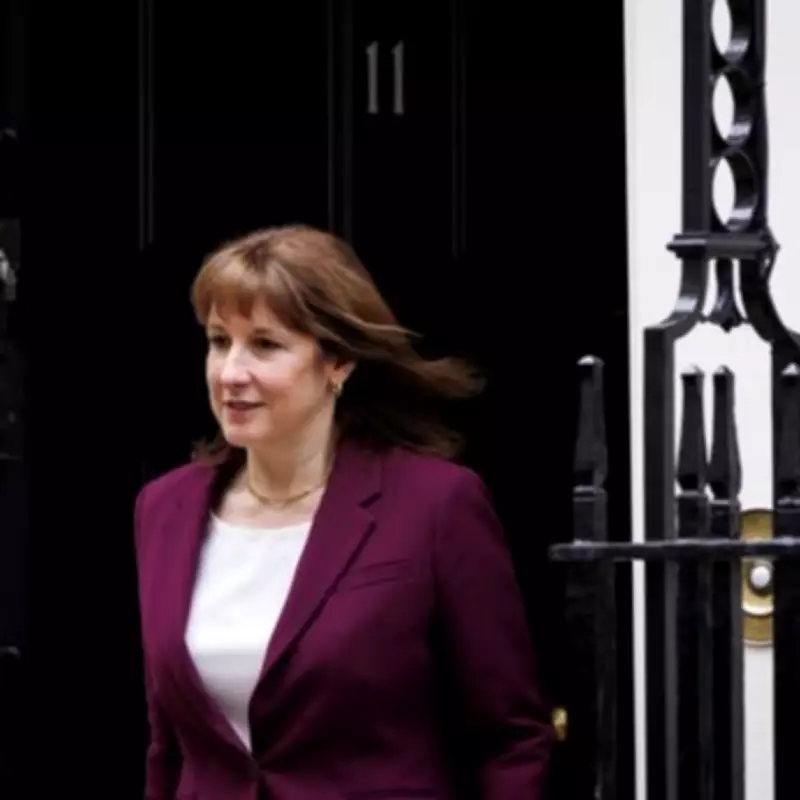
Chancellor Insists UK Economy Resilient Amid Middle East Turmoil
Chancellor Rachel Reeves has declared that Britain's economy possesses sufficient strength to "weather" the repercussions of the ongoing Iran conflict, even as experts caution about severe impacts on household finances. The Chancellor's Spring Statement, delivered on Tuesday, was significantly overshadowed by the escalating war in the Middle East, with analysts warning that prolonged hostilities could disrupt her carefully laid economic plans.
Stability as a Foundation for Resilience
Speaking exclusively to the Mirror during a visit to a building society in Stevenage, Ms Reeves emphasized that her efforts to stabilize public finances after what she described as "the mess left by the Tories" have positioned the UK more robustly to confront global turbulence. She pointed to falling borrowing costs as evidence of this improved economic footing.
"What is unfolding in the Middle East shows how important it is to have returned stability to the economy," the Chancellor stated. "I'm confident that we can weather whatever is thrown at us. We are a strong economy. We have security, stability, built back into our economy."

Reeves reiterated that her primary objective remains making working people better off through economic growth, regardless of external challenges. "But of course, as ever since I became Chancellor, my number one priority is to make working people better off by growing our economy. Whatever is thrown at us, that will continue to be my objective," she affirmed.
Energy Sector Talks and Economic Warnings
The Chancellor held urgent discussions in Downing Street with major oil and gas companies including BP, TotalEnergies, and Serica, focusing on soaring global energy prices. A government source revealed that Reeves pledged to collaborate with these firms to navigate the uncertainty triggered by the Iran crisis and work toward ending the windfall tax on North Sea oil and gas production.
These high-level talks come amid stark warnings from economic think tanks about potential financial shocks for British families. The Resolution Foundation has projected that households could face an annual bill increase of £500 if the Middle East conflict persists. Simultaneously, the National Institute of Economic and Social Research cautioned that sustained energy cost rises over a year could drive interest rates above 4%.
Defending Economic Record and Foreign Policy Stance
When questioned about her ability to shield citizens from potential bill hikes, Reeves urged voters to "judge me on record," highlighting previous actions to reduce energy bills through cost-of-living measures such as freezing rail fares and prescription charges.
"Even with the difficult public finances I inherited, we managed to take money off people's bills. We are getting those interest rates down. So judge me on my record," she asserted. "I am determined to tackle the cost of living challenges that families have been facing these last few years, and that remains the case of whatever is thrown at us."
The Chancellor also addressed criticism from former US President Donald Trump, who disparaged Prime Minister Keir Starmer for refusing to join initial strikes against Iran, claiming the British leader was "no Winston Churchill." Reeves defended the government's position, stating: "It's really important that we do the right thing, and we didn't judge it was the right thing to take offensive action in the Middle East."
She elaborated on the UK's supportive role, explaining: "But with our assets, with our personnel, with our military, with our citizens affected now in the Middle East because of the Iranian response, it is important that we've made available our air bases, both in Diego Garcia, but also in the UK, for the US to launch that defensive action against Iranian targets. That is the right balance."
Reeves emphasized the importance of de-escalation, adding: "We are supporting the US in that defensive action, but I think it's really, really important that we de-escalate what is happening in the Middle East, because that is in our national interest. We will always act as a government in our national interest."

Housing Market and Youth Employment Focus
During her Stevenage visit, the Chancellor also met with first-time buyers at Nationwide Building Society, discussing her commitment to helping young people achieve homeownership. She contrasted the current economic stability with previous challenges, noting that reduced inflation and six interest rate cuts have improved prospects for aspiring homeowners.
"Over the last few years, when houses weren't being built, when interest rates went through the roof, when inflation got out of control, for lots of young people, it wasn't possible to get on the housing ladder," Reeves observed. "But the stability that we've returned to the economy, inflation coming down, interest rates having been cut six times already means that young people now can think again about getting on the housing ladder."
The Chancellor acknowledged the importance of supporting renters as well, highlighting the recently implemented Renters Rights Act that provides enhanced protections for private tenants.
Looking ahead, Reeves is expected to unveil reforms targeting youth employment challenges in the coming weeks, as the government confronts concerning statistics regarding young people not in education, employment, or training. Recent data shows 957,000 individuals aged 16 to 24 fell into this category during October to December 2025, representing 12.8% of that age group.
Plans to equalize minimum wage rates for younger and older workers appear likely to be delayed amid concerns about unemployment among 18 to 24-year-olds, which reached a five-year high in late 2025. The Chancellor acknowledged the seriousness of this issue, stating: "This is a real challenge. And I guess the difference between the previous government and this government is that both of us faced a challenge. We're trying to do something about it."