US Official Demands Global Gratitude for Trump Amid Economic Turmoil
In a striking public address, a prominent US military figure has called upon the world, particularly British citizens, to express gratitude to former President Donald Trump. This demand comes as escalating violence in the Middle East threatens to unleash a severe inflationary shock, dubbed 'Trumpflation,' across global economies.
Escalating Conflict and Economic Fallout
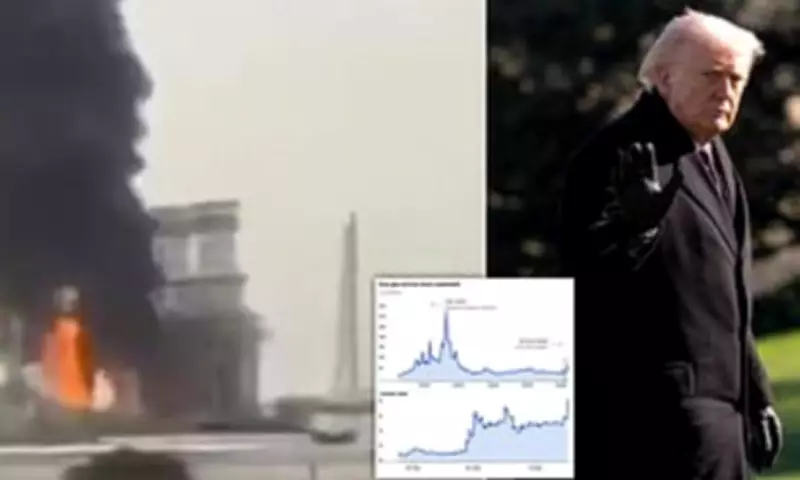
The crisis intensified dramatically when Iran launched missile strikes on a major gas field in Qatar, retaliating against an Israeli attack. This aggression has sent oil and gas prices soaring, with European gas prices surging over 30 percent. Concurrently, Kuwaiti oil refineries were set ablaze following drone attacks, exacerbating supply fears.
Iran has effectively blockaded the Strait of Hormuz, a critical maritime passage for approximately one-fifth of global oil supplies. There is no clear timeline for reopening this vital channel, heightening anxieties about prolonged energy disruptions.

Bank of England's Grim Forecast
The Monetary Policy Committee of the Bank of England has issued a sobering update, abandoning earlier optimism about inflation returning to the 2 percent target. Instead, policymakers now project Consumer Price Index inflation could climb to 3.5 percent later this year. They have signaled readiness to implement further interest rate increases if necessary to combat rising prices.
Just weeks ago, markets anticipated potential rate cuts; however, traders now expect a quarter-point hike in April, with possibly two additional increases by year's end. The Bank's decision to maintain rates at 3.75 percent reflects deep concern over the inflationary impact of Middle East instability.
Political Tensions and International Response
Pete Hegseth, a former Fox News host and current US official, delivered a forceful rebuke to European allies, labeling them 'ungrateful' for their perceived lack of involvement in the conflict. He asserted that the international community should uniformly thank President Trump for his leadership during this crisis.
In response, a coalition including Britain, France, Germany, Italy, the Netherlands, and Japan issued a joint statement condemning Iran's actions. They expressed readiness to support efforts ensuring safe passage through the Strait of Hormuz, though such measures likely depend on a cessation of hostilities.
Economic Consequences for the UK
The UK faces immediate economic strain, with petrol prices already rising and the energy price cap expected to increase significantly when current protections expire in July. Higher energy costs could add approximately 0.75 percentage points to inflation in the third quarter.
Unemployment remains stubbornly high at 5.2 percent, a five-year peak, while youth unemployment has reached 14.5 percent, levels not seen since early 2015. An economic slowdown is evident, with cooling wage growth indicating a weakening labor market.
Market Reactions and Mortgage Impacts
Financial markets have reacted sharply, with the probability of a Bank of England rate hike to 4 percent by June now estimated at 60 percent. Mortgage lenders have withdrawn nearly all sub-4 percent deals, pushing the average two-year fixed mortgage rate to 5.3 percent, the highest since February of last year.
For a typical £250,000 loan over 25 years, annual costs have increased by £788 in just two weeks. Analysts warn that the combination of higher borrowing costs and inflation could push many households to financial breaking point.
Global Central Bank Dilemmas
The US Federal Reserve has maintained its interest rate between 3.5 percent and 3.75 percent, despite political pressure. Chairman Jerome Powell acknowledged uncertainty regarding the conflict's economic effects, emphasizing that future policy will depend on inflation trends.
Economic advisers highlight that central banks worldwide face a delicate balancing act: raising rates to curb inflation risks stifling economic growth, yet inaction could allow prices to spiral uncontrollably.

Long-Term Outlook and Analyst Perspectives
Experts caution that even a short-lived conflict may keep energy prices elevated for an extended period. If hostilities escalate further, inflationary pressures could intensify, potentially leading to years of economic fallout.
Market analysts describe the situation as a dramatic shift, with previously unthinkable rate hikes now back on the table. The term 'shockflation' has emerged to capture the toxic combination of geopolitical shock and rising prices affecting global economies.
As the crisis unfolds, policymakers remain vigilant, prepared to adjust monetary strategies in response to evolving threats to economic stability.