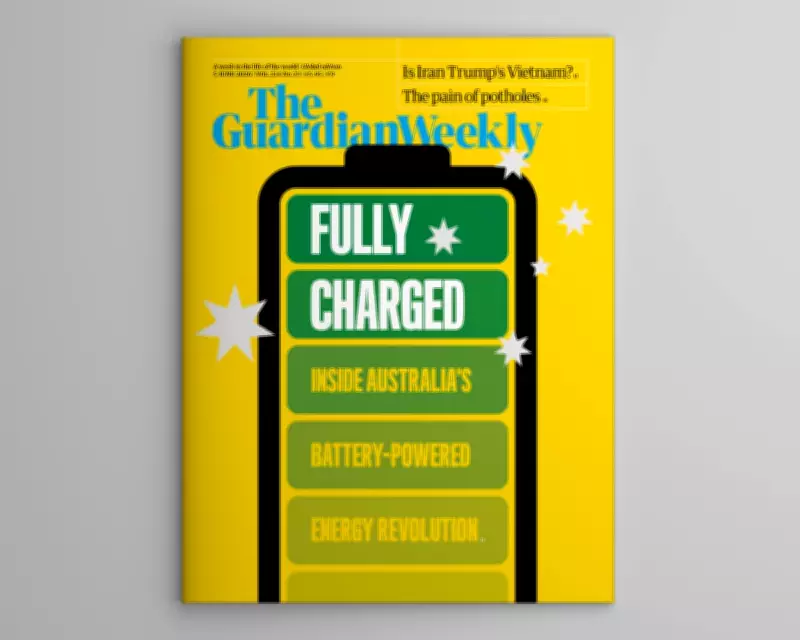
Australia is undergoing a significant transformation in its energy landscape, driven by a battery-powered revolution. The June 5 edition of The Guardian Weekly delves into this shift, highlighting how batteries are becoming central to the nation's renewable energy strategy and electric vehicle adoption.
The Rise of Battery Storage
Australia's abundant solar and wind resources have long been harnessed for electricity generation, but the intermittent nature of these sources requires efficient storage solutions. Battery systems, from large-scale grid installations to household units, are now providing the necessary stability. The article notes that the country is home to some of the world's largest battery farms, such as the Hornsdale Power Reserve in South Australia, which has proven instrumental in preventing blackouts and lowering energy costs.
Electric Vehicles Gaining Momentum
Parallel to stationary storage, electric vehicles (EVs) are gaining traction. Despite initial slow uptake due to range anxiety and limited charging infrastructure, recent government incentives and private investments are accelerating adoption. The piece points out that EV sales have surged, with batteries powering not just cars but also buses and trucks, contributing to reduced emissions in transport.

Challenges and Opportunities
However, the revolution is not without challenges. The article discusses the need for robust recycling systems to manage battery waste and the environmental impact of mining lithium and other minerals. It also highlights the potential for Australia to become a leader in battery manufacturing, leveraging its mineral resources and expertise in energy innovation.
Overall, The Guardian Weekly's feature underscores how batteries are reshaping Australia's energy future, offering a glimpse into a cleaner, more resilient power system.