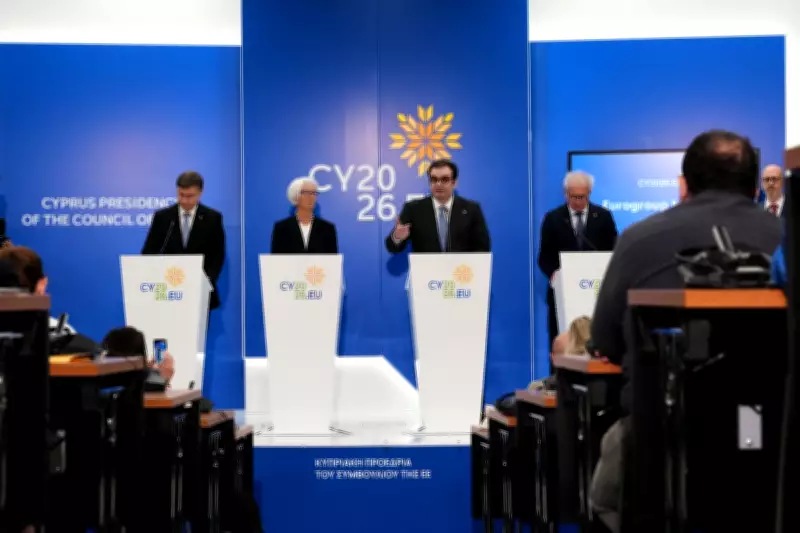
European Union officials have stated that oil and gas prices in Europe are expected to remain elevated until at least the end of 2027, surpassing pre-conflict levels. The warning came during a press conference following a meeting of eurozone finance ministers.
Inflation Forecasts Revised Upward
EU Economy Commissioner Valdis Dombrovskis revealed that higher energy costs are the primary driver behind an inflation forecast of 3.1% for this year and 2.4% for 2027. These figures represent a significant increase from the earlier 2026 projection of 1.9%. Dombrovskis noted that energy inflation would gradually impact other sectors of the economy.
ECB President on Price Stability
European Central Bank President Christine Lagarde emphasized that even if the Middle East conflict were to end immediately, 'lagging effects' would keep prices elevated. She stated, 'Price levels will be higher at the end of this crisis.' Lagarde confirmed the ECB's commitment to taking necessary measures to maintain 2% price stability, closely monitoring the aftermath of the energy price shock. She also highlighted the EU's oil reserves as a buffer against potential demand spikes.

Impact on Economic Growth
Eurogroup President Kyriakos Pierrakakis linked the crisis to free navigation through the Strait of Hormuz, through which roughly one-fifth of the world's oil and gas passes. He affirmed that eurozone economic growth would reach 0.9% this year and 1.2% in 2027, lower than previous forecasts but 'clearly far from a recession scenario.'
Monetary Policy Outlook
Despite higher inflation projections fueling expectations of interest rate hikes, Lagarde offered no specific guidance on the ECB's next moves. She reiterated a data-dependent, meeting-by-meeting approach to determine the appropriate monetary policy stance to achieve the 2% medium-term target.