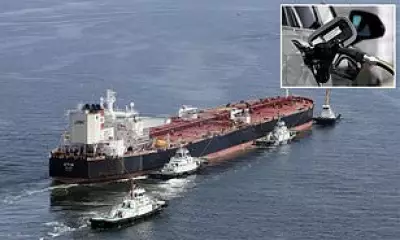
UK households should not expect an immediate surge in their energy bills following the escalating crisis in the Middle East, as the current price cap for April to June is already firmly set. However, experts are sounding alarms that sustained volatility and prolonged uncertainty over energy supplies, particularly through the critical Strait of Hormuz, could lead to significant price hikes for the coming winter and complicate summer refilling efforts.
Roots of the Crisis and Global Market Impact
The tensions stem from retaliatory attacks and the death of Iran's supreme leader, Ayatollah Ali Khamenei, which has prompted Iran to issue warnings for vessels to avoid the Strait of Hormuz. This vital passage accounts for approximately 20 per cent of global oil and gas shipments, making it a linchpin for international energy flows.
The crisis has already sent shockwaves through global markets. Britain's benchmark gas price, known as the National Balancing Point (NBP), has leaped by a staggering 54 per cent. Meanwhile, Brent crude oil has risen by about 9 per cent, reflecting heightened anxieties over supply disruptions.

LNG Production Halts and Supply Chain Concerns
Adding to the pressure, QatarEnergy has halted its liquefied natural gas (LNG) production in response to the instability. Although the UK is now less reliant on Qatari LNG compared to the period following the Ukraine crisis, analysts caution that increased global competition for alternative LNG sources could still drive up prices.
Some experts are warning of a potential 'repeat of 2022' if European gas prices reach 100 euros per megawatt hour, a scenario that could mirror previous energy shocks and strain household budgets.
Looking Ahead: Winter Price Risks and Refilling Challenges
The fixed price cap offers temporary relief for consumers, but the underlying market dynamics pose serious risks. Prolonged uncertainty could disrupt summer refilling operations for gas storage, setting the stage for higher costs when demand peaks in winter.
In summary, while immediate impacts on UK energy bills are mitigated by regulatory measures, the Iran conflict underscores the fragility of global energy supplies. Households and policymakers must brace for potential volatility ahead, with winter looming as a critical period for price stability.