Iranian Media Taunts Australia Over Widespread Fuel Shortages
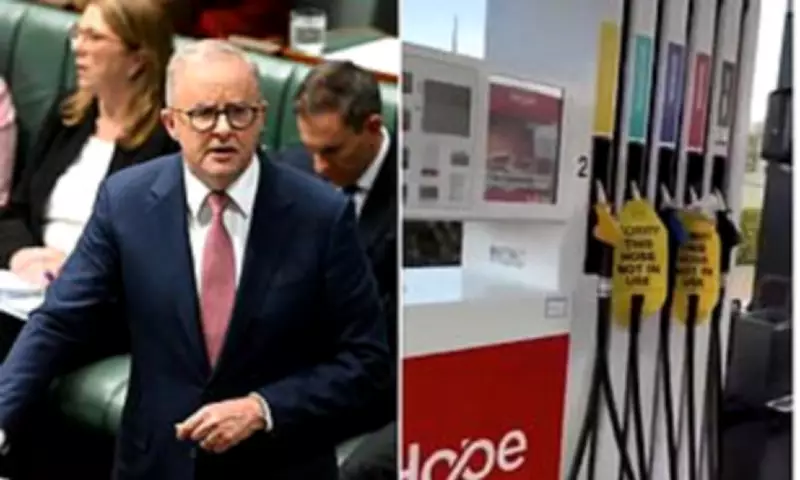
Iranian state media has openly mocked Australia's escalating fuel crisis, with hundreds of service stations across the country reporting depleted petrol and diesel reserves. The Tasnim News Agency, which maintains close ties to Iran's Islamic Revolutionary Guard Corps, circulated footage showing a Gold Coast petrol station completely out of fuel alongside a sneering caption that read: 'Gasoline and diesel are running out in Australia! Hundreds of gas stations in Australia have completely depleted their gasoline and diesel reserves.'
National Impact of Fuel Disruptions
This international jab comes as fuel shortages now affect more than 500 service stations nationwide, with hundreds of locations reporting at least one type of fuel completely unavailable. The situation has emerged amid Iran's continued blockade of the Strait of Hormuz, a critical maritime passage through which approximately one-fifth of the world's oil supply normally flows.
New South Wales has experienced the most severe impact, with at least 289 service stations affected, including 164 that have completely run out of diesel. Victoria faces significant pressure with 162 service stations reporting shortages of one or more fuel types. In Queensland, diesel shortages have been confirmed at 55 locations, while 35 sites have no regular unleaded petrol available.

South Australia has 46 affected service stations, while Western Australia and Tasmania have each recorded shortages at seven locations. In Tasmania specifically, six stations are without unleaded petrol and one has no diesel. No shortages had been reported in the Australian Capital Territory as of yesterday afternoon.
Despite these widespread outages, the affected sites represent only about eight percent of all service stations nationwide, indicating that while significant, the crisis remains contained to specific regions and locations.
Government Response and Panic Buying Concerns
Energy Minister Chris Bowen has repeatedly insisted that the shortages stem primarily from a sudden spike in demand caused by panic buying rather than a fundamental collapse in supply. 'We have as much fuel in Australia today as we had on the day Iran was attacked,' Bowen stated. 'We have had real issues, particularly in regional Australia, getting fuel to where demand has been very high.'
The minister elaborated on the demand surge: 'We've seen very big spikes in demand. Some of that has been panic buying. Some people are trying to get ahead of expected price rises. Some farmers are stocking up, which is understandable. But the fact is, if demand suddenly jumps dramatically, whether it's for petrol, diesel or even toilet paper, supply chains come under pressure.'
Bowen confirmed that Australia has received all expected fuel shipments so far, although six deliveries scheduled for April were cancelled, with some replaced by alternative sources as tensions continue in the Strait of Hormuz. He noted that 74 of the 80 fuel shipments expected across April and May remain on track to arrive.
Contingency Planning and Emergency Measures
If the conflict persists for several more weeks, Bowen confirmed that contingency plans are in place to manage supply risks, though rationing remains unlikely. 'We have also said there are international supply risks going forward, but we are pretty well placed to deal with those risks,' he explained. 'There is a range of actions available to government. Rationing would be an absolute worst-case planning measure. It's not on the agenda.'
The Energy Minister specifically ruled out implementing a controversial $40 fuel purchase cap outlined in a 2019 national emergency response plan for fuel shortages. 'To introduce something like that, you would have to declare a national fuel emergency, which has never been done,' Bowen clarified. 'I've already said I don't envisage doing that. So it's really not on the agenda.'

Other measures within the fuel shortage plan focus on reducing demand before considering rationing. These include urging motorists to car-pool, adopt 'eco-driving' habits such as smoother acceleration and reduced air-conditioning use, and encouraging businesses to prepare contingency plans for potential fuel supply reductions of up to fifty percent.
The emergency document also suggests that governments could allow higher fuel prices to naturally curb consumption, operating on the principle that reduced supply would naturally push prices upward and discourage unnecessary travel. Bowen emphasized: 'Public restraint, public information campaigns and requesting people to save fuel would be the first step, and that only after that would any further actions be considered. I made clear yesterday, I think we're a long way from that.'
Broader Economic Implications
Meanwhile, Treasurer Jim Chalmers has issued a stark warning that the financial impacts of the ongoing conflict in Iran could potentially surpass those of both the COVID-19 pandemic and the Global Financial Crisis. Addressing 100 business leaders on Tuesday night, Chalmers stated that the end of the war 'can't come soon enough' from an economic perspective.
The Treasurer made a startling admission that predictions made just last week about the local impact from the Middle East crisis may prove too conservative. With oil prices now exceeding previous forecasts, more industries are expected to face significant challenges. 'This is the fifth big global economic shock in less than two decades, it could be just as serious as the four before it,' Chalmers cautioned.
'We are well placed and well prepared, but we will be buffeted,' he continued. 'Two things matter most here: how long the war lasts but also how long it takes to get the global economy back on track after it ends. We've seen the positive market response from speculation about US negotiations with Iran and from an economic point of view it's clear the end of the war can't come soon enough.'
The combination of international tensions, regional fuel shortages, and broader economic uncertainty creates a complex challenge for Australian policymakers as they navigate both immediate supply issues and longer-term economic stability concerns.