Iranian Forces Seize Control of Critical Global Shipping Route
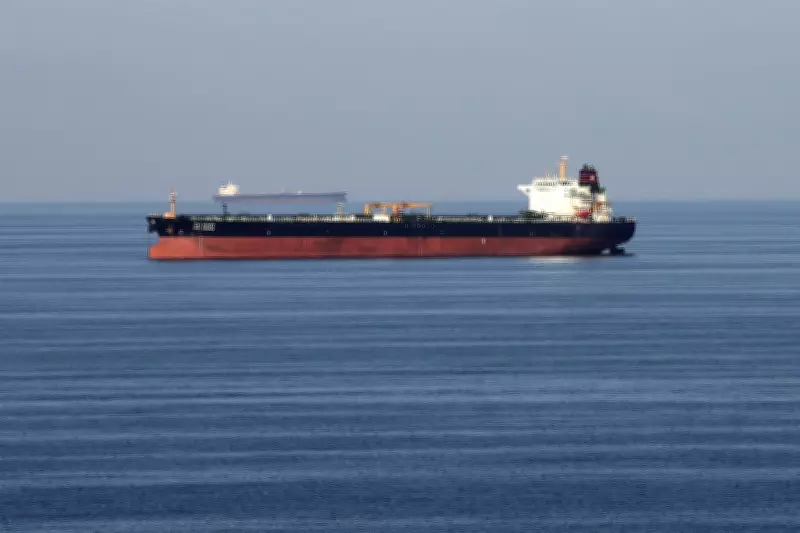
Iranian forces have dramatically escalated tensions in the Persian Gulf by claiming "complete control" over the strategically vital Strait of Hormuz. According to state media reports, the Islamic Revolutionary Guard Corps set fire to a US oil tanker after striking it in the northern Gulf, warning they would attack any vessels attempting to pass through this crucial maritime passage.
Maritime Traffic Collapses Amid Military Confrontation
The confrontation has caused maritime traffic through the strait to plummet by 80% according to Lloyd's List Intelligence, with some reports indicating a staggering 94% reduction since Saturday. Only three ships passed through on Sunday compared to the typical daily average of 138 vessels. Approximately 150 ships have dropped anchor near the strait, while hundreds more have halted operations near Gulf countries.
The UK Maritime Trade Operations reported a tanker anchored off Kuwait was hit by a "large explosion," with the vessel taking on water and oil leaking from a cargo tank. It remains unclear whether this incident relates to the reported attack on the US tanker.

Why This Narrow Waterway Matters Globally
The Strait of Hormuz represents one of the world's most critical maritime chokepoints, with approximately 20 million barrels of oil passing through daily - equivalent to one-fifth of global oil consumption. Additionally, up to one-third of the world's liquefied natural gas supply traverses this narrow passage.
"The scale of what is at stake cannot be overstated," warned Hakan Kaya, senior portfolio manager at investment management firm Neuberger Berman. "A full, or near full, closure lasting a month or more would push crude oil prices well into triple digits."
Geographic and Strategic Importance
The strait runs between the Persian Gulf to the north and the Gulf of Oman to the south, measuring just 21 miles across at its narrowest point. Despite lying in Iranian territorial waters, it has traditionally been treated as an international waterway open to all shipping. The passage consists of:
- Two shipping lanes for opposing traffic, each two miles wide
- A two-mile-wide separation lane between them
- Approximately 100 miles in total length
This geographic bottleneck serves as the primary export route for oil and gas from major producers including Saudi Arabia, Kuwait, Iraq, Qatar, Bahrain, the United Arab Emirates, and Iran itself. Most volumes transiting the strait have no alternative regional exit routes according to the US Energy Information Administration.
Economic Consequences and Global Response
The current disruption follows Iran's closure of the waterway last month for military exercises - the first such closure since the 1980s. Maritime insurers have already withdrawn coverage, and at least four tankers have reportedly been damaged in the escalating conflict, with one Indian crew member confirmed dead.
Former US President Donald Trump announced on Truth Social that the US Navy would begin escorting tankers through the strait "as soon as possible," declaring "No matter what, the United States will ensure the FREE FLOW of ENERGY to the WORLD." He further ordered the US International Development Finance Corporation to provide political risk insurance for maritime trade through the Gulf.
The conflict has spilled beyond regional waters, with the US military reportedly torpedoing an Iranian warship in the Indian Ocean, approximately 40 nautical miles off Sri Lanka's coast, resulting in at least 80 fatalities with 100 more missing.
Asian Markets Face Severe Disruption
Asian economies stand to suffer most significantly from the shipping disruptions, as much of the oil passing through the strait is destined for China (Iran's only remaining oil customer), India, and Japan. Chinese foreign ministry officials stated they would take necessary measures to safeguard their energy security when questioned about potential supply impacts.

With crude oil trading around $80 per barrel before the escalation, experts predict prices could surge into triple digits if the situation continues. European natural gas prices might approach or exceed crisis levels last seen in 2022. The current standoff represents the most severe threat to this critical shipping route since the 1980s, with potential to trigger global economic repercussions far beyond the immediate region.