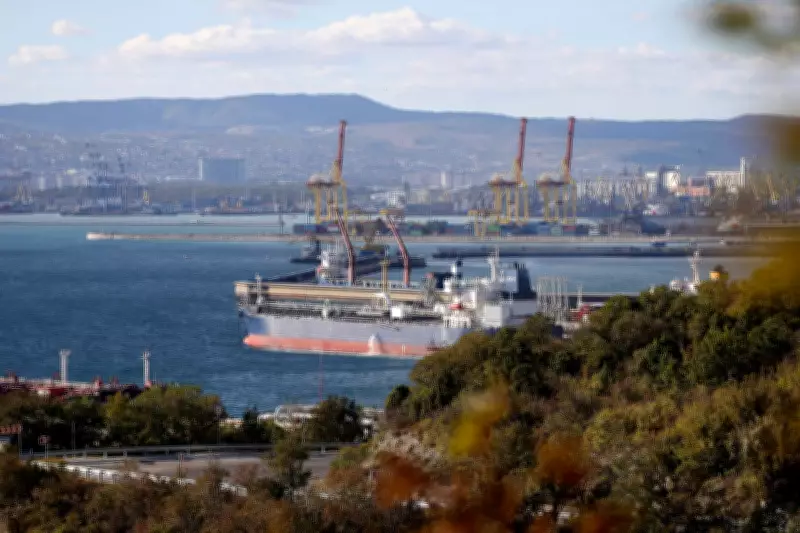
The ongoing conflict involving Iran has triggered a dramatic surge in global energy prices, creating an unexpected financial windfall for Russia that could significantly bolster its capacity to fund its protracted war in Ukraine. Disruptions to Middle Eastern oil and gas supplies, particularly through the critical Strait of Hormuz, have sent benchmark prices climbing, directly benefiting Moscow's energy-dependent federal budget.
Price Surge and Russian Budget Implications
Russian oil export prices have experienced a remarkable ascent, rising from under $40 per barrel in December to approximately $62 per barrel. This increase follows initial war fears and subsequent severe interruptions to tanker traffic through the Strait of Hormuz, a vital conduit handling around 20% of global oil consumption. While Russian crude continues to trade at a discount compared to international benchmark Brent crude—which has risen above $82 from $72.87 before the U.S.-Israel attack on Iran—it now exceeds the $59 per barrel benchmark assumed in Russia's 2026 budget plan.
This development is crucial for the Kremlin, as oil and gas tax revenues constitute up to 30% of the Russian federal budget. The situation is further compounded by Qatar halting its ship-borne liquefied natural gas (LNG) production, intensifying global competition for available cargoes, including those from Russia.

A Reversal of Fortunes for Moscow
This price surge represents a significant reversal for Russia, which had recently faced considerable fiscal strain. In January, state oil and gas revenue plummeted to a four-year low of 393 billion rubles ($5 billion), contributing to a record monthly budget shortfall of 1.7 trillion rubles ($21.8 billion). This decline was attributed to weaker global prices and substantial discounts enforced by U.S. and EU efforts to hinder Russia's "shadow fleet" of tankers, used to sell oil to China and India despite Western sanctions and price caps targeting companies like Lukoil and Rosneft.
With economic growth stagnating under the weight of massive military expenditures, President Vladimir Putin has implemented tax increases and increased domestic borrowing to stabilize state finances during the war's fifth year. The current energy price spike offers a much-needed financial reprieve.
Expert Analysis and Market Dynamics
Energy analysts emphasize the strategic advantage Russia gains from the current turmoil. "Russia is a big winner from the war-related energy turmoil," stated Simone Tagliapietra, an energy expert at the Bruegel think tank in Brussels. "Higher oil prices mean higher revenues for the government and therefore stronger capability to finance the war in Ukraine."
Amena Bakr, head of Middle East and OPEC+ insights at Kpler, noted that logistical disruptions to Middle Eastern supplies create strong incentives for both India and China to deepen their reliance on Russian energy exports.
In Europe, soaring natural gas futures prices are raising serious questions about EU plans to cease Russian LNG imports by 2027, reviving concerns reminiscent of the 2022 energy crisis following Moscow's pipeline gas cuts.
The Critical Factor: Duration of Disruption
Alexandra Prokopenko, an expert on the Russian economy at the Carnegie Russia Eurasia Center, highlighted that the duration of the Strait of Hormuz closure is pivotal. A quick resolution returning Brent prices to around $65 per barrel would have minimal lasting impact on Russia's budget. A medium-term scenario with oil stabilizing near $80 could provide "some fiscal relief," while a prolonged closure with infrastructure damage could push oil to $108 per barrel, delivering "the largest windfall to Russia" despite potentially accelerating inflation and pushing Europe toward recession.
Chris Weafer, CEO of Macro-Advisory Ltd, suggested that even several weeks of Gulf LNG interruptions could pressure Europe to reconsider plans to ban new Russian supply contracts after April 25, with countries like Hungary and Slovakia likely advocating for such a review.

Russian Readiness and European Dependencies
Russia has signaled its readiness to capitalize on the situation. Deputy Prime Minister Alexander Novak stated that Russian oil remains "in demand" and that Moscow is prepared to increase supplies to China and India. Meanwhile, Kirill Dmitriev, head of Russia's sovereign wealth fund, sarcastically questioned whether EU leaders have contingency plans for LNG shortages.
European dependence on Russian energy persists, with Belgium, France, the Netherlands, and Spain continuing to import approximately 2 billion cubic meters of Russian LNG monthly, and Hungary receiving an additional 2 billion cubic meters via the Turkstream pipeline. This totals an estimated 45 billion cubic meters for 2026, representing about 15% of the EU's projected gas demand. Replacing this volume would prove challenging, especially with ongoing disruptions in Qatar tightening the global LNG market.
As the Iran conflict continues to reshape global energy dynamics, Russia stands to gain substantial financial leverage, potentially extending its capacity to sustain military operations in Ukraine while testing European energy security and sanctions resolve.