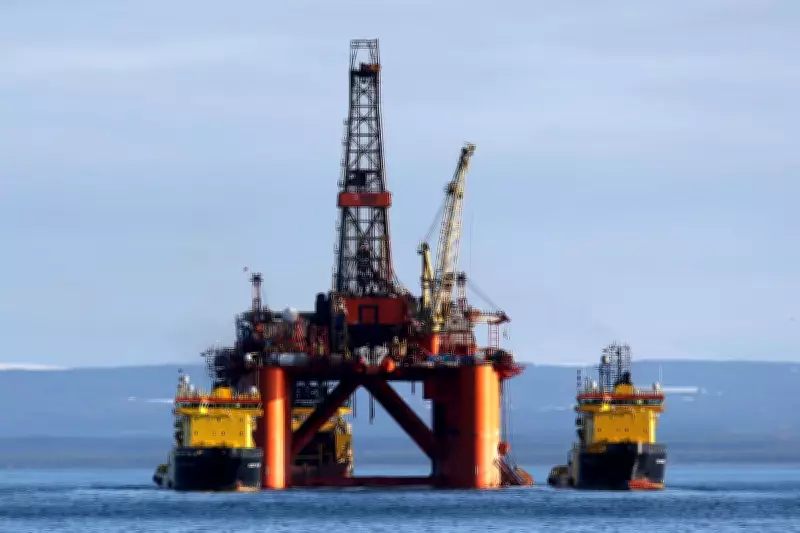
Industry Body Calls for Political Unity to Safeguard Scotland's Energy Sector
Scotland faces the potential loss of vital industry and secure domestic energy supplies if political parties fail to unite in support of the country's offshore energy sector, a leading trade organisation has warned. Offshore Energies UK (OEUK) issued this stark caution ahead of launching its Scottish election manifesto, emphasising the critical need for collaboration across party lines.
Urgent Plea for an 'All-Energy' Approach
The industry body is advocating strongly for the Scottish Government to adopt what it terms an "all-energy" strategy that encompasses both fossil fuels and renewable sources. OEUK warns against dividing the energy workforce into simplistic categories of "clean" and "dirty" industries, arguing that such divisions undermine sector stability and economic security.
Specifically, OEUK is urging political leaders to endorse continued oil and gas extraction in Scottish waters, including development of the Rosebank and Jackdaw oil fields. The organisation stresses that pragmatic policies must prevail over polarised political debates to prevent industrial decline.

Economic Significance and Employment Impact
According to OEUK's latest figures, the UK's offshore energy industry contributed more than £36 billion to the national economy in 2024 while supporting over 240,000 jobs across the country. Of these positions, more than half - precisely 128,400 jobs representing 53% of the total - are based in Scotland, contributing £24 billion to the Scottish economy.
"These figures represent livelihoods, families, and the lifeblood of towns and cities across our country," OEUK emphasised, noting that recent closures at facilities like the Grangemouth refinery and Mossmorran chemical site have already resulted in significant skilled job losses.
Energy Security Concerns and Policy Challenges
Despite Scotland's "world-class" energy resources, the UK imported more than 40% of its energy needs in 2024 - the highest dependency level in over a decade. OEUK attributes this troubling trend to "policy choices, not geology" that risk triggering industrial collapse if not addressed promptly.
David Whitehouse, chief executive of OEUK, stated: "Scotland's offshore energy sector is the backbone of our economy, our communities, and our future. With an integrated approach that builds on our strengths, Scotland's industrial future can be anchored for decades to come."
Whitehouse further argued that decarbonisation efforts must deliver re-industrialisation, requiring support for domestic oil and gas production alongside renewable energy development. He called for urgent reforms to transmission charges, commitment to carbon storage projects like Acorn, and approval of key oil field developments.
Government Response and Policy Positions
Energy Secretary Gillian Martin responded by affirming the Scottish Government's support for a "just transition" that recognises both the continuing importance of North Sea energy production and the basin's maturity. She highlighted the renewable offshore energy sector's substantial economic potential for job creation and investment across Scotland.
However, Martin criticised UK Government policies, particularly the energy profits levy (EPL), which she claims is "driving an accelerated decline of North Sea oil and gas before renewables can be ready." She joined OEUK in calling for the EPL's removal to ensure a managed transition that protects skills and maintains investment pipelines.
The Scottish Government has already invested more than £120 million through its Just Transition and Energy Transition Funds to support the North East's shift toward net zero, creating green jobs and securing future skilled workforces.
"Scottish support for Scottish industry matters," Whitehouse concluded, "and now is the time for all political parties to back our sector." The industry body's manifesto launch represents a crucial intervention in the debate over Scotland's energy future as political parties prepare their election platforms.