Shetland Windfarm Operators Receive Millions to Halt Turbines During Gale Force Winds
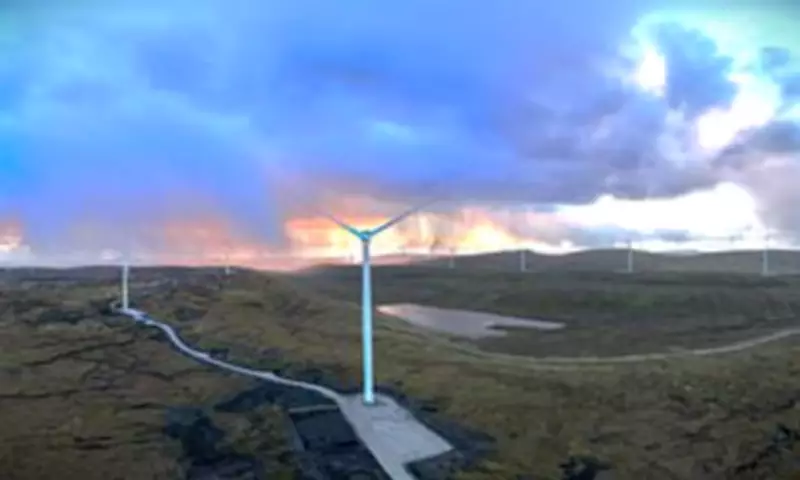
The owners of the Viking windfarm in Shetland are receiving approximately £10 million per year in constraint payments to turn off their turbines during periods of gale force winds. This occurs while local residents, who live in the shadow of the 103-turbine facility, are forced to pay some of the highest energy bills in Britain.
Grid Limitations and Compensation Payments
The primary reason for shutting down the turbines is a lack of capacity on the national grid to transmit the generated electricity to high-demand areas, such as southern England. SSE Renewables, the operator of the windfarm, has an agreement with the National Energy System Operator (NESO), a government-owned public corporation that manages the electricity network. Under this arrangement, when electricity flow must be constrained, operators are entitled to compensation payments.
In 2025, SSE Renewables was paid £9.86 million specifically not to generate power at the Viking windfarm, which began operations in September 2024 and has the capacity to power 500,000 homes. Industry data indicates that the turbines were turned off for approximately 65 percent of the time they could have been operating.

Local Energy Dependency and High Costs
Despite being connected to the Scottish mainland and the UK electricity grid via a 160-mile subsea cable, the local grid in Shetland remains unconnected. Consequently, the 11,706 households on the islands rely on a diesel-fired power station in Lerwick, Shetland's capital, and a gas-fired power station at Sullom Voe in the north of Mainland.
This reliance on fossil fuel-based power sources results in exorbitant energy bills for residents, even as they can see the £580 million turbine project from their windows—a project capable of powering a medium-sized city.
Community Opposition and Environmental Concerns
The construction of the Viking windfarm faced significant opposition from many locals who believed it was too large for the island and raised concerns about environmental impacts. These included the substantial carbon dioxide emissions released during the excavation of peat in the construction phase.
Frank Hay, chair of the Sustainable Shetland community group, expressed outrage, stating, 'It's disgraceful. SSE knew full well they would be paid, whether the wind turbines operated or not.' Similarly, local artist Roxane Permar noted that residents are 'horrified' the windfarm is 'earning money for doing nothing,' adding that the industrialisation of Shetland has brought 'very little benefit' to the community.
Broader Impact and National Costs
The issue extends beyond Shetland. On a recent Wednesday, the Viking windfarm was paid to turn off its turbines, necessitating NESO to compensate gas-fired power plants to replace the lost energy. For instance, the Seabank power station, co-owned by SSE, received £1.6 million in constraint payments, while Keadby 2 in North Lincolnshire, also operated by SSE, was paid £1.3 million.
Data from Kilowatts.io reveals that from January 1, 2025, to April 17, 2026, 42 plants were paid £1.42 billion to replace lost energy when wind turbines were switched off due to grid capacity issues. During the same period, over £445 million was paid to wind farms in constraint payments to halt turbine operations. The Viking windfarm alone received £13.5 million in such payments.
All these payments are ultimately funded by households and businesses through their rising energy bills. In 2025, Scottish wind farms were paid £347 million not to generate electricity, contributing to a Britain-wide total of over £1.45 billion for wasted wind power in a single year.
Political and Campaigner Responses
Politicians and campaigners have raised alarms about the scale of constraint payments. MSP Douglas Lumsden, Scottish Conservative energy spokesman, commented, 'Hard-pressed Scots will rightly be questioning these soaring payments. At a time when they are facing rising energy bills, they will wonder why they are footing an ever-increasing bill for turbines to be turned off.'

He added, 'Rural communities are being overwhelmed by the number of wind farms spreading across the country. Labour and the SNP are riding roughshod over local community concerns. While the right balance must be struck on our energy needs, delivering value for money for taxpayers must be a top priority at all times.'
Campaigner Denise Davis of Communities B4 Power Companies emphasized, 'The whole of the UK is having to pay for this. Every single time they get a bill, they're paying.'
SSE Renewables and the Department for Energy Security and Net Zero have been contacted for comment on these matters.