Solar Panels in UK Winter: Do They Work on Cloudy Days?
Solar panels do not deactivate when winter arrives in the United Kingdom. While output naturally declines during the shorter, darker months, photovoltaic (PV) systems keep producing energy even as temperatures drop. The critical factor is daylight, not warmth, meaning panels remain active throughout the season.
How Solar Panels Perform in Winter Conditions
Solar panels convert sunlight into electricity using PV cells, which respond to light rather than temperature. Interestingly, cold conditions can enhance panel efficiency slightly compared to summer heatwaves. However, the primary challenge is reduced daylight hours—a typical December day in the UK offers around eight hours of daylight, far less than the 16 hours in midsummer. This results in overall production falling to approximately 15–30% of summer output, depending on location and system specifics.
Factors influencing winter output include:

- Orientation and pitch: South-facing roofs at a 30–40° angle capture the most winter light.
- Shading: Trees or neighbouring buildings have a greater impact when the sun is low.
- Panel type: Monocrystalline panels generally perform better in low-light conditions.
- Geography: Southern England receives more winter sun than northern Scotland, though all regions experience seasonal variation.
Addressing Common Winter Concerns
Do solar panels work on cloudy days? Yes. Cloud cover reduces generation but does not halt it. PV panels can capture diffuse light, allowing them to produce electricity even under grey skies. Modern panels are engineered to optimise low-light absorption, stabilising efficiency during overcast weather.
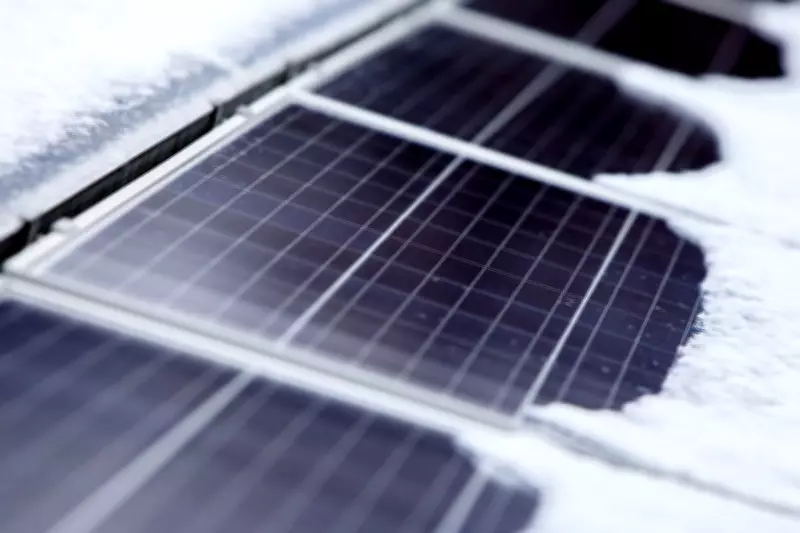
Do solar panels work if covered with snow? Output drops sharply if panels are fully covered, as little light reaches the solar cells. A thin dusting is usually not problematic, and heavy, long-lasting snowfall is rare in most UK areas. Panels are typically installed at an angle, helping snow slip off as temperatures rise. It is safest to let snow clear naturally to avoid damage or safety risks.
How do other weather conditions affect output? Rain dims light slightly but can wash away dust and debris, improving system health. Output depends on light reaching the panels, not temperature, meaning winter weather reduces the time window for light collection rather than rendering systems ineffective.
Maximising Winter Solar Performance
While weather cannot be controlled, homeowners can enhance efficiency:
- Keep panels clean, as dirt and debris have a greater impact when daylight is limited.
- Consider adding a battery to store excess electricity from brighter days.
- Choose high-performance panels like monocrystalline models with half-cut cells for better low-light handling.
- Use microinverters or optimisers to reduce partial shading effects.
- Ensure correct installation angles to improve winter light capture.
Financial Viability and Seasonal Comparisons
Solar panels remain financially rewarding despite lower winter output. Summer months produce significantly more electricity, often outweighing quieter periods. Combined with falling installation costs, energy bill savings, and Smart Export Guarantee payments, solar offers long-term protection against rising energy prices.
Seasonally, UK solar panels generate most electricity between late spring and early autumn. In winter, generation falls due to shorter days and lower light levels, but panels still contribute to household energy use, especially for daytime baseloads like fridges and Wi-Fi routers. Homes with batteries can use them for tariff-shifting in winter, charging off-peak and using stored energy at peak times.
Overall, solar panels do not hibernate in winter. They continue generating electricity, albeit at reduced levels, making them a valuable year-round investment for reducing grid reliance and achieving meaningful savings.