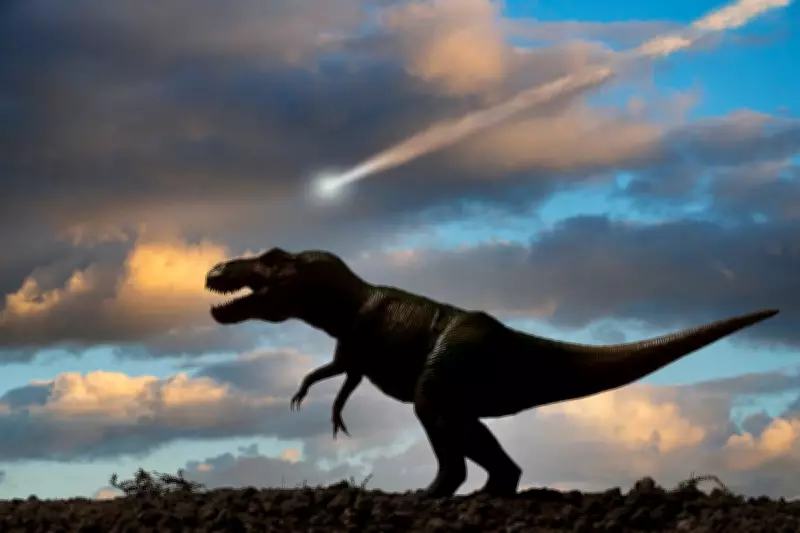
A groundbreaking study may have finally unraveled the long-standing mystery of why the Tyrannosaurus rex and other large meat-eating dinosaurs had such disproportionately tiny arms. Researchers propose that these diminutive limbs were a direct consequence of the evolutionary shift that made the head the primary weapon for hunting, rendering the forelimbs largely redundant.
The Head Takes Over
The study, published recently, suggests that as these dinosaurs evolved, their heads and jaws became increasingly powerful, capable of delivering devastating bites to subdue prey. This development coincided with the growing size of their prey, including massive long-necked sauropod dinosaurs. The forelimbs, which once played a key role in capturing and holding prey, gradually diminished in size and function as the head took over the task.
Quantifying Skull Robustness
The research team quantified the robustness of dinosaur skulls across various species and found a strong correlation between reduced forelimb size and increased skull strength. Among all studied dinosaurs, the T. rex scored the highest in skull robustness, while its arms were among the smallest relative to body size. This correlation strongly supports the hypothesis that the arms became smaller as the head became more specialized for hunting.

Evolutionary Redundancy
Scientists concluded that the reduction in forelimb size was a result of their redundancy in prey capture. As powerful bites and robust skulls took over the role of subduing prey, the evolutionary pressure to maintain large, functional arms diminished. Over time, these limbs became smaller, possibly to reduce energy expenditure or to avoid injury during feeding frenzies.
This new explanation provides a compelling answer to a question that has puzzled paleontologists for decades. The study not only sheds light on the peculiar anatomy of T. rex but also offers insights into the evolutionary dynamics of predator-prey interactions during the Cretaceous period.