Trump Calls on Tech Giants to Generate Own Power Amid AI Data Center Controversy
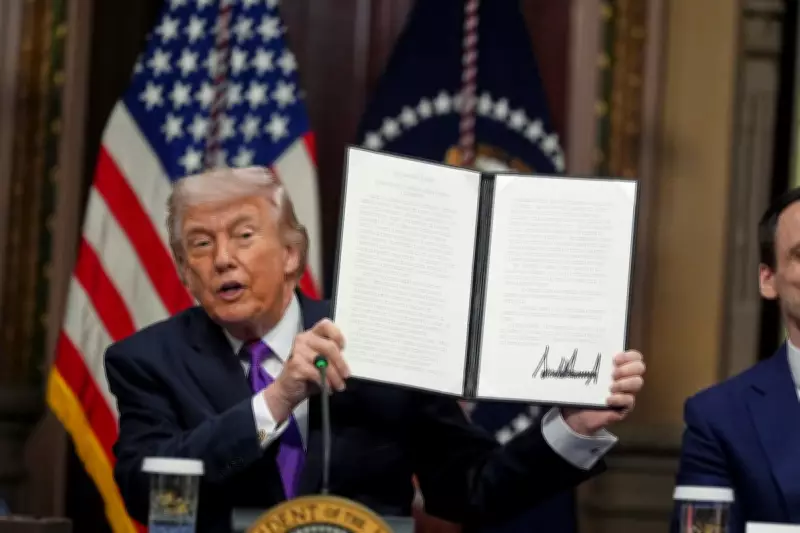
President Donald Trump convened major technology companies at the White House on Wednesday, pressing them to pledge to develop their own power generation. This move aims to alleviate growing public tensions over the soaring electricity costs associated with data centers powering artificial intelligence development.
"They need some PR help because people think that if a data center goes in there, electricity prices are going to go up," Trump stated. "It's not going to happen." The president's "ratepayer protection" pledge, first mentioned in his State of the Union address last month, seeks to address affordability concerns as Americans worry that the AI expansion could lead to higher utility bills. However, the announcement provided few concrete details on implementation or enforcement.
Public Backlash and Political Implications
Communities nationwide have witnessed a significant backlash against data centers, driven by fears of escalating electricity prices, pollution, and excessive water consumption. Opposition to rising power costs played a pivotal role in Democratic electoral victories last year in states such as Georgia, Virginia, and New Jersey, highlighting the political sensitivity of the issue.

Trump has attempted to deflect public concerns about AI, viewing the rapidly evolving technology as essential for attracting foreign investment and maintaining U.S. economic and military dominance. Yet, it remains uncertain whether these commitments will effectively protect Americans from higher electricity prices, which have increased by 6.3% over the past year according to the Labor Department's consumer price index.
Energy Demand and Infrastructure Challenges
The president emphasized that energy demand is projected to triple by 2035, largely due to AI, necessitating a dramatic increase in power plant construction. Construction spending on power generation surged in 2022 but has slightly declined since peaking in October 2023, as reported by the Census Bureau. Trump has also advocated for cancelling wind power projects while promoting coal—a significant contributor to climate change—as a key energy source.
Companies signing the pledge include Google, Microsoft, Meta, Oracle, xAI, OpenAI, and Amazon. Under the agreement, these firms intend to:
- Build or purchase new power generation sources for their data centers.
- Cover the costs of necessary infrastructure upgrades.
- Sell excess power generation to utilities for public consumption.
- Negotiate separate rate structures with public utilities.
- Hire locally for data center construction projects.
Expert Skepticism and Regulatory Hurdles
Energy experts have expressed doubt that tech company promises can curb rapidly rising electricity prices. While Trump asserted the pledge would compel tech firms to produce their own electricity, experts note the deal is likely unenforceable at the federal level. Electricity supply is predominantly regulated at the state level and managed across regions, with market structures varying widely across the country.
Jill Tauber, vice president of litigation for climate and energy at Earthjustice, criticized the pledge as insufficient. "Data centers are increasing costs and pollution for communities across the country," Tauber said in a statement. "More than a pledge, we urgently need strong policies and protections to ensure that data centers pay their way, disclose and mitigate their impacts, and are powered by clean energy."
The initiative underscores the complex interplay between technological advancement, energy policy, and public concern, with significant questions remaining about its practical impact on electricity affordability and environmental sustainability.