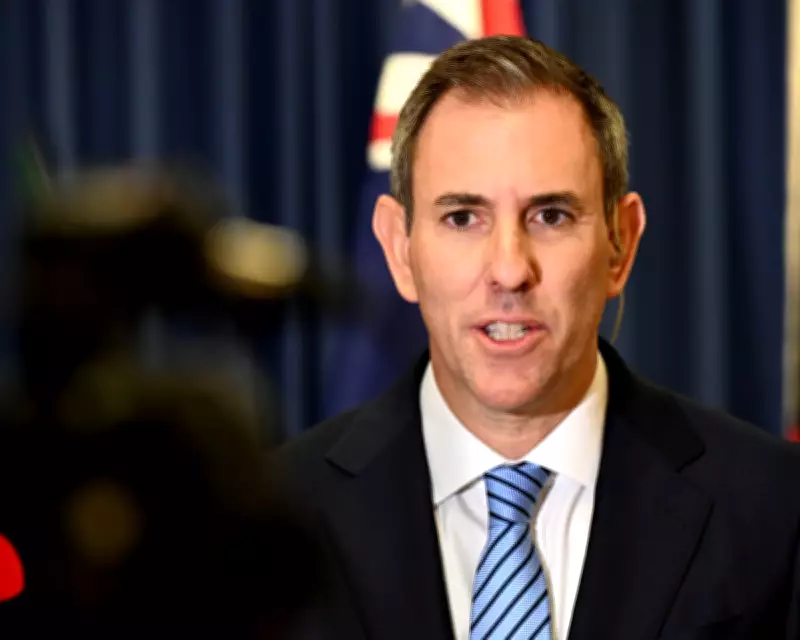
Jim Chalmers has left open the option to extend the 26-cent fuel excise relief beyond its expiry at the end of June, as economists warn that inflationary pressures continue to signal a further rate rise.
Inflation Eases to 4.2% but Interest Rate Rise Still on Horizon
Inflation dipped to 4.2% in the year to April as the government’s fuel excise relief kicked in, leading to lower petrol prices. However, price pressures remain, and experts predict the Reserve Bank of Australia (RBA) may still raise the cash rate later this year.
Fuel prices fell by 7% last month, retracing some of the 33% surge in March when the US-Israel attack on Iran closed a key Middle Eastern shipping route and triggered a global oil supply shock. According to the Australian Bureau of Statistics (ABS), regular unleaded averaged $2.06 per litre in April, down from an average of $2.28 in March. In contrast, diesel became more expensive, climbing from an average of $2.56 in March to $2.92 in April.

The government cut the fuel excise in half from the start of April, but the ABS noted that fuel prices were still 24% higher than they were in February. As the US and Iran pursue a deal to reopen the Strait of Hormuz, global oil prices are just below $US100 a barrel, roughly 40% higher than prewar levels.
Treasurer Jim Chalmers left open the option to extend the 26-cent excise relief beyond its expiry at the end of June, stating it was “under review.” He said, “We’re not expecting to extend it, but we keep it under review from week to week.”
After figures last week showed unemployment unexpectedly jumping to 4.5%, the highest since late 2021, economists said the bigger-than-anticipated drop in headline inflation had squashed any chance of a rate hike at the RBA’s next board meeting in mid-June. However, Stephen Smith, a partner at Deloitte Access Economics, said “the data suggests the effects of the conflict-driven global energy shock are starting to flow through the Australian economy, adding to price pressures and increasing the risk of another rate hike later this year.”
The ABS reported that the impact of higher fuel prices was evident “in products and services with high freight and logistics costs, such as parcel delivery and building materials.” Postal services prices were up 12% in April compared to a year earlier, while new building costs were 4.7% higher. There was, however, surprisingly little evidence that high fuel costs had fed through to supermarket prices, as inflation in the food and non-alcoholic beverages category eased to 2.8% in the year to April, from 3.1%.
Still, the ABS figures also showed its measure of underlying annual inflation, which removes large price swings in items like fuel, ticked up to 3.4% in April, from 3.3%. Inflation remains far above the RBA’s official goal of 2.5%, or the broader 2-3% target range.
Brendan Rynne, KPMG’s chief economist, said that oil price spikes work through the economy on a “staggered basis.” This pass-through had started with fuel and transport costs, and would be followed first by higher food prices, then manufacturing and construction within the next three months, “followed by the rest of the economy within six months until whenever the shock dissipates.” The Reserve Bank has forecast that inflation will peak at 4.8% by the middle of this year, and potentially above 5% should the Middle East conflict last longer than expected.