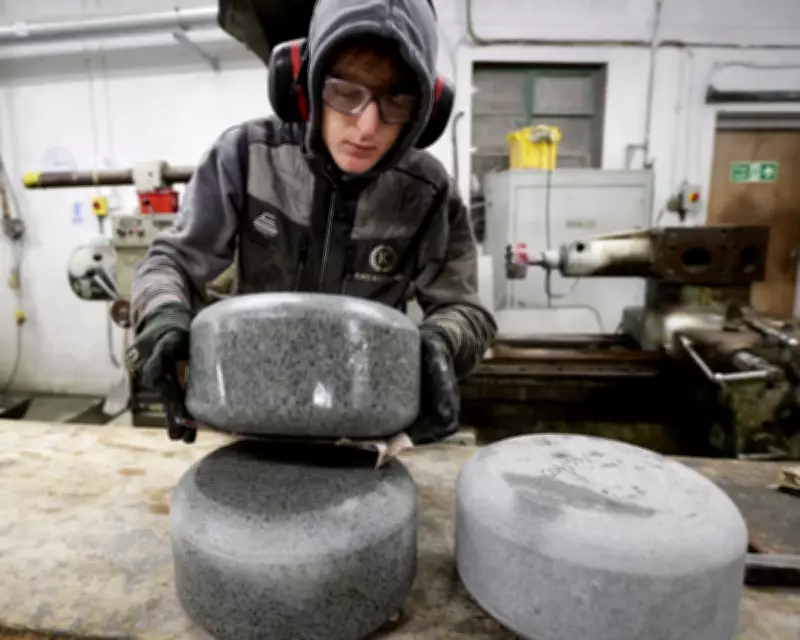
The Scottish Factory Crafting Olympic Curling Stones
In the heart of East Ayrshire, a small Scottish factory holds a unique global responsibility: it is the only facility in the world that supplies curling stones for the Winter Olympics. Kays Scotland, a family-run business established in 1851, employs just 15 staff but has been crafting these essential sporting tools since the inaugural Winter Games in Chamonix in 1924. This year, 132 stones, each weighing approximately 18 kilograms, were meticulously produced in Mauchline and shipped to Cortina, Italy, for the Olympic competitions.
A Legacy of Handcrafted Excellence
Ricky English, the operations manager at Kays Scotland, proudly declares, "It takes 60 million years and about six hours to make a curling stone." Surrounded by ancient granite wheels in various stages of refinement, he emphasizes that the process is far from automated. "It's not just robots and machines doing it," English explains. "It's handcrafted, traditional, and steeped in history. This is a great wee place." The company's association with the Olympics deepened when curling became a medal sport in 1998, and they have supplied every stone since.
The Unique Granite from Ailsa Craig
The curling stones are crafted from a rare type of granite found exclusively on Ailsa Craig, a tiny volcanic island in the Firth of Clyde. Described by poet John Keats as a "craggy ocean pyramid," this island provides two distinct granites. The body of each stone is made from common green granite, which offers elasticity and acts like a spring upon impact. The running band, the only part that touches the ice, is an insert of blue hone granite, a waterproof variety perfect for gliding across surfaces. English notes, "The only place on the planet you can get that is Ailsa Craig." Together, these materials create a durable and high-performance product.

Precision Manufacturing and Global Reach
On the factory floor, machines shape and refine the granite through processes like drilling central holes for handles and polishing with pumice and diamond pads to achieve a liquid shine. Each stone costs £750 and is packed on pallets for global shipment, with major buyers including Canada and China. Remarkably, the furthest order last year came from Antarctica. Kays aims to produce 48 stones weekly, each with a unique number traceable to its original boulder. Granite is harvested from Ailsa Craig every six or seven years, with an estimated 680 million tonnes remaining, ensuring no supply issues.
Historical Roots and Modern Innovations
Curling, native to Scotland and one of the world's oldest team sports, dates back to 1511, with early games played on frozen lochs. Scots immigrants spread the sport globally, leading to the establishment of the Royal Caledonian Curling Club in 1838 and standardized rules as it moved indoors. Beyond Olympic stones, Kays also crafts miniature versions, drinks cubes, and coasters. This year, they secured a contract to produce official Winter Olympics giftware, boosting business despite logistical challenges. English speculates that interest from figures like rapper Snoop Dogg may have expanded the market.
Durability and Sustainability
Curling stones are exceptionally long-lasting, often returned to the factory for refurbishment after decades of use. English highlights, "I think this is the only product in the world where you can come back after 20 years. It's about reliability and performance on the biggest stage." With a blend of ancient materials and skilled craftsmanship, Kays Scotland continues to uphold a proud tradition while meeting modern Olympic demands.