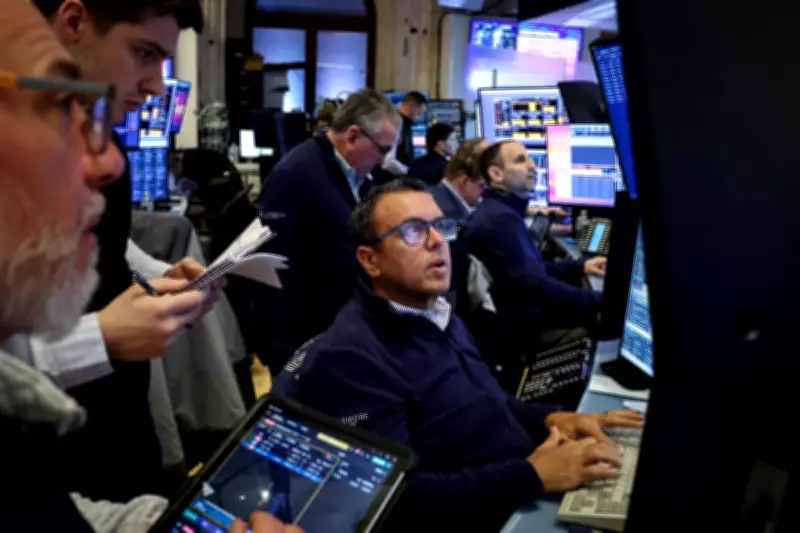
US financial markets experienced significant volatility on Monday as investors closely tracked developments in the escalating conflict between the US, Israel, and Iran. The major indexes, after initially falling over 1%, managed to recover most of their losses by the closing bell, reflecting a cautious yet resilient trading environment amid geopolitical tensions.
Market Performance and Sector Movements
At the end of the trading session, the Dow Jones Industrial Average was down by 0.15%, while the S&P 500 showed a slight gain of 0.04%. The technology-focused Nasdaq Composite Index performed better, closing up 0.36% for the day. Trading activity was particularly concentrated in tech stocks, with notable movements in companies such as Nvidia and Palantir. In contrast, the travel sector faced a slowdown, with airlines including United, Delta, and American experiencing declines as uncertainty over the conflict impacted investor sentiment.
Global Market Reactions and Energy Price Surges
Earlier in the day, global markets witnessed more substantial declines. London's FTSE 100 share index dropped by 1.2%, and Germany's DAX fell 2.4% at closing. The primary driver behind these movements was the sharp increase in energy prices following Iran's retaliatory actions over the weekend. Iranian drone strikes targeted QatarEnergy, a major state-run producer of liquefied natural gas (LNG), and attacked tankers in the Strait of Hormuz, a critical passage for oil and gas shipments to Europe and Asia.

As a result, gas prices in European and Asian markets surged nearly 50% since Saturday, with benchmarks up 40% at Monday's close. The price of Brent crude oil, a global benchmark, rose by 6.9%, while US crude oil futures reached around $72 per barrel—the highest level since last summer, though still below the peak of $120 per barrel seen after Russia's invasion of Ukraine in 2022.
Economic Implications and Inflation Concerns
The conflict with Iran has introduced additional uncertainty into the US economy, which is already grappling with the lingering effects of former President Donald Trump's tariffs on prices. On Monday, mortgage rates increased to 6.12% after briefly falling below 6% for the first time since 2022, driven by a 4% jump in 10-year US Treasury yields. This rise in borrowing costs adds to inflationary pressures, as Americans express growing dissatisfaction with Trump over inflation, despite his campaign promises to curb the rising cost of living.
Trump commented on Monday that the war is expected to last four to five weeks but could extend longer, a scenario that could further inflate consumer prices if attacks persist. However, JP Morgan CEO Jamie Dimon offered a more tempered outlook in an interview with CNBC, stating that he is not overly concerned about the conflict's impact on US inflation unless it becomes prolonged. "The economy is not often driven by something like that unless it is prolonged," Dimon said. "If it's not prolonged, it's not going to be a major inflationary hit."
Overall, the day's trading highlighted the delicate balance between geopolitical risks and market resilience, with investors remaining vigilant as the situation in the Middle East continues to evolve.