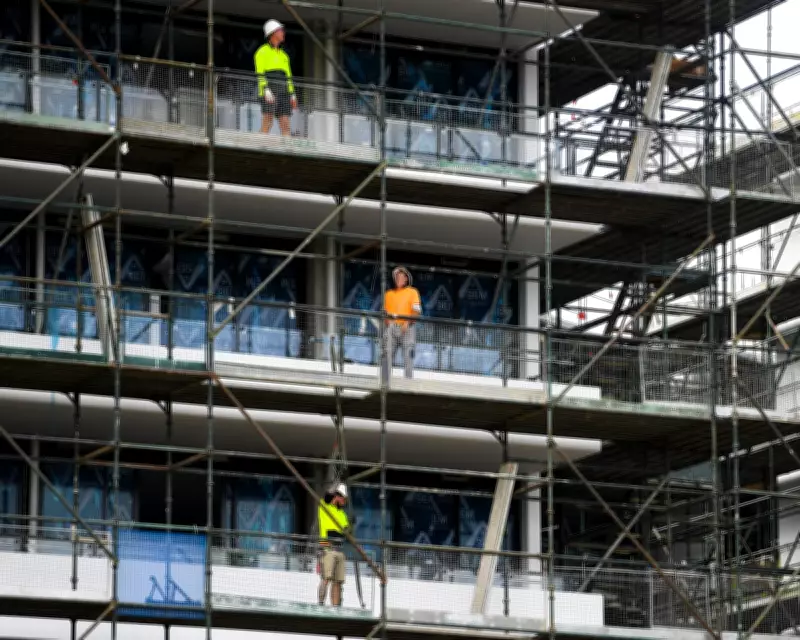
Australia's Housing Target Falls Short on Affordability Solutions
The Albanese government has set an ambitious goal of delivering 1.2 million homes over a five-year period, aiming to tackle the nation's escalating housing crisis. However, despite concerted efforts at both federal and state levels, widespread skepticism persists that this target will be met. Even if achieved, experts argue it will have minimal impact on making homes more affordable for Australians.
Why Supply Alone Isn't the Answer
According to Christian Nygaard, a professor of housing economics at UNSW's City Futures Research Centre, focusing solely on construction numbers is a misguided approach. His modelling indicates that even an unprecedented building spree—maintaining the 1.2 million home target for two decades—would only marginally improve affordability. Nationally, the house-price-to-income ratio might drop from 8.0 to 6.7, while in Sydney, where ratios exceed 12, it could decrease to around 10.
Nygaard explains, "While increasing supply by 1% faster than household growth can reduce prices by 2-3% over time, other factors like rising incomes, favourable tax settings, and fluctuating borrowing costs dilute this effect." He emphasises that boosting housing stock is necessary due to population growth and demographic shifts, but it won't resolve the core affordability challenges facing society.

The Real Issues: Tax and Distribution
The current housing debate, according to Nygaard, lacks clarity on how mere construction translates into affordability gains. He points out that policymakers must prioritise the distribution of new homes rather than just the total number. This involves scrutinising who purchases these properties and the underlying motivations, often driven by lucrative investment opportunities.
By overemphasising supply, politicians avoid tougher conversations about tax reforms, such as capital gains discounts for investors and owner-occupied homes. Nygaard notes that while adjusting investor taxes could have symbolic and practical impacts, more radical changes might be needed. "If we ignore the tax advantages in the owner-occupied sector, we misdiagnose the problem and rely on ineffective solutions," he warns.
Projections and Political Challenges
Official estimates from the National Housing Supply and Affordability Council suggest only 938,000 new homes will be built in the latter half of the 2020s, falling 262,000 short of Labor's target. This shortfall underscores the difficulty of meeting ambitious construction goals. Moreover, even if targets are met, the payoff in affordability terms remains weak, failing to address broader societal wellbeing and political demands, particularly from younger Australians.
Nygaard concludes that a holistic approach is essential, combining supply increases with tax adjustments and urban policies. Without this, the housing crisis will persist, leaving many Australians struggling with high costs and limited access to homeownership.