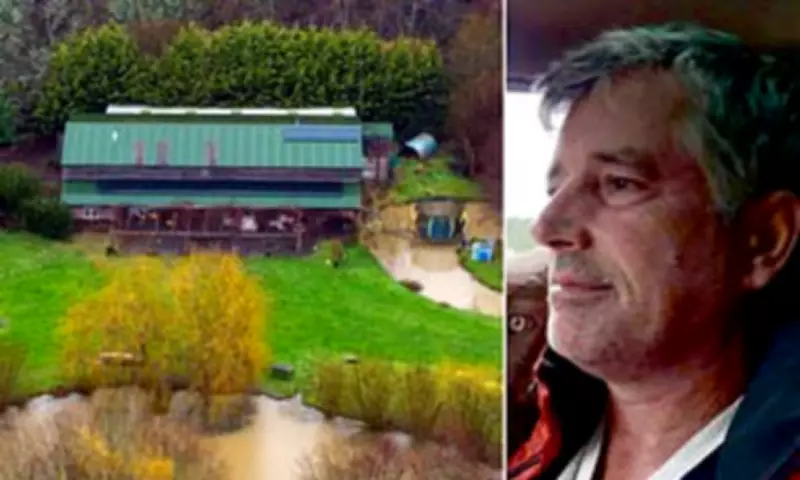
Builder Ordered to Leave Secret Barn Home After Deception Uncovered
Nicholas Steele, a 67-year-old self-employed builder, has lost his legal battle to remain living in a concealed home he secretly created within a 150-foot agricultural barn in the South Downs National Park. The Planning Inspectorate dismissed his appeal, upholding an enforcement notice that requires him to vacate the property and remove all residential fixtures within six months.
Elaborate Concealment Tactics Revealed
Inspector Lee Douglas detailed how Mr Steele had "gone out of his way" to hide evidence of habitation from council officials. His methods included sleeping on a slide-out bed stored inside a cupboard specifically to prevent detection during inspections. Clothing and bedding were concealed within metal filing cabinets, while a relative described staying in a "hidden living space" above the barn's west entrance.
Most strikingly, Mr Steele admitted to ripping out his toilet and shower facilities upon learning that planning inspectors were about to visit the site. These actions, the inspector concluded, exceeded reasonable attempts to maintain a low profile and constituted "positive deception" designed to obstruct the council's planning enforcement functions.

Four-Year Rule Defense Fails
Mr Steele had argued that he was entitled to remain under planning regulations commonly known as the four-year rule, which can grant lawful status to unauthorized developments if they have been used continuously for four years without enforcement action. However, the burden of proof rests with the homeowner, and Mr Steele was forced to acknowledge his deliberate concealment of the living arrangements.
The inspector found no reliable timeline demonstrating when key residential facilities were first installed, removed, or reinstated. Crucially, records showed Mr Steele was registered for council tax and on the electoral roll at another property between 2019 and 2021, undermining his claim of continuous occupation.
Discovery of Fully-Functioning Residence
Although initial complaints about someone residing in the agricultural barn at Willow Spring Farm near Northchapel, West Sussex, first emerged in 2013, it was not until 2022 that officials uncovered the full extent of the conversion. During their investigation, they discovered a fully-fitted kitchen with a range cooker, multiple sleeping areas, a utility room containing washing machines, and a complete shower room with toilet facilities.
Parish councillors raised additional concerns about the building's habitability without mains electricity and noted the absence of council tax or utility bills for the address. Neighbour Laurence Reed, 96, confirmed he had repeatedly reported concerns to the South Downs National Park authority about the unusual living arrangements.
"Off-Grid" Lifestyle and Final Ruling
Mr Steele described his lifestyle as "off-grid" and explained that in winter he sleeps alongside his pigs at the opposite end of the vast structure, heating the space solely with a log burner fueled by wood he cuts from land he claims to own. A portable toilet stood on the driveway during the Daily Mail's visit, and his green Land Rover Defender was parked inside the barn.
Despite his insistence that he believed he was acting within the law and was "not harming anyone," Inspector Douglas concluded there was "a pattern of ongoing and continued deception" that prevented earlier council action. Even if Mr Steele had proven four years of continuous occupation, the inspector noted he would have "profited directly from his deception."
Changing Planning Regulations
The case highlights evolving planning regulations, as the four-year rule referenced by Mr Steele has since been amended. Under current rules, homeowners are only immune from enforcement action on unauthorized developments if there have been no complaints within a ten-year period, significantly extending the timeframe for potential detection.

Mr Steele, who butchers his own livestock and makes pork pies, told reporters he was now in a "limbo" period following the ruling. The enforcement notice requires him to completely remove all beds, soft furnishings, kitchen units, and bathroom facilities, effectively returning the structure to its original agricultural use as intended by its planning consent.