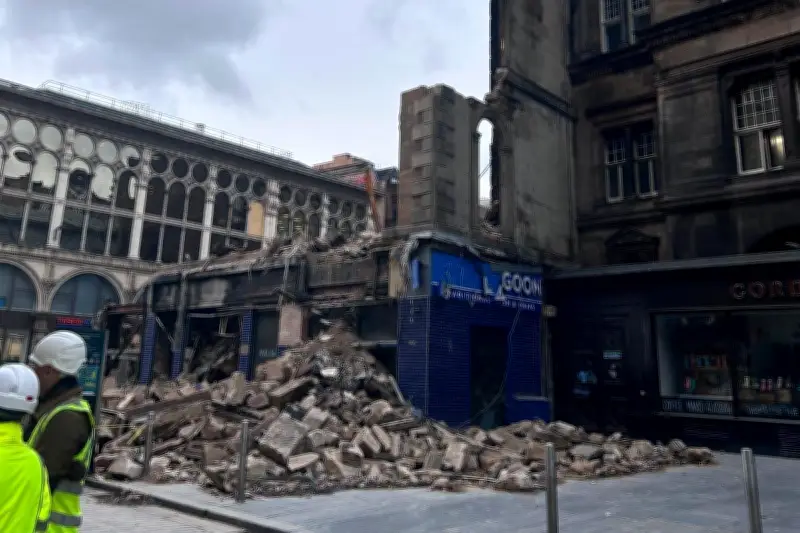
The site of a building destroyed by fire next to Glasgow Central railway station could be temporarily put back into use later this year, according to Glasgow City Council. The council has appointed architectural firm O’Donnell Brown to explore a “meanwhile use” for the Union Corner site before a permanent solution is found.
Fire and Demolition
The fire began in a vape shop on Union Street on Sunday March 8, spreading through the building and around the corner, leading to the structure’s collapse. Only the facade of the B-listed Victorian building at the junction with Gordon Street remained standing, but it was later demolished due to safety concerns.
Plans for Temporary Use
O’Donnell Brown will develop plans for how the site can be used over the next four years, considering “commercial and cultural uses.” Some businesses that lost premises in the fire could be housed in the new space. The council aims to put the site back into use as soon as possible.

Susan Aitken, leader of Glasgow City Council, said: “The final and permanent development of the fire site will take time, but neither the council nor the owners are prepared to see such a crucial city centre space lie empty while that takes shape. Finding an appropriate ‘meanwhile’ use for the site, which doesn’t simply mask the damage but actually attracts people back to this part of the Central Station quarter, is going to be vitally important to support its ongoing recovery. I’m delighted we have expert, local partners working on that already, with the expectation that we will start to see the site coming back into use this year.”
Stakeholder Support
David Cook, chief executive of Glasgow Building Preservation Trust, said: “It is great to see the meanwhile use proposals progress. Everyone in the city wants to see this site reactivated as soon as possible, including the Union Street fire recovery stakeholder group tasked with supporting the council to steer a quick resolution to the challenges of the fire. The long-term solution will inevitably take time due to the complexities and multiple ownerships, so getting life back into this vital part of the city centre before that will be welcomed by all Glaswegians.”