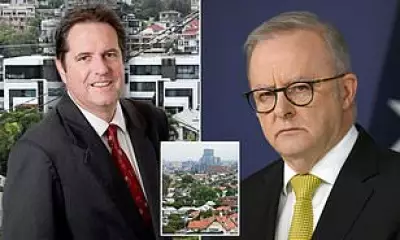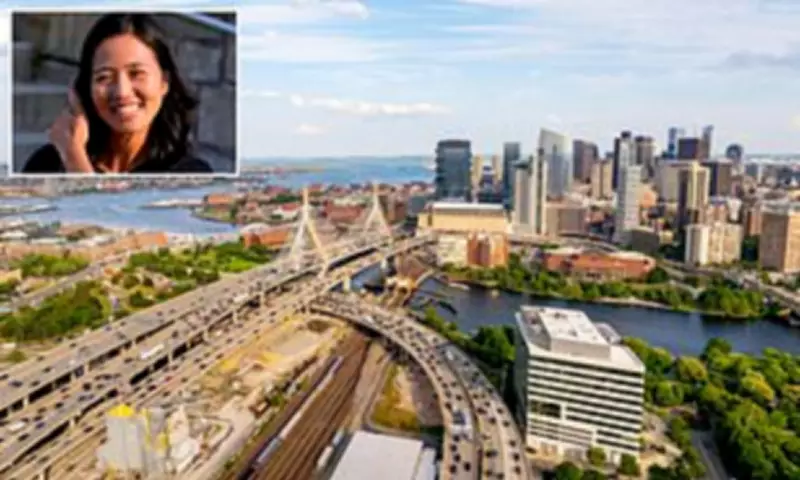
A prominent investment executive has declared he is slamming the brakes on spending in Boston, directly attributing his decision to the policies of the city's Democratic mayor, Michelle Wu. Jeff Kanne, president and CEO of National Real Estate Advisors, expressed deep reservations about injecting further capital into the Massachusetts metropolis, citing Wu's aggressive advocacy for statewide rent control as a primary deterrent.
The Investment Exodus Threat
Kanne, who oversees a colossal investment management firm with approximately $10 billion in assets serving around 120 institutional clients nationwide, asserted that implementing rent control would be catastrophic for housing development. 'If you want to kill housing production, put rent control in place,' he told The Boston Globe, adding emphatically, 'and you’ll lose investors like me who will go somewhere else.'
He clarified that his stance might differ if he were compelled to reside or operate his business in Boston. 'If I live in Boston and that’s where my business is, well, I have to cope with that. But I don’t, and my capital can go anywhere in the United States,' Kanne explained, highlighting the mobility of investment funds in today's market.

A Twenty-Year Legacy Reconsidered
This decisive move follows nearly two decades of Kanne investing in projects throughout the Greater Boston area, meticulously selecting opportunities based on financial returns and their positive community impact, including job creation. 'If the officials in Boston want investors like us to say, "Hey, I can’t wait to get to Boston," they need to roll out the red carpet and say, "Hey, come here. This is what we’re going to do for you",' the real estate magnate stated.
With rent control poised to appear on the November ballot—a measure Wu has pledged to support in her second term—Kanne wants nothing to do with Boston. Rent control, a government regulation capping what landlords can charge tenants and limiting rent increases over time, is popular in many Democratic-run urban centers but faces fierce opposition from investors.
The Ripple Effect on Development
Kanne warned that if investors like him withdraw capital from Boston, real estate developers reliant on such funding will struggle to finance their projects, potentially stalling construction. 'Because, unlike the common perception of real estate development, there’s as many people who lose money ... as there are who make money. It’s risky,' he added, underscoring the precarious nature of the industry.
Mayor Wu is not the only liberal leader causing Kanne to rethink his investment strategy. He expressed similar concerns about New York City Mayor Zohran Mamdani, who campaigned on promises to freeze rents in one of America's most expensive cities. Kanne revealed that before Mamdani's election, his firm was considering an investment in Manhattan. 'We liked it a lot,' he said, but they decided to wait due to uncertainty, noting, 'we just don’t know what’s going to happen.'
Broader Regulatory Concerns
Beyond rent control, Kanne pointed to other restrictions—such as affordable housing mandates and energy efficiency standards—as factors influencing investor decisions in cities like Boston. 'I’m not suggesting that none of those things are good, but what I can say is without a doubt, the fewer restrictions you have, the more likely it is that a project is going to pencil, and the more likely it is that capital providers like me will choose your city to put their money because there’s a lot less risk,' he elaborated.

In contrast, Boston's local government views these regulations as essential for environmental protection and community betterment. City Hall has suggested that global market conditions, rather than the mayor's policies, are the real issue. Brittany Comak, a spokesperson for Wu, told the Globe that the city continuously engages with developers to facilitate projects. 'We are in constant conversations with developers trying to identify ways that the City can be a helpful partner in getting projects into the ground,' Comak said. 'Sometimes the City is able to help developers close the gap, other times the level of support they would require would not justify expending so many taxpayer dollars on a market rate private project.'
Shifting Investment Landscapes
Instead of New York City and Boston, Kanne is redirecting his investments toward other major urban centers like Atlanta, Washington D.C., and even the Bay Area. San Francisco, despite a post-pandemic real estate slump, is experiencing renewed interest driven by artificial intelligence. Kanne credited this resurgence partly to the city's new mayor, Daniel Lurie, who he said 'put out the welcoming mat to businesses and capital.'
Kanne recalled having a more favorable view of Boston under former mayors Rom Menino and Marty Walsh, indicating a significant shift in the city's investment climate. The Daily Mail has reached out to Kanne, Wu, and Mamdani's office for further comment, highlighting the ongoing debate between pro-regulation advocates and investment stakeholders.