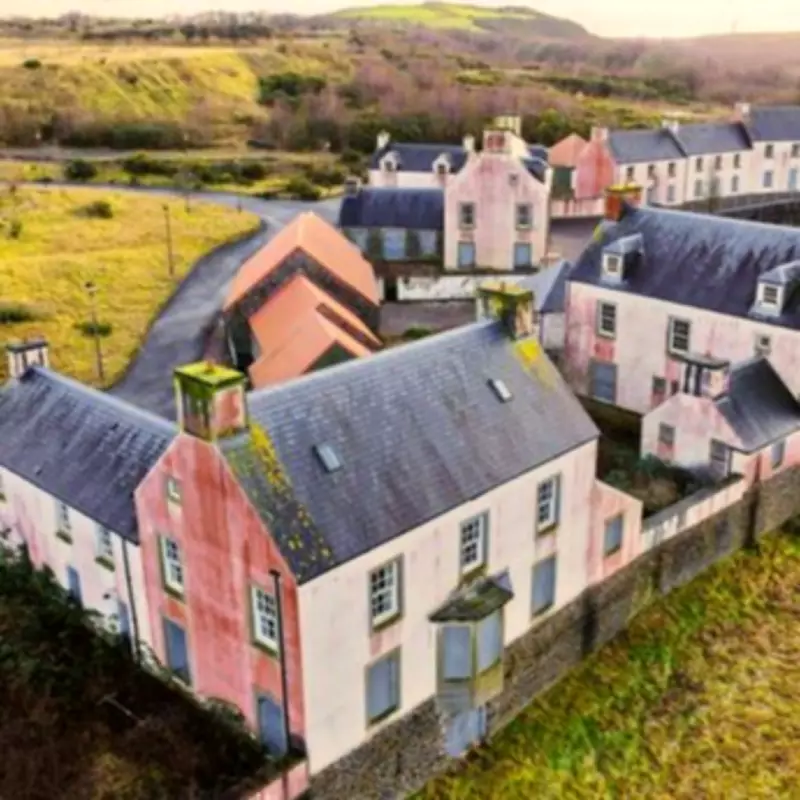
The Deserted Dream: Wales' Uninhabited Eco-Village
Nestled among the green fields of south Wales lies an eerie settlement that appears at first glance to be a charming hamlet of white-fronted houses with red and grey-tiled roofs. The development features several streets and even a building that resembles a small school or community hall. Yet this village has never been home to a single resident.
A Royal Vision Left Unfulfilled
Constructed in 2013 on the site of a former BP crude oil refinery in Llandarcy, near Neath, these traditional Welsh stone houses were built using state-of-the-art construction methods. They were intended to serve as a model for an ambitious eco-friendly village that would eventually comprise thousands of new homes. The project even received backing from then-Prince Charles, who visited the site and drew inspiration from his Poundbury project in Dorset.
"I'm trying to break the commercial mould with the kind of challenges the world is now facing," the Prince said at the time, expressing his vision for sustainable development.

Ambitious Plans That Never Materialised
The initial concept envisioned these properties forming part of a 25-year regeneration scheme - a £1.2 billion environmentally-sustainable urban village comprising 4,000 homes, 10,000 residents and four schools. While some aspects of this vision came to fruition nearby, with approximately 250 homes built and occupied at the Coed Darcy housing estate, the showpiece village remains completely deserted.
Digital storyteller and former broadcaster Jay Curtis recalls that the development once "looked incredible" with "fresh paint, green grass, one of the houses fully decorated as a show home." A significant investment of time, effort and money had clearly been made in creating this pilot village.
Infrastructure Challenges and Lingering Concerns
The fundamental problem lies in the missing infrastructure. These homes were built as a demonstration of what could be achieved on the former refinery site, erected before surrounding roads and services were developed. Planned connections to nearby Neath and Swansea were started but never completed.
Tom Gough from developer St Modwen explained in 2019: "The buildings were constructed to test design and building techniques and used to showcase new ways of constructing homes. They were built much earlier than you would usually do as test homes and they are sat there ready to be occupied. What isn't in place is the infrastructure like roads, which would usually be in place first."
Locals have expressed concerns about potential lingering contamination from the former refinery site. Seren Craven, a frequent visitor to nearby woods, told WalesOnline: "The water around there is just gross and you can see there is still a fair amount of oil being rejected by the ground."
Nature Reclaims the Deserted Village
Over the past thirteen years, nature has gradually reclaimed the abandoned development. Plaster crumbles from walls, grass has become patchy and brown, and once decorative lakes now lie barren. The site has developed an unsettling stillness that feels more like a film set deserted halfway through production than a residential community.
Despite the decay, mysterious activities have been reported. Jay Curtis revealed: "People have said they've seen lights on at two in the morning. Vehicles coming and going at odd times. Something's happening there - no one's quite sure what."
A Legacy of Unfulfilled Potential
The developer maintains that the dwellings will eventually be utilised as part of the wider scheme, but thirteen years after construction, the homes remain empty. The extensive remediation work that preceded construction saw St Modwen strip out 125 kilometres of pipes and cables from the former refinery and extract 1.25 million litres of oil from lakes and ponds across the area.
Jay Curtis expressed the community's bewilderment: "To have that level of hype, a Royal visit, and such ambition - and then to see it all just left - it astounds people. These are big, expensive homes. There are a lot of them. And no-one ever moved in."

The ghost village stands as a haunting reminder of ambitious plans that never reached fruition, a collection of dream homes that have never known residents, waiting for an infrastructure that may never arrive to connect them to the world beyond their isolated fields.