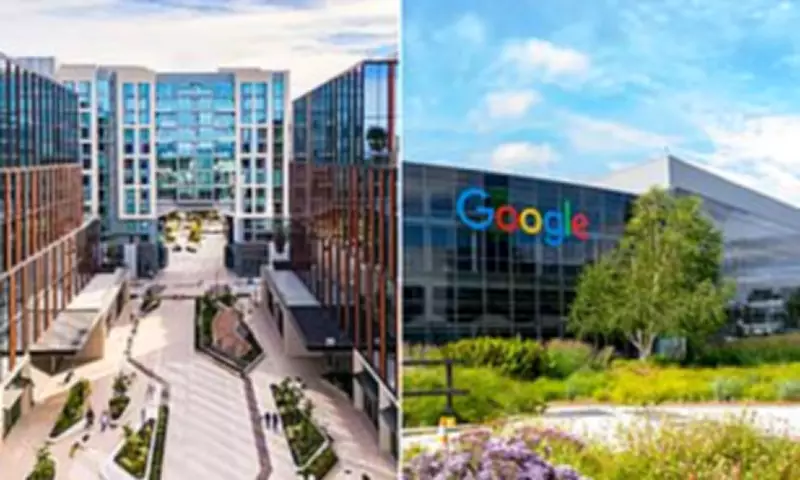
Silicon Valley's Office Revolution: From Isolated Campuses to Vibrant Downtown Hubs
In a remarkable reversal of corporate real estate trends, Silicon Valley's technology giants are turning their backs on the sprawling, self-contained campus headquarters that once symbolized their dominance. Instead, companies are increasingly opting for traditional downtown offices that offer proximity to retail establishments, restaurants, and robust public transportation networks. This strategic shift is fueling a significant resurgence in California's premier technology hub's commercial property market.
Commercial Real Estate Boom Driven by AI Expansion
A comprehensive report recently published by Joint Venture Silicon Valley reveals that 2025 witnessed the highest volume of completed commercial real estate developments since 2021, totaling an impressive 5.61 million square feet. The study, which analyzed data from the third quarter of 2025, further indicates that if leasing rates maintained their momentum through the final quarter, they would reach their highest level since 2018. During the third quarter alone, there were 1,000 lease transactions encompassing 20.4 million square feet.
Russell Hancock, President and CEO of Joint Venture, attributes this dramatic upturn primarily to the artificial intelligence boom. "It would appear that AI is starting to grab a lot of space in the old-fashioned way," Hancock explained, referring to companies expanding their operations and leasing additional office space for AI research, development, and laboratory facilities. "It sort of feels like what was happening in the 1990s, or again, in the 2010 time frame," he added, drawing parallels to previous technological revolutions that spurred real estate growth.

The Cityline Development: A Blueprint for Success
Hancock highlighted the Cityline development in downtown Sunnyvale as a prime example of this successful transition. This project, spearheaded by Hunter Partners, deliberately broke from the established pattern of constructing insulated campuses for individual technology corporations. Instead, it focused on creating traditional office spaces designed to attract employees who had grown accustomed to working from home during the pandemic—a trend that has diminished across much of corporate America but persists strongly within the technology sector.
The strategy has proven remarkably effective. Last year, two prominent technology firms, Databricks and Crowdstrike, occupied office buildings within the Cityline development. Databricks secured 455,000 square feet across two buildings, while Crowdstrike leased an additional 150,000 square feet. Josh Rupert, Senior Director of Development at Hunter Partners, noted, "As we get farther away from the pandemic, we're starting to see tenants, in particular tech tenants, recognize the value of their employees being in the office, if only for three to four days a week."
Market Metrics and Future Projections
Curtis Leigh, Principal Partner at Hunter Partners, confirmed the positive trajectory, stating, "We are seeing a definite upturn in the Silicon Valley commercial real estate market based on almost any metric you analyze." Rupert further emphasized that artificial intelligence has "certainly benefitted" Cityline, given that both Crowdstrike and Databricks are actively engaged in the AI industry. "Artificial Intelligence has driven tenants back into the office," Rupert asserted.
New commercial developments throughout Silicon Valley are now prioritizing accessibility via highways and public transportation, while also incorporating surrounding retail locations and restaurants. This approach aims to entice employees who have been working remotely since the pandemic began. However, the Joint Venture report did identify areas requiring improvement. Office vacancy rates in the valley remain double those of 2019, and rental prices have fallen to their lowest average rate in a decade.
Leigh predicts that "vacancy rates will go down because the demand is now exceeding the supply" over the coming years. Hancock suggested that the increased supply likely contributed to declining rents. Should the AI boom continue and technology companies persist in expanding and leasing more space, demand for commercial properties is expected to rise, subsequently pushing rental prices upward.

Residential Market Implications
The revitalization of Silicon Valley's commercial real estate market is generating a positive knock-on effect on the residential sector. Leigh observed that well-compensated technology employees are increasingly relocating closer to their workplaces. "A stronger office market like we are seeing now drives wages and the ability to live in newer homes, and even live closer to where people work, rather than driving a long distance to save money," he explained.
The Cityline development again serves as a testament to this trend. Rupert reported, "The residential components of our Cityline Project, The Martin and The Flats, have seen incredible occupancy rates since they've each opened, including current and future employees of our office tenants." This symbiotic relationship between commercial and residential real estate underscores a broader transformation in how Silicon Valley's workforce lives and works, moving away from isolated corporate enclaves toward integrated, community-focused urban environments.