California Wildfire Survivors Confront $23,000 HOA Bills During Reconstruction
More than a year after the catastrophic Eaton fire devastated Los Angeles County, residents of a luxury Altadena community are confronting an unexpected financial crisis. Homeowners whose properties were destroyed now face a $23,614 homeowners association bill with just 34 days to pay, triggering legal action and bitter community divisions.
Aggressive Legal Action Follows Devastating Wildfire
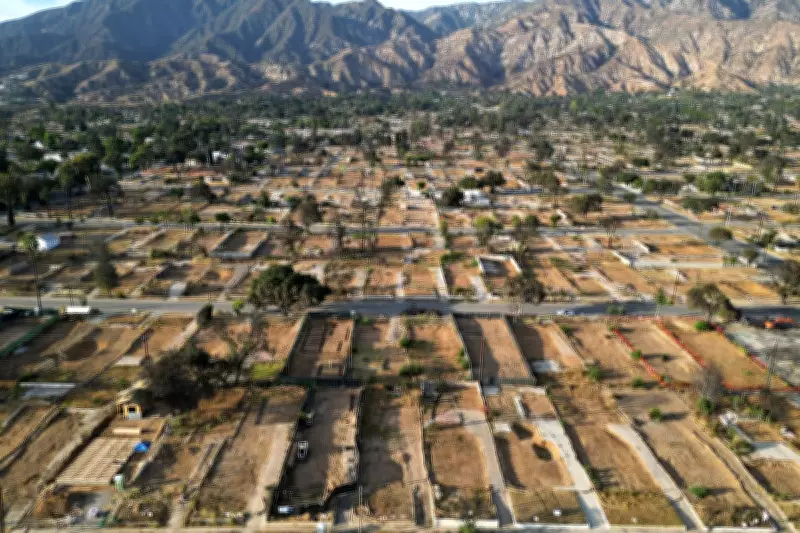
The Eaton fire, which ignited on 7 January 2025 alongside another massive blaze, represents the most destructive wildfire event in Los Angeles County history. The inferno claimed at least 31 lives and obliterated nearly 17,000 structures across the region. In La Vina, a gated community on Altadena's northwest edge, 52 of 272 homes were completely lost to the flames.
Despite significant rebuilding progress with over 70 percent of homes under reconstruction and shared spaces being repaired, the HOA's "special assessment" has created what residents describe as "trouble in paradise." The association announced the fee on 29 July 2025, giving homeowners until 1 September that year to pay the substantial amount.

Those who missed the deadline faced severe consequences including late fees, 12 percent annual interest, and the threat of property liens – creating legally-binding collateral obligations even for homeowners whose structures no longer exist. The HOA has reportedly followed through with this threat, filing a lawsuit seeking foreclosure on an empty lot belonging to a resident whose home was destroyed.
Community Divided Over Assessment Necessity
Resident Ryan Harmon, whose home suffered smoke damage and who has been living in rental accommodation since the fire, leads local opposition to the HOA bill. "I've created enemies," Harmon revealed. "The fire brought everyone together until that HOA letter went out." He described being branded a troublemaker simply for questioning the assessment.
Harmon ultimately paid the fee using a $29,000 insurance payout intended for smoke-damaged clothing cleanup, after months of resistance accumulated thousands in penalties. "Who treats their friends and neighbors so heartlessly after the greatest catastrophe of their lives?" he questioned. "Not every resident has $24,000 lying around months after their house burned."
According to HOA documentation, the special assessment aims to cover $6.4 million in damages not covered by the association's disaster insurance. The substantial bill reportedly includes $2.2 million for irrigation repairs, $1.8 million for fencing replacement, $1.5 million for replanting shrubs and trees, plus additional cleanup and service costs.
Contrasting Perspectives on HOA Actions
While some homeowners' insurance policies cover unexpected HOA assessments, others have disputed the scale of the bills. Supporters argue the amount represents the minimum necessary to restore the neighborhood properly.
Longtime residents Rande and Jess Sotomayor, who have lived in La Vina since 1998, defend the HOA's approach. "The HOA wasn't acting in a vacuum," Rande explained. "There was a lot of input; they had an accounting firm auditing the numbers and a law firm monitoring their compliance."
However, resident Rick Ursitti, whose home was destroyed in the fire, expressed frustration despite having insurance coverage for the assessment. "My insurance covered the assessment, but that doesn't mean I say 'tough luck' to the others," he stated. "I didn't like the way it was handled." Ursitti suggested the HOA could have offered alternatives like loans or installment plans rather than demanding immediate payment.
Legal Experts Express Concern Over Approach
Attorney Luke Carlson, who specializes in HOA disputes, expressed surprise at the situation's severity. "It seems somewhat outrageous," he told the LA Times. "This is a situation where a homeowner has lost everything, and I don't see how aggressive litigation solves any problems."
This legal confrontation isn't La Vina's first community battle. During the 1990s, the HOA fenced off a public hiking trail, sparking lengthy litigation with Los Angeles County that concluded in 2010 with trails reopening and the HOA covering legal fees.

As rebuilding continues against the backdrop of the San Gabriel Mountains, the financial and emotional toll of the HOA assessment adds another layer of complexity to recovery efforts for wildfire survivors still processing their losses.