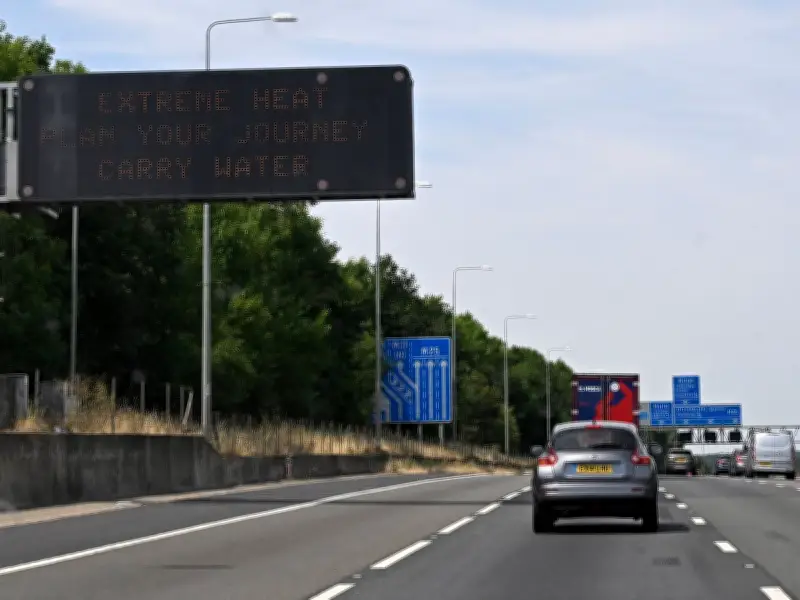
The RAC has warned drivers that running their air conditioning while stationary during the current heatwave could result in fines for engine idling. Temperatures have soared close to 40°C across the UK, marking the highest since the record-breaking heat in July 2022.
Engine Idling Fines Explained
Motorists who leave their engines running while parked risk breaching vehicle emissions laws. The RAC stated: "Remaining in a vehicle with its engine idling causes air pollution and is punishable with a fine of up to £110 for people who refuse to switch off after being asked." This figure applies to Islington Borough Council, where the fine is £110 if not paid within 14 days, reduced to £55 if paid within that period.
The RAC added: "The driver doesn't need to be in the vehicle for an offence to be committed - meaning those that leave their engines running to cool their cars before they set off for a journey could also be caught out." Standard penalties include a fixed penalty notice of £40 from a police officer or a penalty charge notice of £80 from a civil enforcement officer, both halved if paid quickly. Westminster Borough Council, for example, issues fines of £40 (reduced to £20 if paid within 28 days). Each council operates its own fining structure.

Expert Warnings on Tyre Safety
Rod Dennis, the RAC's senior policy officer, said: "While we're all desperate to stay cool, just sitting in the car with the engine and air conditioning running and going nowhere isn't advisable. Due to the air pollution this causes, you risk a fine from a police or civil enforcement officer."
Separately, Continental's technical expert Steve Howat warned that soaring temperatures affect tyre pressure. He explained: "The air pressure inside your tyres responds to the outside temperatures, and if this isn't correct, your grip, fuel economy, safety, and braking distance will all suffer. In extreme conditions like those forecast this week, incorrect tyre pressure can also contribute to uneven tyre wear, reduced handling control, and in worst-case scenarios, increase risk of a blowout while driving." He advised checking tyre pressure regularly with a reliable gauge, especially before long journeys, and adjusting for additional loads as per the vehicle handbook.