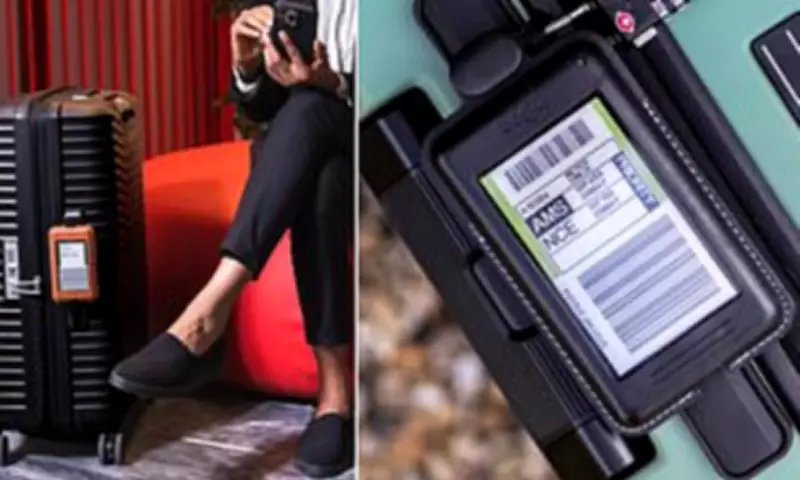
A revolutionary new electronic bag tag system is transforming air travel by enabling passengers to skip lengthy airport queues and check in their luggage directly from home. This innovative technology, which has been adopted by approximately twenty major airlines including Lufthansa, Qatar Airways, and KLM, leverages Bluetooth connectivity to track the precise location of baggage throughout the journey.
How the Electronic Bag Tag System Works
Travellers simply answer a few preliminary questions via a dedicated mobile application before departing for the airport. Upon completion, an electronic barcode is automatically generated on the smart device attached to their suitcase. At the airport, passengers place their tagged bag on a standard weighing machine and can then proceed directly through security checkpoints to board their flight without the usual delays.
Enhanced Convenience and Time-Saving Benefits
To maximise efficiency, certain participating airlines are offering an additional premium service where bags equipped with these intelligent tags are collected directly from the passenger's residence. Some high-end luggage manufacturers have already integrated the technology directly into their suitcases, while standalone electronic bag tag gadgets are currently available on the market, priced between £50 and nearly £180.

Industry experts anticipate that costs will decrease as adoption grows. Andrew Price, the former head of global baggage operations for the International Air Transport Association, praised the advancement, stating to the Times, 'The technology is great. I love it when I can use it, because it does save you time at the airport.'
Modernising an Outdated Process
Jasper Quak, managing director of Bagtag, highlighted that despite the widespread introduction of online and mobile check-in systems, the baggage handling process has remained largely unchanged since its inception in the late 1980s, still 'relying on a piece of paper.' The electronic bag tag represents a significant leap forward in digitising and streamlining this critical aspect of air travel.
Real-Time Tracking and Operational Improvements
BagID, a company founded by an individual who experienced lost luggage, has recently partnered with Aena, the world's largest airport operator, to pilot an advanced real-time tracking system at key Spanish airports including Madrid, Barcelona, and Majorca. Speaking at the Mobile World Congress in Barcelona, BagID's chief executive Ina Eldoy explained that the system can instantly alert airport staff if a passenger's bag is located in one terminal while their aircraft is scheduled for imminent departure from another.
Eldoy elaborated, 'Then they know, "I have to rush this bag", or "I have to send a message to the traveller that it didn’t make the transport, but it’s going to be on the next flight."' This proactive approach aims to drastically reduce baggage mishandling incidents.
Addressing a Costly Industry Challenge
According to data from Sita, the international society of aeronautical telecommunications, the loss or mishandling of luggage cost the global aviation industry nearly £4 billion in 2024 alone. The widespread implementation of electronic bag tag technology is expected to substantially mitigate these financial losses while simultaneously enhancing the overall passenger experience through greater convenience and reliability.