France's Tech Legacy: From Minitel to Modern Sovereignty
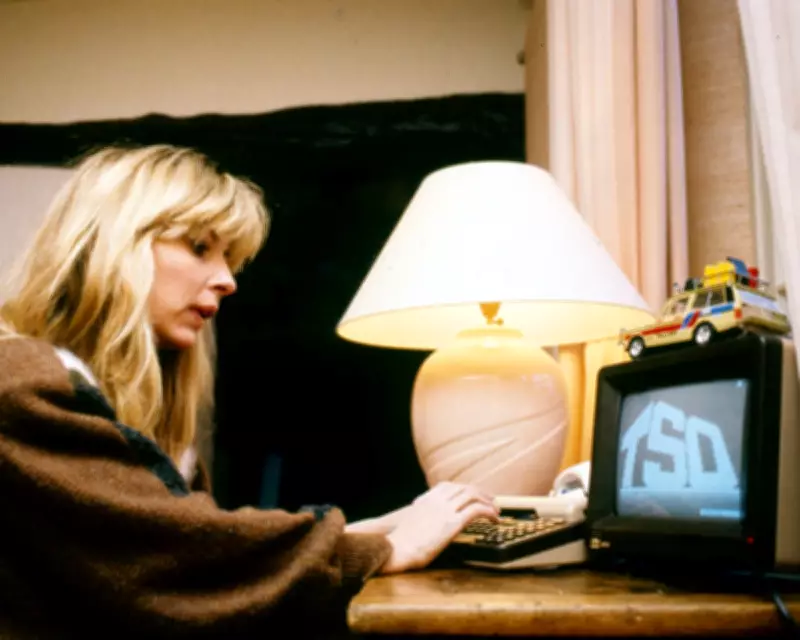
In 1987, a French village resident used a Minitel terminal to follow the Paris-Dakar rally, showcasing an early glimpse of digital connectivity. This image, captured by Philippe Le Tellier, symbolizes a time when France led the world in technological innovation. If France could achieve such feats with Minitel in the 1980s, the European Union now has the potential to liberate itself from Silicon Valley's grip and forge its own path in the tech landscape.
A History of Pioneering Achievements
France has consistently punched above its weight in technology. In the 1960s, it became the third nation, after the United States and the Soviet Union, to independently launch a satellite into orbit. Notably, France was the only country to send an animal, Félicette the cat, into space and successfully return it alive. The 1970s saw the Franco-British Concorde reduce transatlantic travel to just three and a half hours, while the TGV high-speed train revolutionized rail transport, reaching speeds of up to 320 kilometers per hour.
By the late 1980s, the French space agency designed Hermès, a crewed spaceplane that improved upon NASA's shuttle by integrating with its launch vehicle for enhanced safety. Concurrently, a massive expansion of nuclear power positioned France as one of the world's least carbon-intensive economies. However, the Minitel stands out as a quintessential example of French tech prowess.

The Minitel Revolution
More than a decade before the widespread adoption of the World Wide Web, Minitel allowed French users to perform a variety of tasks online. They could purchase train tickets, check film schedules, manage banking, play games, access recipes, read horoscopes, and even engage in erotic chats, known as la messagerie rose. Initially introduced as an electronic phone directory with a screen and keyboard, Minitel could locate individuals even with phonetic misspellings and display business information, including maps.
By the late 1980s, approximately 20% of French households owned a Minitel terminal. Usage bills soared, leading to innovations like the Mistral device, which enabled offline consultation of up to 60 pages to save costs. This system was part of a broader technological rivalry within France, with researchers divided between decentralized networks, similar to the internet's precursor Arpanet, and centralized systems like Transpac, which France Télécom supported.
Lessons for European Tech Sovereignty
The Minitel's success was also its limitation. Its centralized, controlled data flow hindered scalability, ultimately causing it to be overtaken by the more flexible internet. Some critics argue this was a government failure, but a deeper analysis reveals that France Télécom's insistence on end-to-end control for monetization mirrored the tactics of modern tech monopolies, which have degraded the internet's quality, as described by Cory Doctorow.
Today, the European Union faces a critical juncture. As it develops a "made in Europe" industrial policy to counter competition from the United States and China, the EU has an opportunity to resist external pressures and redefine technology that serves its citizens. France's legacy in areas like nuclear energy, space exploration, telecommunications with Eutelsat, chip manufacturing, frontier AI through Mistral AI, and quantum computing with Pasqal demonstrates the value of state-driven innovation.
Challenges and Opportunities Ahead
Despite France's foresight, scale remains a significant barrier. The dominance of US tech giants, fueled by venture capital and vast English-speaking markets, has shifted technology's focus from collective benefits to individualized attention capture and data extraction. This has led to societal costs, including democratic erosion, mental health issues, and social isolation.

The EU must regain sovereign control over technology, but it can do so democratically. Debates between deregulation, favored by Germany, and government-led approaches, preferred by France, may be misguided. Instead, the EU should leverage its scale to selectively compete in key markets while abandoning others. By learning from France's Minitel era, Europe can build a tech future that prioritizes public good over corporate profit, ensuring technology enhances rather than undermines society.