Microsoft's Glass Data Storage Could Preserve Information for Millennia
From ancient stone carvings to modern floppy disks, humanity has long sought ways to preserve vital information. Now, researchers at Microsoft in Cambridge have unveiled a groundbreaking method that could safeguard data for thousands of years: laser-writing in glass. This innovation addresses the pressing need for durable long-term storage, as current systems like magnetic tape and hard disks have limited lifespans, requiring frequent copying and maintenance.
The Science Behind Glass-Based Data Storage
In a study published in the journal Nature, Richard Black, the research director of Project Silica, and his team detail how their system works. Data is converted into bits and then encoded as tiny deformations, known as voxels, within a piece of glass using a femtosecond laser. Remarkably, hundreds of layers of these voxels can be created within just 2mm of glass, making the process highly efficient. By splitting the laser into four beams that write simultaneously, the technology achieves a recording speed of 65.9 million bits per second.
The researchers have demonstrated that they can store 4.84 terabytes of data in a 12 square centimetre piece of fused silica glass, 2mm deep. This is equivalent to the information held in approximately 2 million printed books, as noted in an accompanying article by scientists in China. Additionally, the team has adapted the method to work with borosilicate glass, commonly used in Pyrex products, which is more affordable and widely available.

Reading and Stability of Glass-Stored Data
Once data is written into the glass, it can be retrieved using an automated microscope with a camera that captures images of each layer. These images are then processed and decoded through a machine learning system, ensuring fully automated operation from writing to reading. Experiments indicate that the laser-created deformations are incredibly stable, with the potential to last over 10,000 years at room temperature, offering unparalleled longevity compared to traditional storage media.
Potential Applications and Challenges
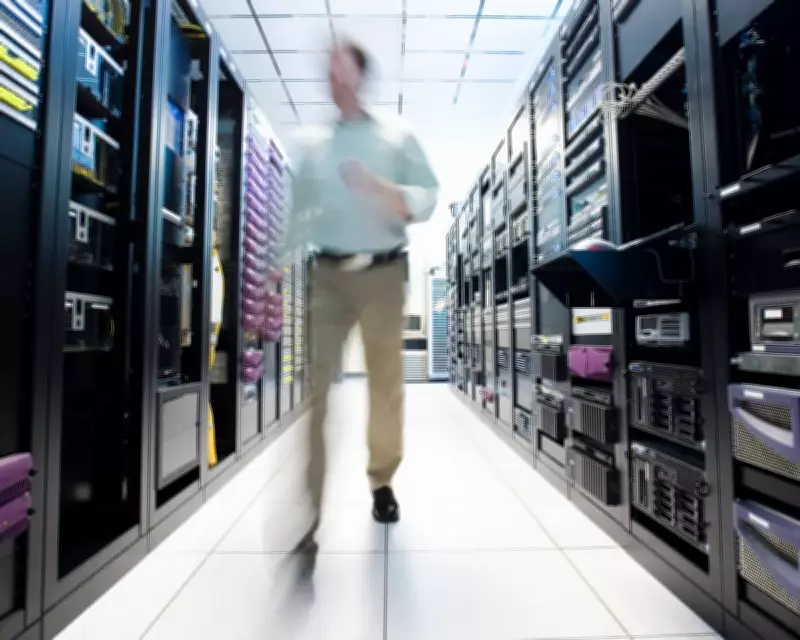
While this technology holds promise for big cloud companies and datacentres, it is not intended for home or office use. Richard Black emphasises that the system is designed for large-scale applications, where long-term data preservation is critical. However, experts like Melissa Terras, a professor of digital cultural heritage at the University of Edinburgh, highlight potential hurdles. She points out that future generations may lack the necessary technology or instructions to read the glass, and significant investment is required to deploy such systems widely.
Terras also raises concerns about current priorities, suggesting that resources might be better spent on immediate issues, such as recovering from cyber-attacks on institutions like the British Library, rather than investing in futuristic storage solutions. Nonetheless, the development of glass-based data storage represents a significant step forward in ensuring that digital archives, from personal photos to national records, can endure for millennia without degradation.