Nigeria and Kenya Spearhead Africa's Electric Van Assembly Drive with Chinese Kits
E-mobility companies across Africa are initiating local assembly of electric vans and taxis, leveraging Chinese-made vehicle kits and creative financing solutions to expand the adoption of electric public transport throughout the continent.
Saglev's Groundbreaking Initiative in Nigeria
Saglev, based in Lagos, Nigeria, has commenced assembly of 18-seater passenger electric vans using imported kits from Chinese automaker Dongfeng Motor Corp. The company aims to produce up to 2,500 vehicles annually, with plans to eventually assemble 17 different electric models for markets in Nigeria and West Africa.
"This represents a significant milestone in Nigeria's shift toward clean, fossil-free transportation," stated Saglev's CEO Olu Falaye. He emphasised that this van is the first locally assembled electric vehicle designed for mass transit in Nigeria and sub-Saharan Africa.

"This achievement clearly demonstrates that electric mobility in Nigeria is practical, scalable, and prepared for widespread adoption," Falaye added.
Saglev is a joint venture between Nigeria's Stallion Group, a prominent auto distributor, and Chinese automaker Sokon Motor. The company also intends to install solar-powered charging stations to address power reliability issues, a critical barrier to EV uptake in certain African regions.
Kenya's Parallel Advancements in EV Assembly
In Kenya, a similar movement is underway. Chinese-backed Rideence Africa recently inked a $2.46 million agreement with Mombasa-based Associated Vehicle Assemblers (AVA) to start local assembly of electric taxis and minibuses. These vehicles will be built from kits supplied by China's Jiangsu Joylong Automobile and Beijing Henrey Automobile Technology.
"We are decisively transitioning from operator to manufacturer," explained Rideence Africa's managing director, Minnan Yu. "Our objective is to establish a Kenya-rooted new-energy mobility company that serves the entire African continent."
Kenya and Nigeria, as two of Africa's largest economies, are at the forefront of this local EV assembly push. Countries are motivated to reduce fuel expenses, lower emissions, and develop domestic manufacturing capabilities.
"This partnership establishes Kenya's first dedicated electric vehicle assembly line, unequivocally proving that Kenya possesses the capacity and capability to assemble EVs locally on a large scale," remarked AVA Managing Director Matt Lloyd.
The Vital Role of Electric Vans in African Transport
Electric vans and minibuses are integral to public transportation across Africa, where Japanese models like the Toyota Hiace and Nissan vans currently dominate roads for passenger and goods transport.
EV charging costs average approximately $3 for up to 200 kilometers (123 miles), compared to over $15 in petrol costs for similar distances. "The assembly of electric vans is emerging as a robust market segment," noted Dennis Wakaba, secretary-general of the Electric Mobility Association of Kenya. "Previously, high costs deterred operators, but as local assembly scales up, prices have decreased, attracting more orders."
Expanding Market and Innovative Financing Models
Kenya hosts one of Africa's most dynamic electric mobility markets, with startups assembling buses and vans for public transport and ride-hailing services. Ethiopia and South Africa have also entered this sector. In Ethiopia, Belayneh Kinde Group (BKG) assembles around 150 minibuses monthly using Chinese components.
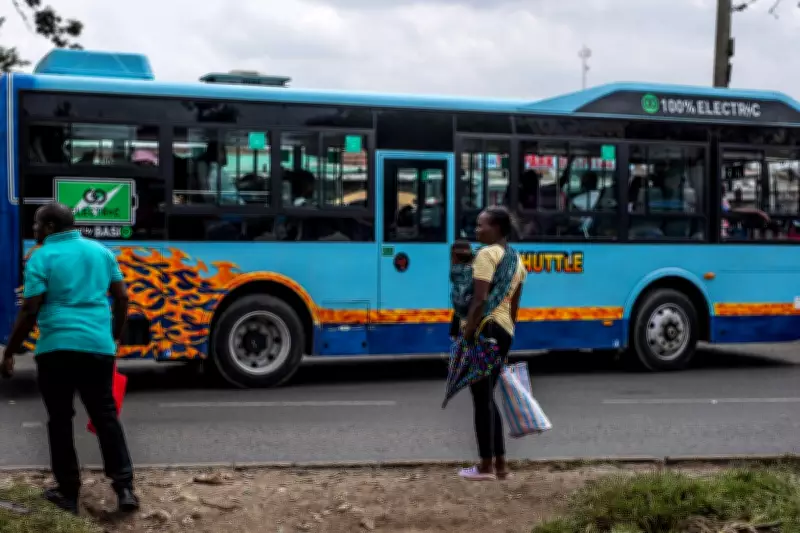
To enhance affordability, companies such as Rideence are implementing pay-as-you-drive and lease-to-own options, enabling operators to bypass hefty upfront payments. Rideence leases its taxis to drivers for about $18 per day. BasiGo-Kenya Vehicle Manufacturer, which is expanding into electric van assembly, requires operators to pay a deposit followed by roughly 20 U.S. cents per kilometer (32 cents per mile) driven.
This approach aligns with the financial realities of transport operators in Africa, where credit access is limited and few can afford to buy new vehicles outright.

"These innovative financing models reduce risks for both assemblers and operators, accelerating vehicle deployment. We anticipate more e-vans capturing a larger share of African transport systems," Wakaba commented.
Current Landscape and Future Prospects
Despite progress, Africa currently has only about 30,000 EVs, compared to millions of petrol and diesel vehicles, according to recent data from the Africa Mobility Alliance. The continent manufactured just 1.1 million vehicles last year, with 90% produced in Morocco and South Africa.
The local assembly initiatives in Nigeria and Kenya signify a pivotal step toward sustainable transportation, leveraging Chinese technology and adaptive financing to overcome regional challenges and foster greener mobility solutions across Africa.