Sue Autonomous Shuttle Debuts in Munich, Targets Public Transport Gaps
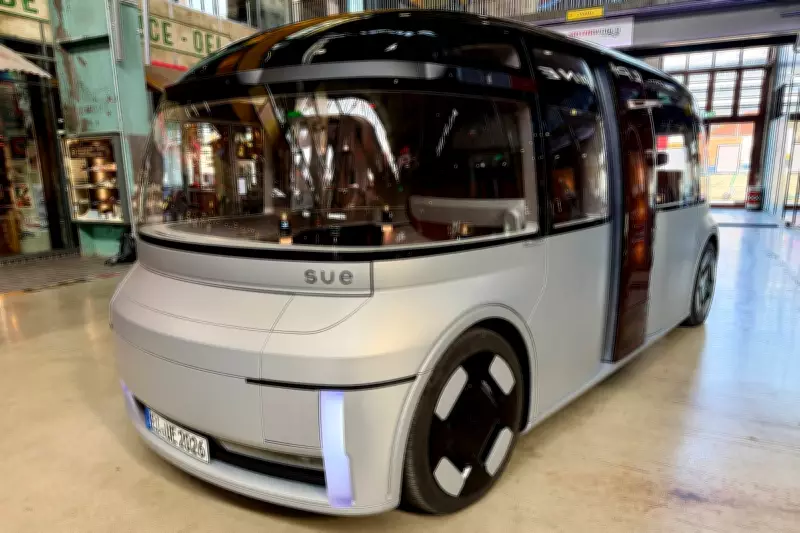
The Sue autonomous electric people mover has made its international debut in Munich, offering a vision for the future of public transport in the era of self-driving technology. Developed by UE Studios, a company known for creating concept cars and special vehicles for films, Sue is specifically designed as a shared public transport vehicle rather than a robo-taxi or futuristic city pod.
Human-Centric Design and Shared Transport Focus
Alexander Uedelhoven, project lead at UE Studios, emphasised that Sue was conceived from the ground up as a shared vehicle for public transport, addressing the needs of both passengers and operators. Unlike many design-led studies, Sue is road-registered, carries number plates, and is fully drivable, though it currently operates with an onboard operator due to legal requirements. The vehicle is engineered for fully autonomous use, with speeds up to 31mph, significantly higher than typical low-speed autonomous pods.
UE Studios has already secured permission for autonomous operation in a defined region in Bavaria, where Sue could connect two villages. The layout seats six passengers plus an operator, expanding to eight seats in fully-autonomous mode, supporting both ride-sharing and ride-hailing with two separate interior sections that can be booked individually.

Innovative Features and Sustainable Materials
Sue features a symmetrical front-to-rear design to reduce tooling and maintenance costs, similar to the Citroen Ami. Large glass areas replace traditional A-pillars, enhancing visibility and creating an open feel. The side of the vehicle is treated as "the new front," with doors designed like welcoming house entrances.
Inside, Sue offers two compartments divided by electronically switchable glass panels and a panoramic glass roof for a 360-degree view. Distinctive Sue Ambience digital candles at each seat guide passengers to their allocated spots using colour and number cues, mirrored on a booking app. Materials prioritise durability and recyclability, with 3D-printed TPU cushions and Arfinio mono-material for easy cleaning and lower maintenance costs.
Technical Specifications and Future Prospects
Under the floor, Sue houses a battery of just over 60kWh, operating on a 48-volt system to simplify maintenance and suit rural areas. Autonomous sensors and computing hardware are housed in a central "vision belt" and modular rack system, allowing for independent upgrades. As a prototype, Sue marks the end of its funded development phase, with future production depending on partners, volumes, and regulatory frameworks.
Conceived as complementary public transport infrastructure, Sue aims to fill gaps where existing bus and rail networks fall short, offering a glimpse into a more connected and sustainable mobility future.