Waymo Driverless Car Hinders Ambulance During Austin Mass Shooting Emergency
In a concerning incident that highlights the complexities of integrating autonomous technology into urban environments, a driverless Waymo vehicle temporarily blocked an ambulance attempting to reach the scene of a mass shooting in Austin, Texas. The event, captured in bystander video and confirmed by both the company and local officials, has sparked urgent questions about how self-driving cars operate during fast-moving emergency situations where every second counts.
Details of the Incident and Shooting
The mass shooting occurred in Austin's entertainment district early on Sunday morning, resulting in three fatalities and thirteen injuries. Investigators are examining terrorism as a potential motive, particularly after reports that the suspect wore clothing featuring an Iranian flag design and the phrase "Property of Allah." This attack followed recent military actions by the U.S. and Israel against Iran, though the FBI and Austin police continue to investigate the precise motivations behind the violence that sent bar patrons and nearby residents scrambling for cover.
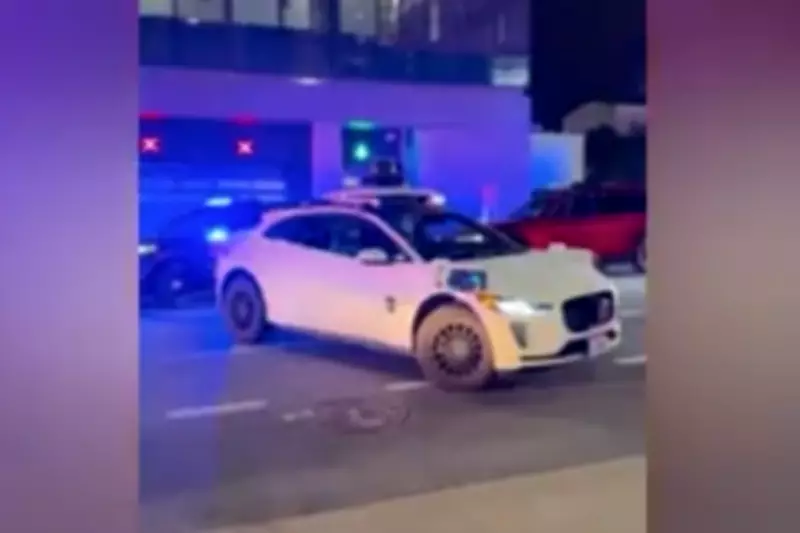
Video footage from the scene shows the Waymo car stopped completely, obstructing the street as an ambulance approached. A police cruiser arrived shortly after, with an officer attempting to communicate with the company through the vehicle's speaker system. It took approximately another minute before the autonomous car finally moved away, pulling into a nearby parking garage and allowing emergency services to proceed.

Official Responses and Training Protocols
At a press conference held on Monday, Austin-Travis County EMS Chief Robert Luckritz addressed the incident, emphasizing that first responders are specifically trained to handle such scenarios involving autonomous vehicles. "We had more than twenty assets and resources that responded to this event," Luckritz stated, adding that they work "very closely" with autonomous vehicle operators to coordinate during emergencies.
Luckritz downplayed the impact on patient outcomes, noting that "we were on scene within fifty-seven seconds" and that in the grand scheme, the delay did not significantly affect medical results. However, he confirmed that officials have already contacted Waymo to express concerns and collaborate on preventing similar occurrences in the future.
Waymo's Statement and Broader Context
A Waymo spokesperson explained in a statement that the vehicle was en route to pick up a rider near West Sixth Street, where the shooting occurred. As it approached the designated location, the car "identified a road blockage and began executing a U-turn." During this maneuver, another ambulance appeared, prompting the vehicle to "briefly yield" before being assisted by the nearby police officer.
The company acknowledged the incident, stating: "While the Waymo Driver operates in dense U.S. cities, smoothly navigating interactions with emergency vehicles at all hours, we are dedicated to learning from this situation and how we show up for our community as we continue improving road safety in the cities we serve."
Austin as a Testing Ground and Recent Challenges
Austin has emerged as a prominent testing ground for autonomous vehicles, but this rollout has not been without challenges. Recent reports indicate that Waymo's cars have faced scrutiny for illegally passing Austin school district buses, leading to a voluntary software recall in December following a federal safety probe. This latest incident adds to growing concerns about the technology's reliability in unpredictable, high-stakes environments.
Meanwhile, Waymo has expanded its robotaxi services to include Dallas, Houston, San Antonio, and Orlando, underscoring the rapid proliferation of autonomous vehicles across major urban centers. The victims of the shooting have been identified as Ryder Harrington, 19, Savitha Shan, 21, and Jorge Pederson, 30, whose lives were tragically cut short in the violence.

As cities like Austin continue to navigate the integration of self-driving cars, incidents such as this underscore the critical need for robust protocols, continuous software improvements, and close collaboration between technology companies and emergency services to ensure public safety remains paramount.