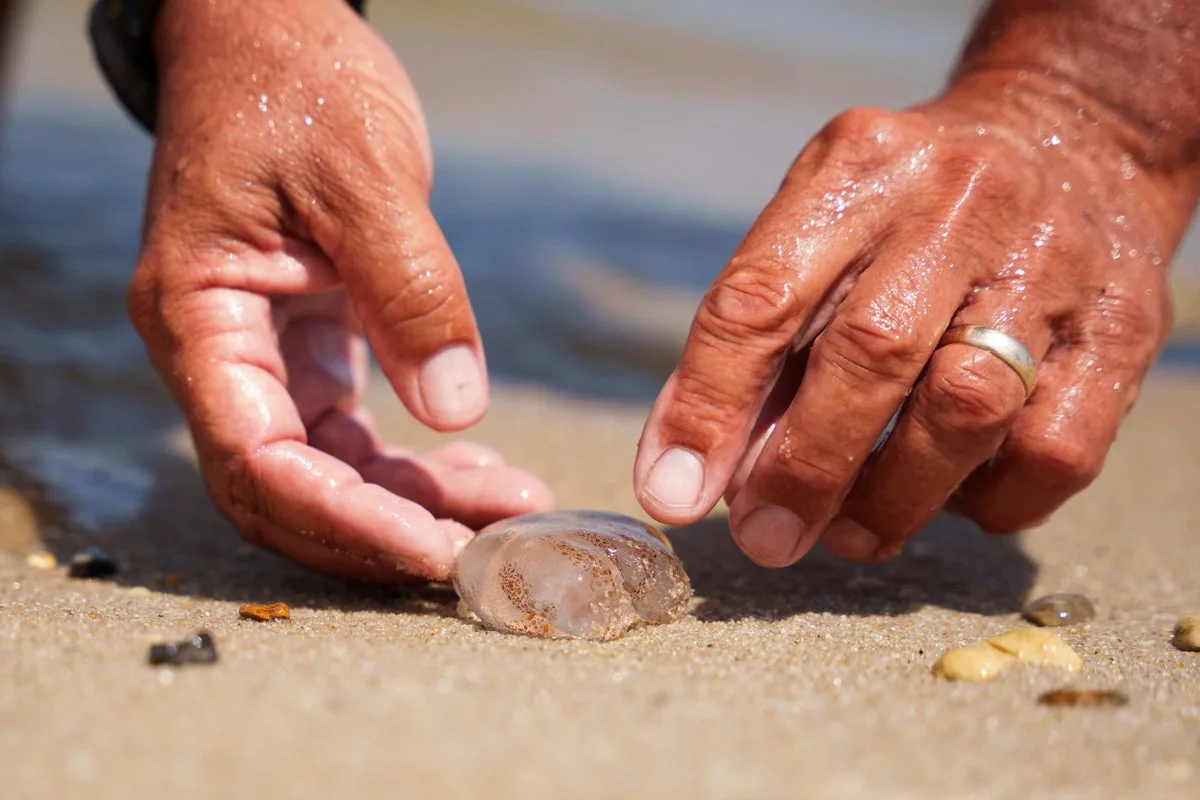
Beachgoers along the US East Coast are encountering an unusually high number of jellyfish this summer, with experts describing the surge as unprecedented. Sightings have increased in states including Maryland, Delaware, Massachusetts and Maine, driven by higher temperatures and increased rainfall creating ideal breeding conditions.
Jonathan Cohen, a marine science professor at the University of Delaware, told The Washington Post: “It’s as bad as I’ve ever seen it. To have this many for as long as we’ve had them is rare.” The rise in jellyfish has led to a corresponding increase in stings. Lewes Beach in Delaware reported a fourfold rise in stings this July compared to last year, according to the Associated Press.
While most stings are minor, experts advise seeking medical help if symptoms such as difficulty breathing, wheezing, hives, or chest pain occur. For treatment, the Mount Sinai Health System recommends rinsing the affected area with vinegar or ocean water, avoiding fresh water, and applying antihistamine or steroid creams after soaking in hot water for 20–40 minutes.

Despite the surge, lifeguards and experts say swimmers need not avoid beaches this Labor Day weekend, as sightings are expected to decline with cooler temperatures. Hurricane Erin, which hit the East Coast earlier this month, also helped clear some jellyfish. Meanwhile, a nuclear power station in France had to shut down temporarily after a jellyfish swarm clogged its cooling system.