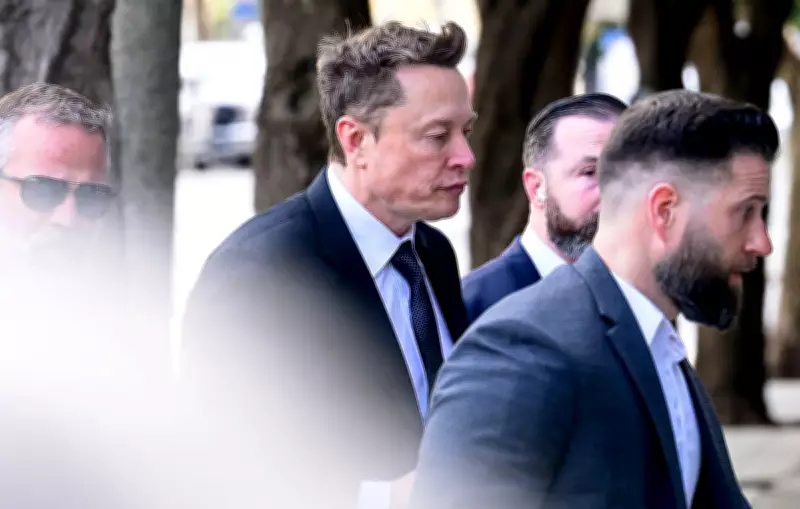
Elon Musk arrived at federal court in San Francisco, California, on 4 March 2026, as he took the witness stand in a high-profile civil trial. The case involves allegations that the billionaire manipulated Twitter's stock price prior to his acquisition of the company in 2022, with investors accusing him of securities fraud.
Investors Allege Fraudulent Tactics
Twitter investors have filed a class-action lawsuit claiming that Musk publicly derided the social network to artificially depress its stock value, enabling him to purchase it at a bargain price. According to the plaintiffs, Musk agreed to buy Twitter but then engaged in months of waffling and attacks aimed at lowering the share price to secure a better deal.
Despite contentious legal battles, Musk ultimately completed the purchase for $54.20 per share, totalling approximately $44 billion. His legal team has argued that he had no intention to harm investors or manipulate stock prices, asserting that his criticisms were legitimate concerns about the platform.

Musk's Testimony and Market Comments
During proceedings on Monday, Musk was questioned by investors' attorneys about whether he was aware that his public statements could influence stock prices. In response, Musk described the stock market as "like a manic depressive," noting that his tweets sometimes had unexpected effects on share values.
He stated, "My tweets have sometimes the opposite effect of what one would expect on stock prices. Sometimes they have the expected effect." Throughout 2022, Musk frequently posted to his millions of followers, alleging that Twitter was plagued by bots and fake accounts, at one point tweeting that at least 20% of accounts were fraudulent and threatening to halt the deal if proven otherwise.
Trial Details and Legal Arguments
The trial is being held in federal court in San Francisco under Judge Charles Breyer. During jury selection, nearly half of prospective jurors were dismissed due to strong negative opinions of Musk. Opening statements began on Monday, with plaintiffs' lawyer Mark Molumphy asserting, "We're here today because Elon Musk cheated investors. The evidence will show Mr Musk knew exactly what he was doing."
Musk's attorney, Michael Lifrak, countered by arguing that the billionaire's complaints about Twitter were valid and his concerns "were real and weren't a fraud." The trial focuses on a six-month period from April to October 2022, during which plaintiffs allege Musk pressured Twitter's board to sell at a lower price than his initial offer.
Stock Volatility and Investor Losses
When Musk indicated in May 2022 that he was backing out of the purchase and putting the buyout "temporarily on hold," Twitter's shares dropped sharply, at times falling by 20%. The stock remained unstable for months, leading investors in the lawsuit to sell their shares below $54.20 when they believed the deal was collapsing.
After acquiring Twitter in 2022, Musk took the company private, rebranding it as X. Last year, he merged X with his artificial intelligence firm, xAI, and integrated both businesses under SpaceX, his rocket company. Musk, the world's richest person with an estimated net worth exceeding $800 billion, is expected to take SpaceX public this year in a projected record IPO, with private investors valuing his conglomerate at $1.25 trillion.
Potential Outcomes and Broader Implications
If the jury rules in favour of the Twitter investors, Musk could be required to compensate them for reported losses. This decision may also influence other pending lawsuits against Musk, including one by the US Securities and Exchange Commission alleging he failed to disclose his stake in Twitter within the required timeframe.
Musk has repeatedly denied any wrongdoing, placing the burden on investors' lawyers to prove he intentionally manipulated share prices. The trial is anticipated to last two to three weeks, with significant ramifications for corporate governance and securities law.