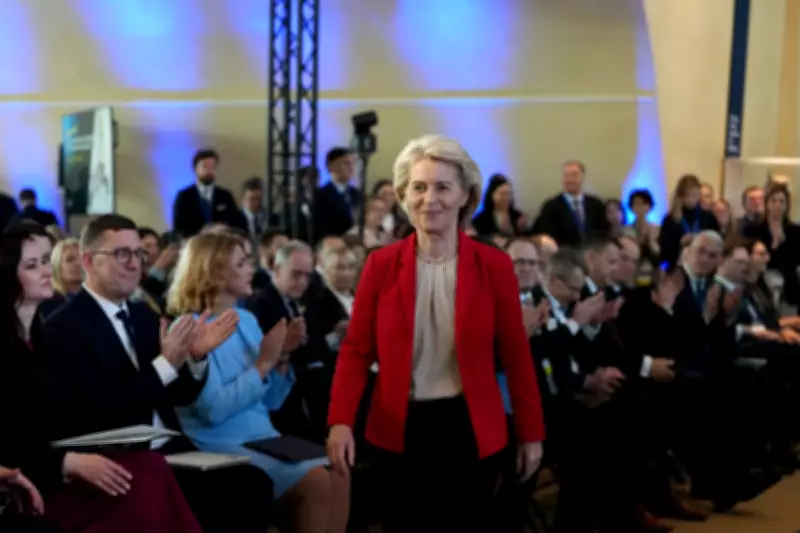
European Commission President Ursula von der Leyen has declared her intention to begin "provisionally implementing" a landmark trade agreement with the Mercosur bloc of South American nations, despite lacking formal approval from the European Parliament. This significant announcement was made on Friday, following ratification by Uruguay and Argentina the previous day.
Quarter-Century Negotiation Culminates
The EU-Mercosur trade deal represents the culmination of negotiations spanning twenty-five years, involving nations collectively home to over 700 million people. This agreement establishes one of the world's largest free trade zones, accounting for approximately a quarter of global gross domestic product.
Strategic Response to Global Trade Shifts
This move follows significant disruptions in international trade, including tariffs imposed by the United States and China's restrictions on critical mineral supplies. These developments have prompted the 27-nation European Union to aggressively pursue free trade agreements with various global partners as part of a broader economic strategy.

Controversial Implementation Approach
"When they are ready, we are ready," von der Leyen stated, indicating the Commission's readiness to proceed with backing from European leaders. However, this approach effectively sidesteps the European Parliament, where the agreement was expected to face rigorous scrutiny from elected representatives.
This provisional implementation represents an unusual maneuver for the European executive branch and is likely to generate substantial criticism, particularly given the deal's vehement opposition from Europe's agricultural sector.
Von der Leyen's Justification
At a tightly controlled news conference where no questions were permitted, von der Leyen framed the decision within broader geopolitical and economic contexts. "Mercosur embodies the spirit in which Europe is acting on the global scene," she asserted.
"Our businesses, our workers, and our citizens will reap the benefits, and they should reap them as soon as possible," von der Leyen added. "This is about resilience, this is about growth, and Europe shaping its own future."
Parliamentary Consent Still Required for Finalization
The Commission President acknowledged that the "agreement can only be fully concluded once the European Parliament has given its consent." She emphasized that "the commission will continue closely with all EU institutions, member states, and stakeholders to ensure a smooth and transparent process" moving forward.
This provisional implementation strategy allows the trade deal to take effect while parliamentary approval processes continue, potentially accelerating economic benefits but raising questions about democratic oversight within EU trade policy formulation.