Trump Trade Representative Contradicts President on Tariff Authority
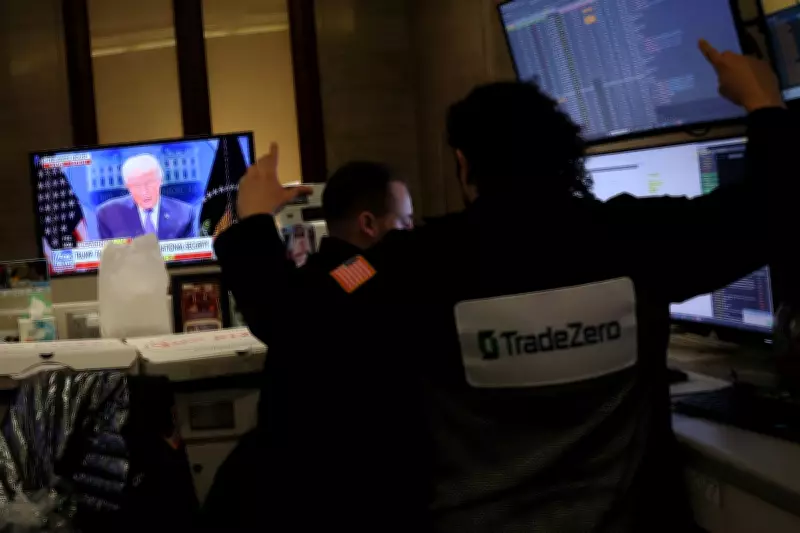
In a striking admission that directly contradicts President Donald Trump's public statements, U.S. Trade Representative Jameson Greer has revealed that the administration's newest tariff measures are strictly temporary and cannot be extended without congressional approval. This revelation comes less than twenty-four hours after Trump declared during his State of the Union address that no legislative action would be necessary to maintain his controversial trade policies.
The 150-Day Limit on Presidential Tariff Authority
Speaking to Bloomberg News on Wednesday, Greer confirmed that the 10 to 15 percent global import tariffs announced by Trump following last week's Supreme Court decision represent only a "temporary, 150 day authority". This limited timeframe is designed to provide continuity with the now-invalidated taxes that Trump had previously attempted to impose unilaterally under a 1977 law that contained no explicit tariff provisions whatsoever.
The legal foundation for these temporary measures rests on Section 122 of American trade law, a relatively obscure provision that permits presidential tariff action for precisely 150 days. Beyond this deadline, specific congressional authorization becomes absolutely mandatory for any extension. Despite this clear statutory limitation, President Trump has repeatedly rejected the notion that legislative cooperation is required, creating a significant policy contradiction within his own administration.

Supreme Court Ruling and Presidential Reaction
Greer's admission follows last week's landmark Supreme Court decision, where the conservative-majority court ruled 6-3 that Trump could not invoke the 1977 International Emergency Economic Powers Act to impose tariffs. The justices determined that this Carter-era legislation simply did not grant the president authority to levy import taxes for any reason, striking down much of Trump's unilateral tariff policy.
The affected measures included:
- "Reciprocal" tariffs on multiple countries announced during Trump's "Liberation Day" event in April
- Specific tariffs targeting Canada, China, and Mexico intended to combat fentanyl trafficking
President Trump responded with characteristic fury, labeling the Supreme Court ruling "deeply disappointing" and expressing shame toward the Republican-appointed justices who ruled against him. In particularly harsh language, he accused Chief Justice John Roberts and his own appointees, Justices Neil Gorsuch and Amy Coney Barrett, of being "fools and lap dogs for the RINOs and the radical left Democrats." He further claimed these justices displayed "unpatriotic and disloyal" behavior toward the Constitution.
Administration Plans to Circumvent Legal Limitations
Despite acknowledging the temporary nature of current tariff authority, Greer indicated the administration intends to pursue alternative legal mechanisms to reconstruct Trump's trade policy framework. He stated officials plan to "reconstruct" Trump's invalidated tax scheme using different statutory tools to maintain what he described as essential policy continuity.
"We'll just have a change in the legal implementing authority," Greer explained, suggesting the administration would seek different legislative justifications for essentially the same trade policies. This persistence comes despite public polling consistently showing majority opposition to Trump's tariff approach among American voters.
The emerging contradiction between presidential rhetoric and administrative reality highlights significant tensions within Trump's trade policy apparatus. While the president publicly dismisses congressional authority, his own trade representative acknowledges strict legal limitations that will inevitably require legislative cooperation if the administration wishes to extend its tariff measures beyond their initial 150-day window.