

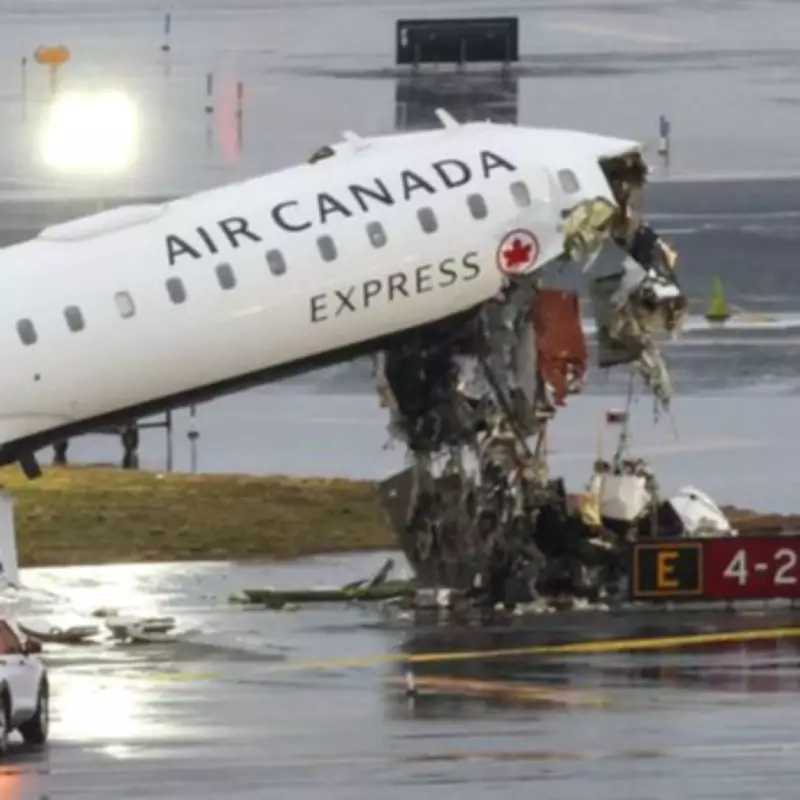
The investigation into the tragic Air Canada plane crash at New York City's LaGuardia Airport has uncovered a crucial and fatal miscommunication error at the heart of the incident, which resulted in the deaths of two pilots and left dozens of others injured. The cockpit voice recorder from the aircraft has revealed a critical breakdown in coordination between air traffic controllers that led to the catastrophic collision.
Runway Confusion and Failed Safety Systems
According to the audio evidence, one air traffic controller granted permission for Air Canada Flight 8646, arriving from Montreal, to land on runway 4. Simultaneously, another controller instructed a fire engine to drive down the exact same runway. This disastrous miscommunication occurred at approximately 11:40 PM on Sunday, with the truck's surface safety system also failing to alert the controllers to the impending danger.
Controller Roles and Last-Minute Warnings
It has emerged that two air traffic controllers were on duty in the tower that night. One served as the local controller, while the other acted as the controller in charge, also taking on ground controller responsibilities. In the final moments before impact, the controllers desperately pleaded with the fire engine to stop, but their warnings came too late to prevent the collision.

The crash claimed the lives of both the pilot and co-pilot of the Air Canada plane, with an additional 41 individuals sustaining injuries that required hospital treatment. The aircraft collided directly with the fire engine on the runway, causing significant damage and emergency response efforts.
Layered Safety Systems Under Scrutiny
National Transportation Safety Board chairwoman Jennifer Homedy emphasized the rarity of such incidents in modern aviation. In comments to the Wall Street Journal, she stated, "We rarely, if ever, investigate a major accident where it was one failure. Our aviation system is incredibly safe because there are multiple, multiple layers of defence built in to prevent an accident."
This statement underscores the ongoing investigation's focus on how multiple safety protocols, including communication procedures and automated alert systems, failed to prevent this tragedy. The probe continues to examine all contributing factors, from human error to technological safeguards, in order to prevent similar occurrences in the future.






