

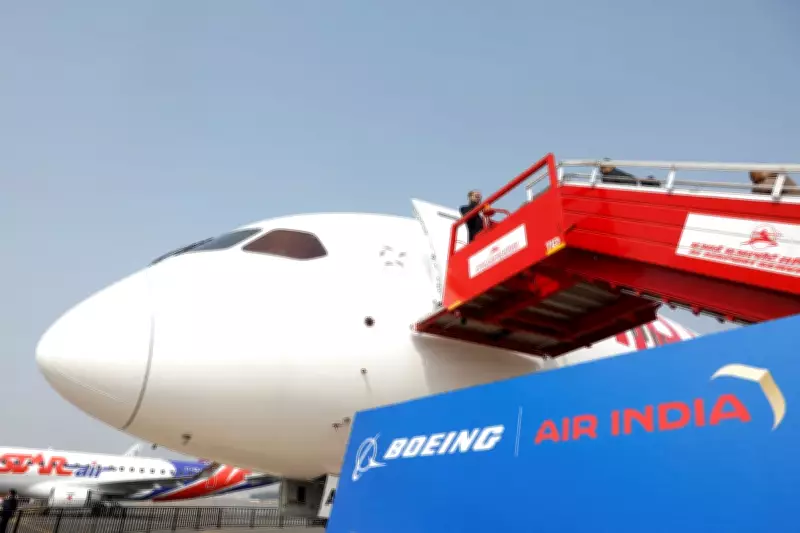
Air India Flight Diverted to Saudi Arabia Over Technical Fault
An Air India flight travelling from Bengaluru to London was forced to make an unscheduled diversion to Jeddah in Saudi Arabia on Monday due to a suspected technical fault. The airline confirmed the incident, stating that the diversion was undertaken as a precautionary measure to ensure the safety of all onboard.
Details of the Diversion
Flight AI133, operated by a Boeing 787-8 Dreamliner, landed safely at Jeddah's King Abdulaziz International Airport at approximately 2pm GMT. According to flight tracking data from Flightradar24, the aircraft had been airborne for more than six hours before the decision to divert was made. All passengers and crew were confirmed to be unharmed following the landing.
In an official statement, Air India said, "Air India Flight AI133, operating from Bengaluru to London Heathrow on 23 March, made a precautionary en route diversion to Jeddah following a suspected technical issue." The airline emphasised that the aircraft is now undergoing thorough technical inspections in strict accordance with established safety protocols. While the exact number of people onboard was not disclosed, the airline reiterated that passenger and crew safety remains its highest priority.

Recent Incidents and Broader Context
This event marks the second significant operational issue for Air India within a matter of days. On 19 March, a separate Air India flight bound for Vancouver was compelled to return to Delhi after nearly seven hours in the air. That incident involved a Boeing 777-200LR, registered VT-AEI, which had proceeded into Chinese airspace before turning back. The diversion was necessary because the aircraft had not been properly cleared for the route to Canada, highlighting an apparent lapse in updating operational requirements.
The latest diversion occurs against a backdrop of increased disruption for airlines operating in Gulf airspace, largely due to geopolitical tensions stemming from the US-Israeli conflict with Iran. Numerous carriers have been forced to reroute or cancel flights through the region, placing additional strain on vital air corridors connecting South Asia and the Middle East with Europe.
Global Aviation Safety Concerns
This incident adds to a series of challenges facing global aviation safety. In a separate and tragic event late on Sunday, an Air Canada Express flight, a CRJ-900LR arriving from Montreal, collided with a ground vehicle after landing at LaGuardia Airport in New York. The accident resulted in the deaths of both pilots and injuries to dozens of individuals, prompting the Federal Aviation Administration to temporarily close the airport to incoming flights.
Furthermore, the aviation industry is still grappling with the aftermath of several major disasters. In June of last year, an Air India Boeing 787 Dreamliner crashed shortly after takeoff from Ahmedabad, claiming 241 lives out of 242 people on board. Earlier in January 2025, an American Airlines jet collided with a military helicopter near Washington, D.C., in one of the deadliest civil aviation disasters in recent American history. These events collectively underscore the ongoing pressures and critical importance of rigorous safety protocols within the international aviation sector.






