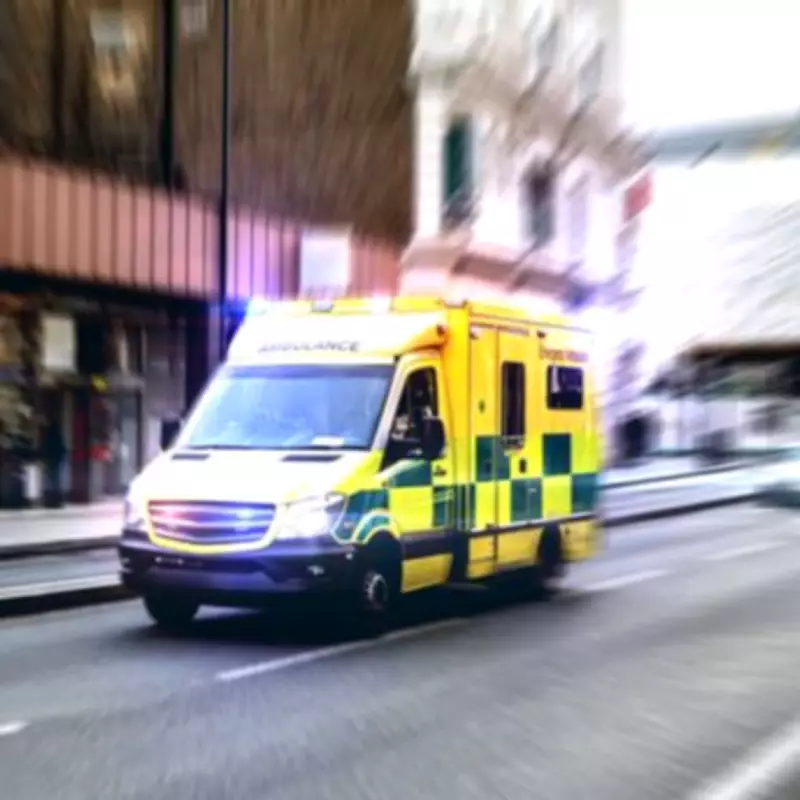
Highway Code Ambulance Rule Could Lead to £1,000 Fines and Penalty Points
Emergency vehicles such as ambulances, fire engines, and police cars often need to reach their destinations as rapidly as possible to save lives and respond to critical incidents. When motorists see flashing blue lights and hear blaring sirens, they understand the urgent necessity of quickly clearing a path to allow these vehicles to pass through traffic without delay.
Time Is Critical, But Safety Remains Paramount
In the rush to assist emergency services in moving swiftly, drivers can easily become flustered or panicked, especially on narrow roads or streets that are packed with parked vehicles. While motorists might find it challenging to create sufficient space for ambulances or fire engines on congested routes, it is absolutely essential that they stay composed and move their vehicles safely and responsibly.
This careful approach not only reduces the likelihood of collisions and accidents, but failing to properly allow an emergency vehicle through could land you with a substantial financial penalty. The Highway Code explicitly requires drivers to yield to vehicles displaying flashing lights, including police cars, fire engines, ambulances, and emergency doctors' vehicles.

Potential Consequences for Violations
However, if you violate traffic regulations whilst attempting to make way, such as by entering a yellow box junction or a bus lane, or by running a red light, the consequences can be harsh and severe. Beyond facing fines, certain violations can also add three penalty points to your driving licence, as reported by the Liverpool Echo. This combination of financial and legal penalties underscores the importance of adhering to the rules even in stressful situations.
The Highway Code states clearly: "You should look and listen for ambulances, fire engines, police, doctors or other emergency vehicles using flashing blue, red or green lights and sirens, or flashing headlights, or traffic officer and incident support vehicles using flashing amber lights."
Official Guidance and Practical Advice
The guidance further instructs drivers to halt before reaching the top of a hill, to never drive onto the pavement, to make sure no one else is put at risk, and to steer clear of sudden braking. Additional practical advice available on the Blue Light Aware website explains: "Of course, there will be times when there simply is no room for an emergency service vehicle to get past, or perhaps its crew are activated by their control room to respond to an emergency while they are waiting with everyone else at the traffic lights."
On these specific occasions, emergency crews know that other motorists are not allowed to 'jump' the red light, and the emergency vehicle would ideally not activate its sirens and lights until it was safe for the vehicle in front to cross the solid white line at the junction. The guidance adds a crucial point: "On the (hopefully) rare occasions that a blue light vehicle, in 'emergency mode', is sitting behind another vehicle at a red traffic light, it's important to appreciate that it would be both very dangerous and illegal for the other vehicle to move across the solid white line."
Ultimately, while the priority is to assist emergency responders, drivers must balance this with strict adherence to traffic laws to avoid penalties and ensure overall road safety for everyone involved.