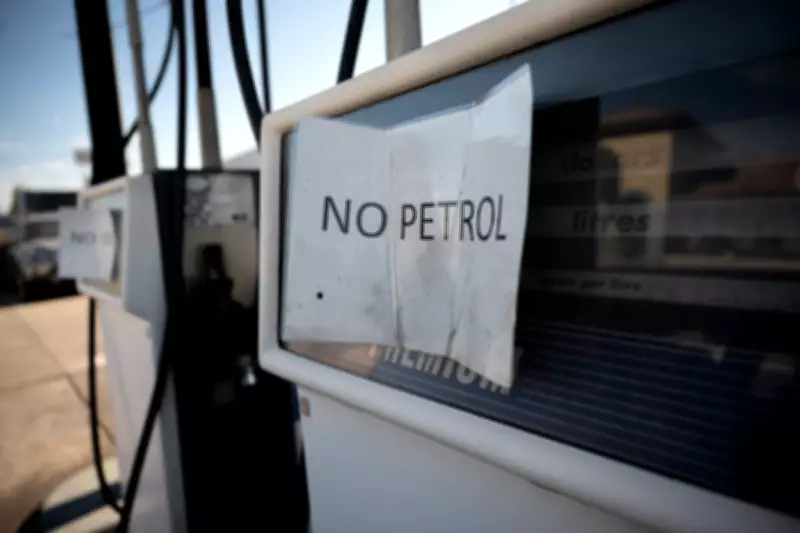
Australian Fuel Stations Run Dry Amid Panic Buying Frenzy
Dozens of petrol stations across Australia have completely run out of fuel as distributors struggle to keep pace with customers panic-buying in response to soaring prices driven by the ongoing Middle East conflict. The situation has left many regional towns without access to petrol, creating significant distribution challenges.
Distribution Crisis Hits Regional Communities Hardest
The New South Wales government reported that 32 out of 3,000 service stations in the state were out of at least one fuel type on Monday morning, with single-station towns particularly vulnerable. NSW Premier Chris Minns acknowledged that while the state has sufficient fuel reserves, distribution to regional areas has become problematic as motorists stockpile at local stations.
"It's harder to restock those petrol stations if they've got more than expected out of the bowser on any given day," Minns stated, highlighting the logistical challenges created by panic buying behavior.

Victorian Farmers Federation president Brett Hosking reported that entire towns including Wedderburn, Bonnie Doon, and Robinvale had run completely dry. He expressed concern about distribution priorities, questioning how tanker trucks could continue past metropolitan areas with high demand to reach regional communities.
Price Surge Creates "Permanent High" on East Coast
The NRMA has warned that regulators missed opportunities to prevent price hikes, with booming wholesale demand pushing fuel prices to what spokesperson Peter Khoury described as a "permanent high" on Australia's east coast. Unleaded petrol prices surpassed 230 cents per litre in Darwin and Melbourne over the weekend, with other capital cities approaching similar levels.
"We are now in a permanent high point in Sydney, Melbourne, and Brisbane," Khoury stated, blaming stations that increased prices early in the conflict. "The opportunity to crack down on that behavior and just get them to hold their price - we missed it."
Government Response and Industry Challenges
The federal government has implemented temporary measures including allowing fuel companies to sell lower-quality petrol and releasing approximately one-fifth of their mandatory stockpile. Regional Australia has been prioritized in these measures, though fuel rationing has been ruled out.
However, independent and regional stations face particular challenges. Many have reported difficulty accessing fuel after major suppliers including Ampol, BP, Mobil, and Viva Energy prioritized supply to regular customers, effectively cutting off smaller groups that purchase fuel on the spot market.
In Western Australia, two service stations in Manjimup ran dry on Friday, while industrial fuel suppliers have limited sales to 10,000 litres per customer. Local shire president Donelle Buegge noted that independent stations were struggling more than major brands.
Agricultural and Community Impacts
The fuel shortages threaten Australia's agricultural sector, with NSW Farmers president Xavier Martin warning of "serious dysfunction" leaving farmers, villages, and towns without fuel. He emphasized that tractors and harvesters require thousands of litres of diesel daily, yet attention has focused primarily on petrol shortages.
Swan Hill rural city council mayor Stuart King reported that Robinvale, currently hosting temporary workers for wine grape and almond harvests, faces particular challenges as workers travel up to 100km daily to reach farms. King called for a fuel excise cut similar to 2022 measures, noting prices in his area had risen 30% in just two weeks.
The social impact extends beyond agriculture, with King reporting that young people are reconsidering sports participation due to travel costs. "I've spoken to some young people over the weekend and they're saying they might just work on Saturdays instead of playing sports," he noted, warning of cumulative effects on community wellbeing.

Economic Disparities in Fuel Price Impacts
Analysis by the e61 Institute reveals that surging fuel prices disproportionately affect lowest-income households, which spend approximately 10% of their income on petrol. However, a fuel excise cut would deliver greater benefits to high-income households, who purchase nearly twice as much fuel as the lowest-earning Australians but are better insulated from price increases. The federal government has ruled out excise changes for now.
Urban areas are not immune to shortages, with a 7-Eleven in Canberra's Holt running out of fuel over the weekend due to sudden bulk-buying, and another in Phillip running low with stocks potentially depleted by Monday evening.
As shortages spread to more towns, calls for stronger interventions grow louder. The NSW government held crisis talks with fuel suppliers and key industries on Monday, resulting in agreements for improved information sharing to direct fuel where it's most needed.