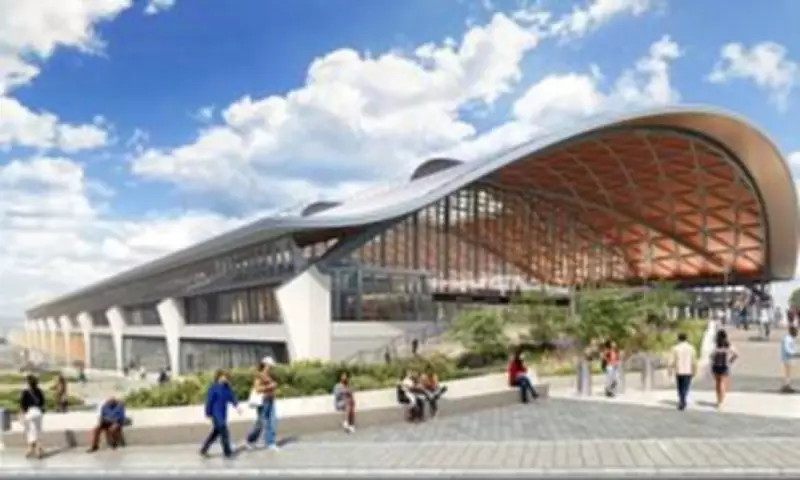
Birmingham's Curzon Street: A New Railway Landmark for HS2
Birmingham is poised to welcome a brand new railway station, Curzon Street, specifically designed to accommodate the forthcoming HS2 high-speed trains. This development marks a significant milestone in British rail infrastructure, as it will be the first entirely new intercity terminus constructed in the country since the Victorian era.
Connectivity and Journey Times
The station's primary function will be to link Birmingham with London, achieving a remarkable journey time of just 49 minutes. Beyond this core route, trains will seamlessly integrate with the existing national rail network, providing direct connections to major cities including Manchester, Liverpool, and Glasgow. Strategically located east of Birmingham city centre, Curzon Street is set to become a crucial transport hub for the region.
Architectural Design and Passenger Experience
The architectural vision for Curzon Street station draws direct inspiration from the iconic arched roofs pioneered by Victorian railway engineers, thoughtfully updated for contemporary needs. The design philosophy places passenger experience at its core, emphasising:

- Accessibility: Fully accessible entrances and pedestrian routes.
- Sustainability: An 'excellent' BREEAM rating achieved through LED lighting, solar panels, and minimised environmental impact.
- Public Space: Four dedicated public areas, including two squares and a promenade, alongside planted zones for rainwater collection.
- Amenities: Over 550 cycle parking spaces, durable ceramic tiling, integrated lighting, paving, and seating.
- Efficiency: A connected layout in the eastern concourse allowing platform changes without exiting ticketed areas.
Economic Impact and Local Integration
Curzon Street station is anticipated to be a catalyst for regeneration, particularly in Birmingham's Eastside and Digbeth districts. During its main construction phase, the project is supporting more than 1,000 jobs. Once operational, it will play a vital role in the long-term economic future of the West Midlands by strengthening transport links. The station will offer seamless connections to the local transport network, including bus services and the Midland Metro, with a dedicated tram line running alongside and beneath the structure.
Controversy and Delays Surrounding HS2
Despite the ambitious plans, the broader HS2 project has been mired in significant controversy and persistent delays. Originally scheduled for completion this year, the opening is now projected for anywhere between 2029 and 2033. Local communities have voiced strong objections to the disruption caused by construction.
In Warwickshire, residents of Water Orton report that their peaceful community has been severely impacted, with heavy machinery causing home vibrations, clouds of dust, and noise pollution, leading some families to relocate. The subsequent reduction in local children has forced the area's primary school to decrease its capacity.
The project has been critically labelled a '£640million per mile national humiliation'. Satellite imagery reveals the 120-mile construction site as a prominent muddy wasteland, notably in areas like between Steeple Claydon and Calvert in Buckinghamshire. Here, closed roads, lorry-filled depots, and large earth mounds have replaced green fields, with locals complaining of deafening noise levels and constant traffic diversions.
Birmingham Curzon Street station represents a bold fusion of historical inspiration and modern, sustainable design aimed at transforming regional travel. However, its success remains intrinsically tied to the contentious and delayed delivery of the HS2 line itself.