

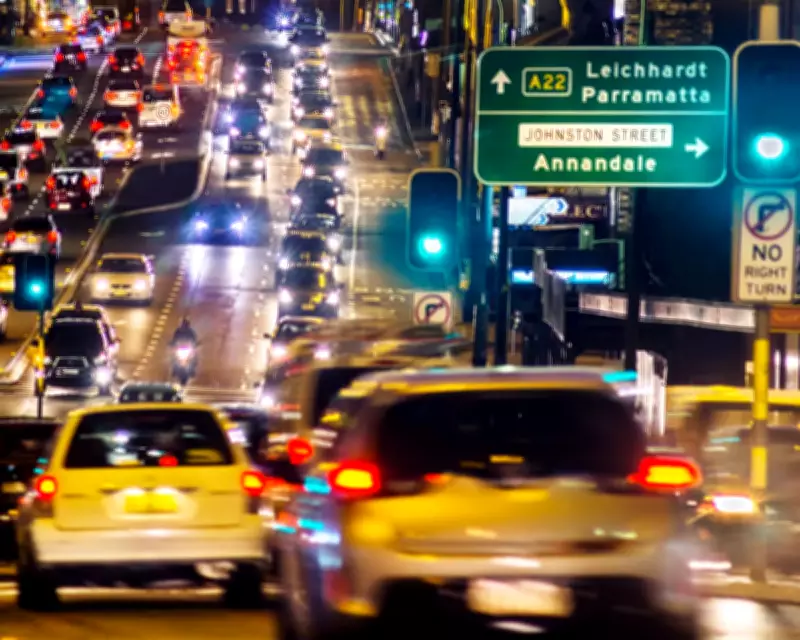
Despite a significant surge in petrol prices, Australians have not reduced their driving habits or increased their use of public transport, according to recent traffic data. Vehicle numbers on major arterial routes in Sydney and Melbourne have held steady, sparking growing calls for free or cheaper public transport to encourage a shift away from cars.
Traffic Data Shows Minimal Change
Weekly traffic data from New South Wales reveals little variation on Parramatta Road, a key Sydney route, and only a slight decline on Pennant Hills Road between 23 February and 22 March. This period follows geopolitical events that disrupted oil supplies, leading to higher fuel costs. Similarly, in Melbourne, traffic on major roads like the M1, M80, and West Gate Tunnel has remained consistent, even after accounting for partial closures.
Public Transport Usage Stagnates
Public transport patronage has not seen a notable increase despite the financial pressure. In Sydney, Opal card tap-ons for buses and ferries dropped in March compared to 2025 levels, while a brief spike in train usage earlier in the year has eased. Melbourne's Myki taps also fell in the second week of March, though new payment options introduced later led to over 40,000 successful transactions. Canberra recorded fewer bus and light rail trips during the same period.

Political and Expert Responses
The Senate recently voted down a motion for federal support of "free or affordable" public transport, despite backing from some Nationals senators and the Greens. At the state level, NSW's Liberal opposition, Business NSW, and transport unions have advocated for reduced fares to provide cost-of-living relief. However, the NSW government has dismissed these proposals, citing existing taxpayer subsidies covering 75% of costs.
Transport expert Geoffrey Clifton from the University of Sydney notes that households typically absorb short-term fuel price hikes before altering behavior. "In the short term, households tend to cop it and then, as these things go on for longer, we start to see households making different decisions," he said. Research from Transurban supports this, indicating motorway traffic often remains resilient during price spikes.
Regional Variations and Future Outlook
In Queensland, where fares are capped at 50 cents, public transport usage saw a slight uptick in mid-March, though officials caution it's too early to link this to fuel prices. Western Australia reported a rise in public transport trips, attributed to new rail lines and fare cuts, but traffic in Perth, including on the busy Kwinana Freeway, showed no change.
Emerging trends suggest potential shifts if high petrol prices persist. Ebike provider Lime reported a nearly 10% increase in trips in Sydney, possibly indicating a move away from short car journeys. Clifton predicts commuters may eventually turn to alternatives like electric vehicles, cycling, or walking if costs remain elevated.
Overall, the data underscores a reluctance among Australians to change travel habits immediately, highlighting challenges in reducing car dependency amid rising fuel expenses.






