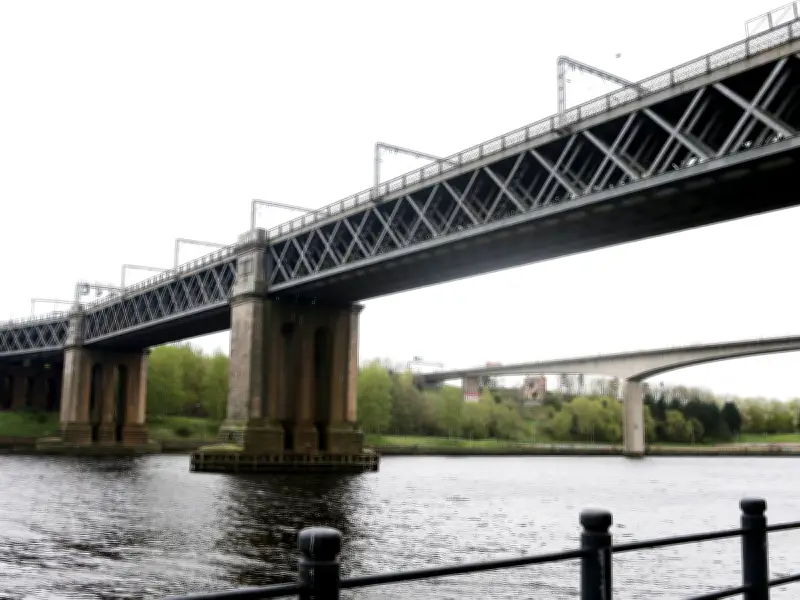
In July 1906, thousands of people lined the streets of Newcastle to witness the official opening of the King Edward VII Bridge, a new railway bridge over the River Tyne. The bridge was inaugurated by King Edward VII himself on July 10, 1906, amid great public excitement.
Royal Connections of Tyne Bridges
Of the seven bridges linking Newcastle and Gateshead across the Tyne, six were opened by prominent members of the royal family. Queen Elizabeth II opened the Gateshead Millennium Bridge in 2002; King George V opened the Tyne Bridge in 1928; and Queen Victoria inaugurated the High Level Bridge in 1849. The Queen Elizabeth II Metro Bridge was opened by the late monarch in 1981, while Princess Diana opened the current Redheugh Bridge in 1983. Only the Swing Bridge, operational since 1876, opened without royal fanfare.
Background and Construction
At the turn of the 20th century, Newcastle was a booming industrial and economic centre. To relieve the overloaded High Level Bridge, which handled 800 train and engine movements daily, work began on a new bridge in 1902. Designed by Charles Augustus Harrison and funded by the North Eastern Railway, the bridge was constructed by Cleveland Bridge of Darlington. Divers worked in dangerous compressed-air caissons to lay foundations under three large piers; one diver died, and many fell ill.

The Royal Opening Ceremony
By July 1906, the bridge was ready for its official opening, though not fully completed. King Edward VII, then 64 years old, arrived in Newcastle with Queen Alexandra for a series of engagements. In an era before television or widespread photography, few on Tyneside had seen the king. The Evening Chronicle reported: “By the time the king and queen went past giving, after all, but a fleeting glimpse of their presence, these people had been standing for hours - they began to assemble at three o’clock in the morning - waiting for the coming of royalty.” Despite heavy rain, the crowds cheered as the royal procession passed.
Completion and Testing
After the formalities, work on the bridge continued. On September 27, 1906, its strength was tested by ten locomotives, each weighing 100 tons, coupled in two sets of five and driven across at six to eight miles per hour, exerting maximum pressure on every girder. At 350 metres (1,148 feet) long, 15 metres (49 feet) wide, and 34 metres (112 feet) above high water, the steel-lattice structure was the first bridge designed to carry four main tracks, though the narrow spacing has occasionally challenged modern high-speed trains.
Legacy and Cost
The bridge opened to traffic on October 1, 1906, at a cost of £500,000 (equivalent to £55-60 million today). Grade II-listed since 1994, it remains an integral part of the East Coast Main Line and has been described as “Britain’s last great railway bridge.”