

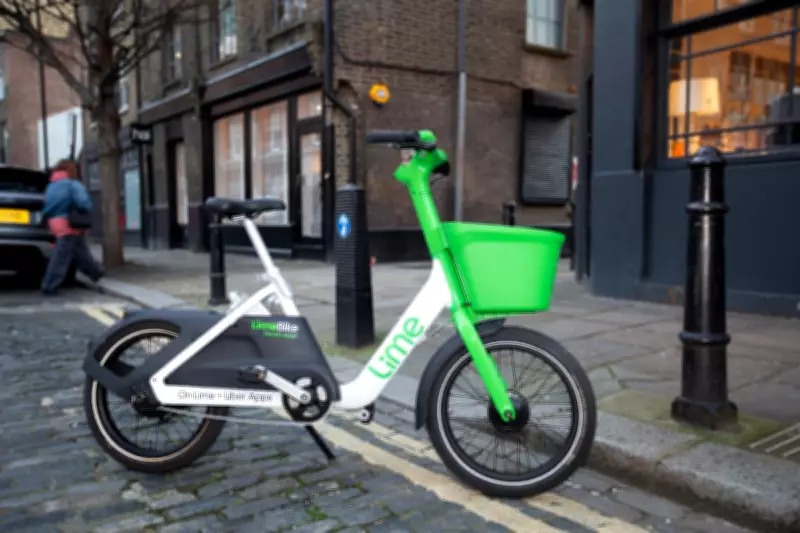
Lime's Enhanced E-Bikes Promise Major Improvement in Parking Detection
Rental e-bike operator Lime has announced that its new models will make a "huge difference" in detecting poor parking, a persistent issue that often leads to extra fees and service bans for users. These updated e-bikes are equipped with advanced GPS technology designed to more accurately identify when bikes are parked in designated bays, alongside a revamped display that clearly indicates to riders when they are within a parking zone.
Stricter Parking Rules and Penalties for Users
Users must now conclude their trips by placing bikes in a parking bay, rack, or neatly at the pavement side, depending on the specific location. Failure to comply results in an initial warning, with repeat offenders facing charges of up to £20 and a potential ban from the service. This move comes as poorly parked rental e-bikes have sparked significant concerns across UK towns and cities, with numerous complaints about blocked pavements and roads causing accessibility issues.
Council Crackdowns and Financial Impacts
In response to the problem, Kensington and Chelsea Borough Council in London took action last year by confiscating dangerously parked rental e-bikes and charging operators a retrieval fee of £84.45 per unit. By November, this enforcement led to the seizure of 1,000 bikes, generating £81,000 in revenue. Lime's chief technology officer, Jon Jenkins, highlighted the limitations of traditional GPS signals in urban environments like London, where tall buildings can reduce accuracy to about 12.3 metres, making it difficult to ensure proper parking in small bays.

Technological Advancements and Improved Accuracy
Jon Jenkins explained to the Press Association that the new bikes offer a significant upgrade, with GPS accuracy within 1.5 metres. This precision allows Lime to confidently verify when a bike is parked in a designated bay, enhancing compliance and reducing disputes. He stated, "This vehicle can give us its location accurate to within 1.5 metres, so we know that when this is identified as being parked in a parking bay, it's actually in that bay. That makes a huge difference."
Infrastructure Support and Positive Trends
In September 2025, Lime reported funding over 930 new e-bike parking bays in collaboration with London boroughs since the beginning of that year. Additionally, the company noted a 59% decrease in incidents of overcrowded parking bays between January and September 2025 compared to the same period in the previous year, indicating progress in managing parking density.
Design Improvements for Broader Inclusivity
Lime has also redesigned its e-bikes to appeal to older riders and women, who are currently underrepresented among users. Key changes include lowering the step-through area, installing an easier-to-operate seat clamp, and repositioning the battery from in front of the seat to behind it and lower down, which shifts the centre of gravity to make the bikes feel lighter. Other enhancements feature more comfortable handlebar grips, an updated phone holder for better screen visibility, and a more robust lock to deter theft and unauthorized use.
Expansion Plans and Future Goals
Jon Jenkins emphasized Lime's ambition to "expand micromobility throughout the UK," focusing on creating a more inclusive vehicle. The company engaged with less frequent riders, such as women and older individuals, to gather insights on design improvements. Lime, which operates in approximately 230 cities worldwide, has already deployed these new bikes in North America, Australia, and parts of Europe. Starting this month, the bikes will be introduced in Lime's existing UK areas—London, Oxford, Nottingham, and Milton Keynes—as well as the West Midlands, aiming to enhance urban transport options and reduce parking-related issues.






